Miscellaneous

Now that I’m done documenting every aspect of our BVI trip, I can report on some fun stuff…

As if we don’t have enough cats, while picking blackberries on Saturday afternoon, I spotted a barn kitten starting to cross busy Francis Road in Mount Vernon. I was nearly back to our house, my container brimming with blackberries that I picked along Swan Road, when my eyes met the eyes of the black and white kitten. She was catty-corner to our house, which is on the corner of Swan and Francis.Kabuki

I put down the container and dashed across the street, hoping a speeding car won’t get to her first. Scoping her up, I raced back to our house, picked up my blackberries, and then calmly walked into the garage where Rich was working on something or other. Without turning, he asked if I’d gotten any blackberries.

I put the container on his work bench and commented that I had, but one blackberry was rather peculiar and squirmy.

He spun around and sputtered, “Oh my God,” snatched the kitten from my hands, and turned to walk into the house.

“Not so fast,” I yelled. “That ain’t your blackberry! Its mine. Your blackberries are on the workbench!”

Kabuki with Pu'Yi Even though Rich was delighted with the kitten, he felt it probably belonged to someone. I pointed out that she was across the street from a large field and barn. Most likely, she was born in the barn. And more importantly, I was concerned that if I returned her to the field, she’d once again try to cross the road and become road pizza.

Plus, circling overhead were hawks and an occasional bald eagle, which could easily swoop her up for a tasty dinner. An eagle can pluck a duck out of the water. A 2-3 pound kitten would be easy prey.

While eating lunch (leftover Mexican food from the night before) we continued debating about what to do about the kitten. After lunch, Rich continued working in the garage for an hour or so then came inside to take a nap… with the kitten on his chest. Green tomatoes_2

When he awoke, there was no more debating. The kitten was bundled up and driven back to our house in Kirkland!

We named her Suki, which means beloved in Japanese. She’s super mellow and gets along with the other cats… and 95% of the time, she’s either with Rich or myself. In fact, Rich set up a chair by his computer so she can help him type and answer the phone during the day. She appears, however, to be more interested in being fed than Linux device drivers.   Green tomatoes_1

In other news, I’ve become fixated with my tomato plants, which continue to have GREEN instead of RED tomatoes. I can count on one hand, the number of tomatoes that have turned RED this year. We have three huge plants in Kirkland and a half a dozen plants in our raised beds in Mount Vernon.

It’s been a horrible year for most produce. Our only successes have been peas, pea pods, lettuce, a few heads of broccoli (which tasted terrible), tarragon, a few string beans, and one large and several small zucchinis. Grumble.

The Final BVI Story!

View from Governor's MansionIn less than a month, Rich and I will be setting off on another adventure, this time in the Puget Sound, Haro Straits and parts of Canada. This means, I better finish up writing about our British Virgin Island (BVI) adventure!

When I last wrote, we were reminiscing about your trip, remembering the high- and low-lights as the sun set over Privateer Bay. We spent the rest of the evening, packing and reviewing what we needed to do when we got back to Road Town and Conch Charters. Road Town Gallery

The next morning, Friday, was very windy. We’d showered the night before and we’re happy to put on clean, non-salty clothes the next morning. All we had to do was sail two hours, unload our bags, clean out the ice chest/refrigerator, do a little cleaning (we’d done most of the cleaning the night before), and enjoy the rest of the day wandering around the town before spending a relaxing evening at the Fort Burt Hotel.

Remember how I started the previous paragraph, “Friday was very windy.” And windy meant that lots of salt water splashed onto our clean clothes and body as Efithia tossed around, her motor chugging away at the breakneck speed of four knots. Road Town Jeweler

Grumble.

Happily, we were the only boat coming into the marina at that time of the morning. Once we phoned the charter company, they sent out a dingy with two people on it, one a driver, and the other a young barefoot boy who climbed onto Efithia – while she was moving – as if he was stepping over a puddle in the middle of the street. He drove the boat into the slip, leapt off and tied her off.

Road Town Pebbles HospitalRich and I then scrambled to start unloading… two huge Army duffle bags full of our clothing, snorkel gear, linens, and bags of shells; two sailing bags of gear; Sputnick in her computer bag; and my carry-on bag. We also had several cans of soda and some food for the rest of the day and flight home the next morning. Note: We were so buzzed that it didn’t occur to us that we couldn’t take the soda onto the plane and a bottle of rum until we got to the airport!

While Rich dragged all of our gear up several flights of stairs to the Fort Burt Hotel (across the street) because the charter company wouldn’t let us keep them in their office, I emptied out the ice chest and finished cleaning.Road Town street 

An hour later, both covered with sweat, we were ready to permanently step ashore and wish Efithia ado. While our sea legs disappeared within minutes, our energy was zapped. We felt and looked like zombies. Not only was the heat draining, but we weren’t used to walking long distances after nine days of swimming, walking short distances on land, bouncing around the boat, sitting, and sailing.

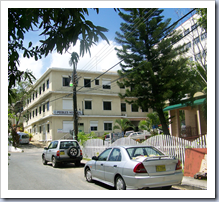
We decided to head towards downtown and get a bite to eat. We took a back road, which runs in front of the old Peebles Hospital (top), the only hospital in BVI. Since we last visited, a new, multi-story hospital has been built, which you can see to the left of the older hospital. 

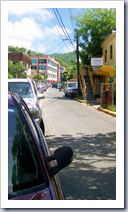
Road Town AlleyThe streets in BVI, even the main roads, are very narrow. Most don’t have sidewalks and the cars park on both sides of the streets, often a few feet from the homes and businesses. In spite of cars parking as far off the roads as possible, barely two cars can fit down a streets, passing within inches of each other.

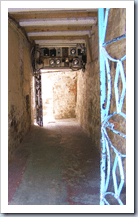
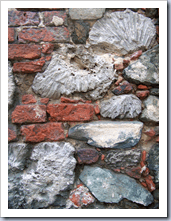
Below is a narrow alley that Rich found interesting because of the numerous electrical meters mounted just below the ceiling, towards the back of the alley. I was intrigued by the mixture of bricks, shells, rocks, and mortar used to build several of the buildings we passed. 

And because both sides of the street are parked up and parking lots are practically nonexistent, if someone has to make a stop, like retrieve their mail from the post office, they simply stop in the middle of the road and everyone behind them has to wait until they return.

Road Town wallAfter making our way now the street, and not getting hit by any cars, we arrived at Pusser’s, an institution in BVI with bars and restaurants throughout the islands and a reputation for strong drinks using Pusser’s Rum. We were early for lunch and explained to the waitress that we’d just gotten off a boat and simply wanted to chill-out – both in the relax sense and air conditioned comfortable of the restaurant. 

After a while we ordered. Rich had a hamburger with fries and I opted for yummy, decadent macaroni and cheese. You gotta’ have your comfortable food in times of need!

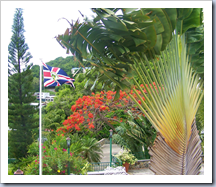
After lunch, we headed for the Old Government House, which was built in the 1920’s and served as the home of the island’s British governor until the mid-1990’s. On a hill, a short walk up from the main drag that runs through Road Town, the Spanish-inspired home is surrounded by mature landscaping, sitting areas, and paths.  Governor's mansion outside

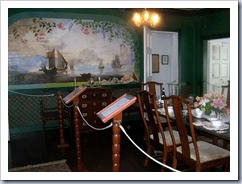
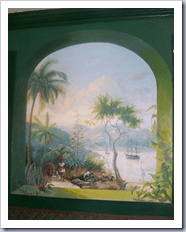
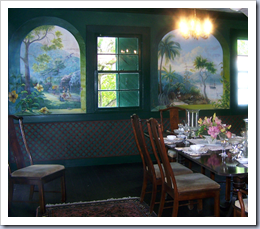
After much discussion, the Government House was restored and reopened as a museum in 2003, and a new residence for the governor was built next door. Several rooms contain the original furniture; most striking is the dining room with panoramas of the islands painted on the wall by the wife of a governor.

Upstairs is the only air conditioned room. Inside are stamps that were issued by BVI and United Kingdom. In other room is a library with historical documents and photographs that were donated by islanders and others who influenced the development of BVI. Throughout the house are portrays and paraphernalia from British royalty, including a guest book signed by Queen Elizabeth II. Governopr

We spent an enjoyable hour or so looking through the Government House then hobbled back to the Fort Burt Hotel, hopefully that we could check in. After gathering our luggage, we were escorted to our room. What a surprise! Not only was the room spacious and air conditioned, but it had an incredible view of the marina and the surrounding area.

I didn’t know what to do first. Walk barefoot on the cool marble in the bathroom. Take a long, sudsy shower. Sit on the balcony and look at the site below. Melt into the king-sized bed (Rich’s choice). Turn on Sputnik and catch up on writing? Watch through binoculars the cleaning lady napping on Efithia, instead of cleaning the boat. Attempt to drink an iced diet Pepsi without spilling it (one of my choices). Dining room

Not only did I spill the Pepsi, but I spilled an entire glass of water that evening while at the upscale Drakes Point at Fort Burt restaurant. I think my equilibrium was off. I was so used to “things” moving while on the boat that I didn’t compensate for non-movement when on land.

After Rich snoozed for a while and I wrote, we headed to the crystal blue pool at the hotel for a few laps without having to compete with tropical fish, coral, waves, and other sea life. We then sat in the shady and reflected on our trip, remembering the blizzard of fish that would swim past us, the windy days when our boat zipped along at six knots, exploring deserted beaches, sipping mojitos as the sun set, flocks of dramatic black and white seagulls that begged for food, being rocked asleep in the v-berth, sudden rain showers, finding two intact conch shells, sharing Haggen Daz ice cream bars, and much, much more. Dining room_2

Dining room_3


Underwater Desert

Every day we sailed in the British Virgin Island (BVI), we went snorkeling, sometimes twice a day. For the most part, the water is a tepid eighty-three to eight-six degrees; occasionally, you swim through an icy patch of water and when it was stormy outside, the water felt cooler. For the most part, swimming around BVI is like being in a sun-warmed swimming pool.

The first few times we snorkeled, I was in so much awe of the fish, coral, and plants that nothing got recorded in my memory bank. I simply swam, observed, and concentrated on my breathing. Inhaling and exhaling out of a tube that’s sticking out of my mouth doesn’t feel natural!

After a couple of days of remembering nothing while snorkeling, I took another approach, dictating in my head what I was seeing in hope I could quickly type up my recollections that evening. It didn’t work. I barely wrote anything because I couldn’t find the right words.

Finally, I implored Rich to help. He came up with the perfect analogy. The reefs and surrounding oceanscape in BVI is like an underwater desert.

Like a desert, there is fine off-white sand with craggily pieces of coral that look like cactuses. The colors are surprisingly muted. For the most part, the coral and rocks are earth tones: Beige, umber, gray, goldenrod, and maroon. The shapes and texture of the coral are interesting, but the colors are depressing!

The color of the water, however, is extraordinary. At low depths, it is dazzling aquamarine. Lapped on the shores, it’s blue like the sky. Through a swimming mask it glimmers like a gemstone as the sunlight streaks at angles into the water. Then you see the coral. Oh dreary coral.

Okay, I’m not being fair. Drizzled on some of the coral and rocks is what appears to be melted, turquoise plastic like gooey blue translucent icing you squeeze out of a tube. There are also giant lacy fan attached to the rocks that wave back-and-forth in the current. Most of the fans are beige, but some are maroon, maize, charcoal gray, and asparagus. Their movement is more intriguing and mesmerizing than their color.

While not a mecca of color, the brain coral is intriguing with random whorls and ranging in size from tennis ball to papasan. Staghorn, elkhorn, and finger coral look like they sound – thickets of twisted antlers of varying widths and colors from pearly white to taupe and ash gray. This picture does a good job of capturing what we saw. Even better check out this site about coral in St. Martaan, which is southeast of BVI and next to St. Martin, St. Kitts, and St. Barts.

What makes snorkeling amazing are the fish. So many wonderful fish and memorable encounters! My favorite fish, without a doubt, are parrotfish. Even though a parrotfish can grow to the size of a large salmon, they are very docile and too silly and beautiful to incite an ounce of fear. They range in color from dullish medium gray with whisper of vibrant colors to full-on rainbow with blotches of yellow, green, pink, and blue. Throughout their lifespan they can change colors and genders!

Their bodies are funky with itty-bitty fins and tails, large, expressive eyes, and large, pouty lips that are usually poised on a piece of coral. Their diet primarily consists of algae from polyps inside coral. They rip off chunks of coral, which they pulverize using grinding teeth in their throats, and then digest the algae. Much of the sand where parrotfish live is actually ground-up undigested coral they excrete.

Parrotfish varieties include Stoplight and Redband… and now that I look at the pictures, what I thought was a parrotfish is really a Yellowhead Wrasse or Creole Wrasse.

My next favorite fish were Sergeant Major, which I lovingly referred to as bumblebees. These frisky black and yellow striped fish tended to be in small schools and weren’t perturbed by giant human swimming by their homes. We saw tiny ones – about the size of peas – in a sheltered pool near the shore. We saw larger, plum tomato-sized, bumblebees darted in the reefs, swimming around docks or by our swim ladder. They aren’t opposed to eating cracker crumbs.

The most common fish were varieties of butterfly and angelfish. These elegant, disc-shaped fish came in a multitude of colors and patterns. Most memorable was a small black fish with bright periwinkle spots. Around the peripheral of its body was a stripe of florescent blue. It looked like something that would appear in the Disney Electric Parade.

We definitely saw many Foureye, Spotfish, and Banded butterflyfish. And there were Queen Angelfish along with other in this class, but not as colorful.

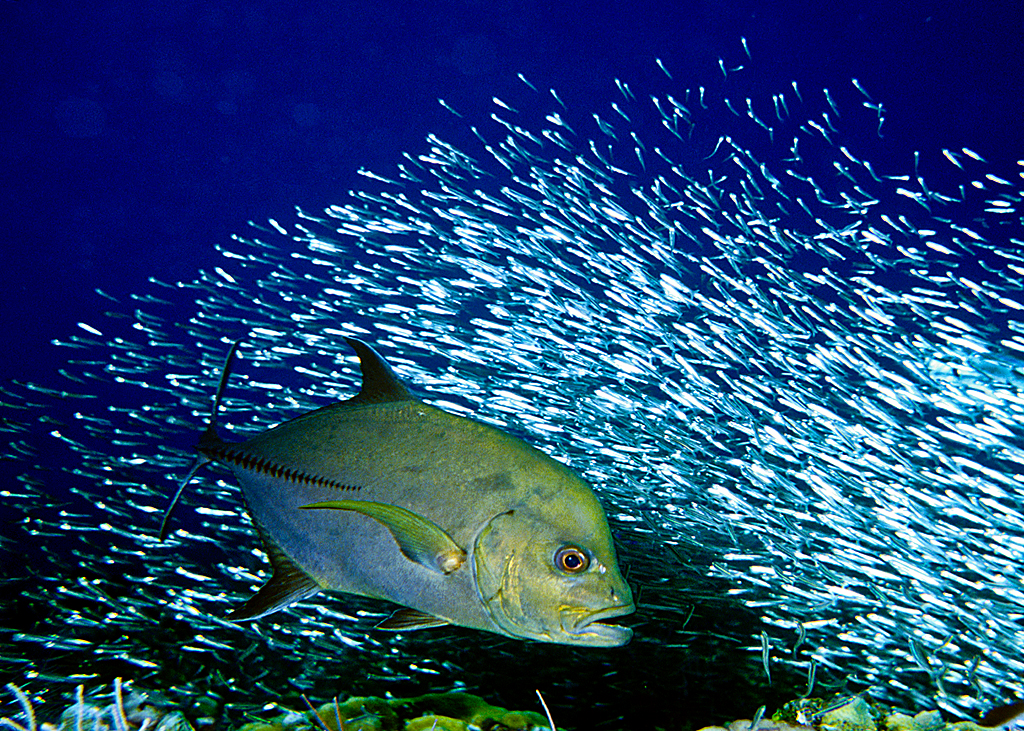
The large, scary fish that resembled small tuna were most likely harmless Bar Jacks. We saw a couple of them in shallow waters by beaches. And yes, we saw a few Barracuda, but they were fairly small and swam by us. Nevertheless, they have ferocious teeth that even on an 18-inch fellow could remove a finger or two… especially if it has a shiny wedding ring on it.

Grunts – French and Bluestriped – and Yellowtail Snappers were common and always in a schools. Now is a good time to launch into schools of fish. One of the most exciting aspects of snorkeling, aside from seeing a rare or very colorful fish, is swimming alongside or through a school. Some schools comprised a few dozen fish moseying along with each member paying little attention to the others.

Most schools comprise thousands, possibly tens of thousands of fish. Half the time we snorkeled, we swam through or by a school of Silversides. These fish remind me fresh water Tetras because they’re less than two-inches in length and vary in color. Most memorable is a variety is like a slender crystal prism, shimmering as the light changes. They’re so translucent that you can see their organs and spines.

Others are white with stripes of color. Aside from being very beautiful, they swim in unison, following the same path then without warning, switching directions, every head and tail in perfect harmony. They don’t seem to be perturbed by humans and will swim around you, scarcely an inch from your body or outstretched hand. I loved to float with my head underwater, breathing through my snorkel as thousands of Silversides showered past me like rainbow snowflakes. Check out this video on Silversides by Don Stark, a PADI Open Water Scuba Instructor and amazing underwater videographer and producer of www.scubavisions.com.

Larger fish like grunts and tangs usually swim the same direction, but are more likely to look around and act independently as they swim. Check out this amazing video by Don Stark on Blue Tangs. We saw many fish that we believed were tangs, but were most likely angelfish, like the Blue Angelfish or Gray Angelfish. It’s so hard to figure out what you’re seeing because the environment is constantly changing with fishing swim every direction. With every few strokes, you pass by rocks and coral that are hiding extraordinary fishes. Round a corner and a lightly populated area becomes a buzz of activity with three or four schools of different fish.

Whenever we snorkeled, we hoped to see a hawksbill turtle. These shy creatures are lovely. Lovely is truly the best word to describe them. They swim so effortlessly with wise faces, graceful flippers, and mottled shells. Once we spotted one, we’d slow our swimming to minimize startling it and try to follow it, oblivious to anything around us, but this mystical creature glissading through the water. Watch this video about hawksbills.

Seven years ago, we saw several manta rays, swimming in open water. This trip, we saw none. Although, one evening, after eating dinner, we were exploring the area in our dingy and Rich though he spotted a large ray because a large dark gray shadow moved across the sun-speckled water. Like hawksbill turtles, they quietly move through the water, creating as little notice as possible.

The ones we’ve seen in the pass were at least three-feet across, but unlike the Spotted Eagle Ray in this video, they didn’t seem to move their “wings” as aggressively. I found them fascinating, but frightening. I’d much rather see a mellow nurse shark than a ray!

Yes, Rich and I took underwater pictures. However, I was stupidly cheap and instead of investing $100 or so in a mediocre-quality underwater camera, I convinced Rich to purchase two no-quality single-use underwater cameras. The resulting pictures were fuzzy, underexposed, overexposed, and not exposed.

I guess that means we’ll have to return to BVI a third time!

Wrapping Up Our BVI Trip

Much of what I wrote about BVI was written in the evenings on Sputnik, my beloved netbook. Looking at what I wrote on Tuesday, eight days into our trip, it’s obvious that I was starting to lose steam. In fact, at this point, I was counting the day until we could go home. And I’m sure that Rich was of the same mindset.  Rocky shoreline

We were sunburned, tired, hot, and not particularly excited by anything aside from the prospect of sleeping on a soft bed with fluffy pillows, and a fan whirling overhead. I had daily fantasies about warm showers with fragrant shampoo, Ivory soap, and piles of warm towels (preferrrably just removed from a dryer).

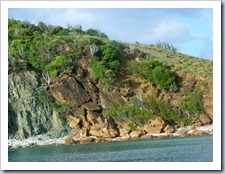
To remedy our lackluster attitude, on Wednesday morning, we snoozed in the v-berth until 7:30. It was a blustery morning so neither one of us was inclined to get up. Rich made some coffee, which we sipped as we motored to The Caves (above) on Norman Island. This area is supposed to have great snorkeling, but we weren’t impressed, mainly because the water was choppy and full of sediment, making it hard to see the fish and coral. In addition, the current, made it dangerous to swim around the point to see another part of the reef. The prospect of being washed into sharp coral by a swift wave didn’t appeal to us.Cat in a cove_small

Norman Island was the inspiration for Robert Louis Stevenson’s novel “Treasure Island.” The area has a history that involved pirates, treasure, and rum. A short sail away is Dead Chest Island, which reportedly got its name when the notorious Blackbeard. After a mutiny, he put fifteen men ashore on the island with only a bottle of rum, hence the song “fifteen men on a dead man’s chest, yo ho ho and a bottle of rum.”

With periodic rain storms throughout the day, after our morning snorkel expedition, we weren’t gung-ho about doing much more than anchoring in quiet Privateer’s Bay, reading, snorkeling in the area, daydreaming, and spying on others boats and their occupants.  Cat in cove

“Rise and shine” was the battle cry on Thursday morning after a stormy night, closing hatches, checking the GPS to make sure we weren’t dragging anchor, and trying to get comfortable on the thin foam cushion in the v-berth.

The weather was overcast with gusty winds so we motored to the wreck of the Rhone, a Royal Mail Steamship that sank in 1867 after being caught in a hurricane. It’s one of the top place to scuba dive in BVI because the wreak is in only 30-90 feet of water with much of the ship is intact and visible, including decking, parts of the rigging, the steam engine, crow’s nest, and propeller. Sunset in BVI

Even so, I wasn’t eager to see it since 125 people instantly perished when cold sea water gushed into the ship, causing the steam engine to explode. Plus, our sailing book said that snorkelers can’t see much unless the water is super clear. Nevertheless, we pulled on our swim fins, adjusted our masks, and jumped into the water. 

Sure enough, there wasn’t much to see, until we decided to circle back towards one of the commercial (scuba) dive boats. We could clearly see what was left of the Rhone. It strange to swim over a submerged ship as if we were a huge whale, its bones broken apart and scattered on the ocean floor.

By the time, we turned around to investigate the other half of the ship (it broke into two pieces), a group of scuba divers had suited up and were swimming underneath us. It was like swimming in a bowl of seltzer water. Everywhere there were itty-bitty bubbles along with larger bubbles that drifted up towards the surface and burst when we touched them with our hands. 

I don’t know how long we swam in the bubbles, chasing and popping the bubbles. It was definitely some of the best fun I’ve had with a snorkel and mask!

Next, we headed around the corner to a cove off Salt Island (below). There were no mooring balls so we dropped an anchor, which didn’t seem to be holding. Rich pulled on his fins, mask and snorkel and jumped overboard to take a look. The anchor was in a rocky area. We attempted to anchor again, but couldn’t get a firm hold and were concerned that with the strong winds, a less than perfect anchoring, would blow us onto the beach. Sad Salt Island

Rich decided to go back to the wreck of the Rhone, grab a mooring ball, and then dinghy back to Salt Island. Excellent plan and twenty minutes later we pulled our dinghy onto the beach.

Salt Island was one of my favorite places when we first visited BVI. The salt ponds were full and on the peripheral were mounds of salt crystals along with a multitude of different varieties of sun-bleached coral. The islanders collected and harvested the salt, and every year, sold a one pound bag of salt to the Queen of England as a symbolic tribute. During their heyday, they were an important source of salt for the British Royal Navy. Salt pond

Until a few years ago, one man lived on the island and was the sole person overseeing the salt ponds. As it grew older, he had to move to the main island, Tortola. Since he left, the salt ponds have become stagnant; the edges caked with reddish brown mud, the desiccated carcass of a small goat the only relic on the ground. Outside of seeing a couple of goats on the hillsides, seeking cover under scraggly bushes, there was no sign of life.

The handful of residential buildings had fallen into disrepair, the grave sites of the people killed on the Rhone have been vandalized, and much of the beach and walking paths were littered with broken bottles and cans.

It was very sad. And in a sense, it was subtle signal that our time at BVI was winding down. The next day, our last full day of sailing, we decided to snorkel one last time at The Indians. Unfortunately, it was overcast and windy so the water was murky, making it hard to see the fish and the reefs. It much nicer snorkeling when rays of bright sunlight filter down into the water, illuminating the fish and creating patches of warm water. Soper's Hole

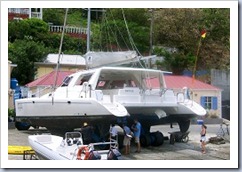
With our ice supply nearly gone and a need to keep our last bit of food cold, we zipped back to Soper’s Hole (right) for ice and a much needed dark chocolate Hagen Daz ice cream bar. We dawdled for an hour or so, went into a few shops, walked over to the dry dock (below), where a huge cat was being pulled out of the water. While Rich was preoccupied, I had a love fest with a young, slender, black cat. He was unsprayed, flirtation, frisky, and happy that someone was petting him.

Cat in dry dock We leisurely sailed back to Norman Island and Privateer’s Bay, a quiet anchorage with few boats and pleasant snorkeling. More rocky than “reefy,” the bay had a range of terrains and in several places can be very shallow – too shallow! At one point, we zigged instead of zagged and were in only a few feet of water with sharp coral, pointy rocks, and sea urchins less than a foot beneath our bodies. In this situation, you have no choice but to remain prone and paddle like crazy until you get in deeper water.

I’m sure we were in this shallow water only a few minutes, but it felt like half an hour of frantic paddling until the ocean floor once again dropped a safe distance beneath my body. 

In other part of the bay, we were meander along a small reef and came upon a large pile of discarded conch shells. Local fishermen gather conch, break off the bottom of the shell, pull out the conch then dump the shells overboard, in this case, close to the shore. Voyage Cats

Conch is a popular dish in the Caribbean; although, overfishing has depleted the supply and it’s illegal to gather queen conch Florida and adjacent Federal waters. On the last night we were in BVI, we had conch fritters as an appetizer. It tasted like fried, ground up squid… the shells with the critters inside are much more impressive.  

The pile of conch shells that we came upon were primarily queen conchs, which have large, deep pink and coral lips that curve away from the main part of the shell. There were exquisite. We swam around the pile for few minutes, admiring their beauty and wondering whether we could swim down and grab one off the piles. We remembered, however, that you’re not supposed to disturb anything near the reefs.  Cameo

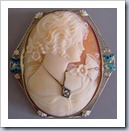
Conch were originally used to make cameos(left) because they have layers of color, ranging from ivory to deep coral, which are revealed by a skilled carver’s hand. While we were in Soper’s Hole, I purchased a pretty silver bracelet with an inlaid piece of conch to remember our days in BVI.

Attack of the Cats

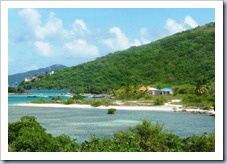
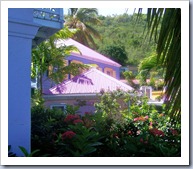
Sopers Hole_4Sunday morning we zipped over to Soper’s Hole, a picturesque marina on the west end of Tortolla, the main island. Even from a distance, Soper’s Hole is inviting with quaint buildings in Caribbean colors – pink, purple, coral, aqua, pale and green – nestled at the base of a green mountain dotted with palm trees. Without a doubt, it is one of my favorite places in BVI. Even though it’s ritzy and picture-perfect, it’s laidback and welcoming.    
Sopers Hole_2I suspect Soper’s Hole’s appearance is tied to two facts. First, it’s across from the U.S. Virgin Island, where tourists from around the world take fast ferries over to BVI for a day of sightseeing or to be shuttled to a snazzy resort or luxury yacht. Soper’s Hole has an immigration office, resort-quality shops, and amenities for ships up to 180 feet in length.

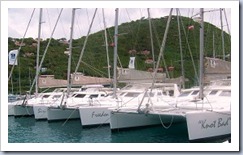
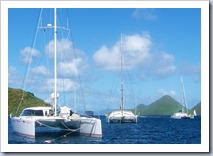
Voyage Charters is also located at the marina. This upscale charter company offers 40- to 58-foot luxury catamarans (cats) for bareboat and crewed charters. Sopers Hole

Rich asked whether we could tour one of these behemoth and they pointed us to two boats that were being cleaned. A cat has two pontoons with a large, flat area in between. This flat area is where the cockpit is located; although, on a large cat it’s more like a gathering spot with ample seating, and depending on the size of the boat, a mini kitchen with a sink and built-in barbeque. The lines for hoisting and lowering the sails are easy to reach and usually an arms-length away from the seating. Off to one side are a few steps, leading up to the helm, where you steer the boat.  Flowers at Sopers Hole
A sliding glass door, off the cockpit, opens into a spacious, air-conditioned area that has a kitchen akin to a luxury apartment with full-sized oven and stove, large sink, and sizable refrigerator (with an ice-maker) and freezer beneath the counters. Along with a breakfast bar with padded stools, there was a circular setting area with a low table, bookshelves, ornamental pillows, and other amenities you’d find in a designer living room, including pictures on the wall!

On this part of the boat is a spacious navigation area with a desk and full-sized, padded captain’s chair. Cats
The pontoons are located on opposite sides of the kitchen/saloon area. You step down into them; each has two roomy cabins with a queen sized bed, large head (toilet, sink, shower), and cupboards for storage. The larger cats have a fifth cabin that is accessible from the deck. And several models have one-person v-berths behind the forward cabins in each pontoon. According to the brochure, up to twelve people can sleep in a 58-foot cat.

Check out this ten-year old, $450,000, 50-foot cat in the BVI, which sleeps ten, has five bathrooms, five states rooms, and luxuries that are unimaginable on a smaller monohull like Efithia, the 32-foot Beneteau we chartered. A monohull, however, is much more fun and responsive to sail than a beamy catamaran. Flowers at Sopers Hole_2
When we were in BVI seven years ago, there was an occasional cat. Now, there are two to three times as many cats – from various charter companies – on the water than monohulls. Because cats are so wide they look like something from Star Wars, especially when they have louvers on the front windows that make them look like menacing war machines.

The main reason why we went to Soper’s Hole was to get gas for our dinghy along with ice for the refrigerator. Even though we ran the refrigerator during the day, it needed bags of ice to stay cold. In nine days, we went through one block of ice and five bags of cubes. By the time we turned in the boat, only a quarter bag of cubes was left… everything else had melted or be sacrificed for nightly mojitos.

While at Soper’s Hole, we decided to visit the local grocery store, which had a surprisingly large selection of gourmet and specialty foods, mainly because it’s used by people with bucka-bucks to provision large cats and mega yachts. I was happy just standing the doorway, relishing the air conditioned. It felt so good on my overcooked skin. The clerk would probably disagree; she was wearing a heavy winter coat. Sopers Hole_3

We walked up every aisle, enjoying the cool air while we picked out a chunk of frozen fish ($11), a red pepper, loaf of artisan whole grain bread, can of bug spray, and a Haagen Daz dark chocolate ice cream bar ($4.50). The latter we shared, greedily eyeing each other to make sure one didn’t get more than the other.

When we returned to Soper’s Hole a few days later, Rich hightailed it back to the grocery store for another Haagen Daz bar, which we inhaled while talking to a couple who lived in Bellingham, Washington and often sailed in the Puget Sound. Cruise Ship in BVI
The picture above is an old duplex, which was located behind the fancy shops at Soper’s Hole. The quality of this building is very representative of what many of the houses and buildings look like in un-touristy BVI. It’s amazing how many buildings are in disrepair. It’s a two-class economy in BVI with the very rich and the poor, barely getting by.

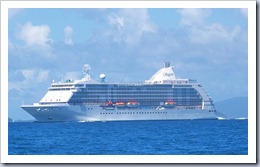
After our shore adventure at Soper’s Hole, we had a lengthy sail to Norman Island and picked up a mooring ball at Privateer Bay. Before dinner, we snorkeled twice then went ashore to beach comb for shells and coral. We saw the large cruise above during our sail.

For the past few days, my skin was hinting at a revolt, which came to fruition on Monday morning. My arms, hands, face, and parts of my legs were covered with festering, itchy bumps… dreaded prickly heat! 

In spite of being miserable, I was determined to forge ahead because our itinerary had us snorkeling at The Indians, considered one of the best places to snorkel and dive in the BVI. Shortly after the sun rose, we motored over to The Indians and grabbed a National Parks Trust mooring ball. After a quick breakfast, we pulled on fins, snorkels and masks and were captivated by what we saw. The Indians is a collection of rugged rocks that sprout out of the ocean. Ringing the rocks are protected reefs with an amazing variety of tropical fish and coral. Sailor Julie
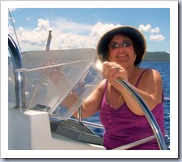
Here’s a link to many wonderful videos shot by SailQwest, who captured an octopus, nurse shark (avoid humans), turtles, mantra ray, and several of the many schools of color fish. As you snorkel, you inevitably pass through a dozen or more schools of fish, which can contains thousands of itt-bitty tetras or a fifty or less Angel , Parrot, Tang, Wrasse, Sergeant Major… or Jacks or Groupers.

We snorkeled twice around The Indians then pulled up sails and set off to what Rich thought was U.S. Virgin Island waters. An hour into the sail, we realized that we were sailing towards Road Town, Tortola and Conch Charters from which we chartered Eftihia. I asked Rich whether we could go into town and get “treatment” for my prickly heat. Yes! Sailor Rich
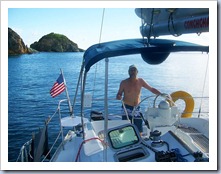
Half an hour later, we bought a strong antihistamine in liquid form along with 1% hydrosome cream. Both came from Carlisle Laboratories in St. Michael, Barbados and were happily very effective at drying up my bumpy skin. For the rest of our trip, I sipped the antihistamine every few hours and liberally applied the cream along with soothing aloe vera goop.

Our trip into town was a bit of an adventure. We’d tied up our boat to a mooring ball at the Conch Marina and then used our dinghy to motor to downtown Road Town where two pharmacies were located. The night before, it rained several times, drenching the inside of the boat. The storms came rapidly in the middle of the night so several times, we had to awake from sound sleep, wiggle out of the v-berth, find our footing in the dark, and then quickly scramble around the boat closing windows and hatches. Once the rain ceased, we’d get up and open the windows and hatches again.

Rich and I were like Keystone Kops, opening and closing windows and hatches, mopping up water, slipping on the wet floor of the boat, and constantly bumping into each other as the boat pitched during the storm.

By the time we reach Road Town, the following morning, to get antihistamines, the inside of the boat had nearly dried out. It was short-lived, however, with the rain continuing unpredictably throughout the day and of course, the windows and hatches were usually open when the drops started falling!Seagull
Adding to the wet boat was our wet clothing. After visiting the pharmacy, we climbed into the dingy and I started reading the instructions on the antihistamine bottle. Within seconds, a few raindrops fell. Rich yelled, “It’s coming get ready.”

I thought Rich was out-of-his-mind as I continued reading. There was no need for me to put my medicines in the dry bag. After all, a few sprinkles couldn’t possibly turn into a torrential downpour within… minutes, our clothes were soaked through. And just a few hundred yards away, not a drop was falling!

Once we motored out of the rain shower, I took a swig of the antihistamine and immediately felt better, at least, psychologically I felt better. Within a short time, we were back on Efithia and tacking (or maybe jiving) to Privateer Bay. I was too dopey to know or care. Once there, I decided it was time for a long nap in the galley. Rich kept watch above deck, with binoculars. He frequently pulled out his fancy, high-powered, gyroscope-corrected, UV protected, twenty-pound binoculars to spy on other boats and their occupants. During this bout of espionage, he watched several people attempt to water-ski behind a dinghy. Seagulls and the setting sun
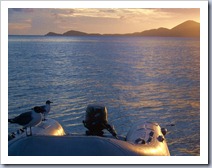
Dinghy antics can be very amusing… and not just resting places for seagulls. During our trip, we witnesses two very obese – in the 300-pound range – men speeding around in a dinghy. From what we could ascertain, a woman on their boat, while snorkeling, lost something in the water. They called to Bubba One and Bubba Two to jump in the dinghy and help with the search.

Getting into dinghy from the swim ladder of a boat can be a bit tricky in that you need to step slowly and confidently into the dinghy – something that can be challenging if you’re grossly overweight and need to also be mindful of your swim trunks not slipping and showing too much crack.

Bubba One, the driver, got into the dinghy without too much problem, but Bubba Two had more difficulty because one end of the dinghy was barely in the water. And the other end was weighed down with 300-pounds of blubber. Both safely in the dinghy, Bubba One goosed the engine and the dinghy took off with a start.

Rich and I watched in astonishment because dinghies aren’t particularly stable, especially at fast speeds. Once they reach the woman in distressed, Bubba One cut the engine and Bubba Two rolled over the edge of the dinghy into the water like a pink hippopotamus. He dove down several times, using a mask, to try to find the missing item, but didn’t seem to meet with much success.

Meanwhile, Bubba One turn up the throttle and headed back to the boat with one side of the dinghy in the air and the other weighed down with an outboard motor and the equivalence of two people. Add a bit of manliness, crank up the speed, insert a sizable wave and you get a bit of hilarity as Bubba One flew up in the air and barely landed back in the dinghy.

After sleeping off the antihistamine buzz, and feeling less itchy, we decided to snorkel around Privateer Bay. We were thrilled to see three turtles gliding through the water, occasionally correcting their course by gently paddling. They tend to be shy, staying near the bottom of the ocean floor. During our snorkeling outings, we probably swam over many turtles because their shells blend into the sand.
Bumblebees in the Water

This is a continuation of our BVI sailing adventure… Following the traditional of getting up before the roosters crow, Rich had the motor started and mooring lines in by 6 a.m. the following morning. We zipped over to Monkey Point for two rounds of fabulous snorkeling then sailed to Diamond Cay (Manchioneel Bay) on Jost Van Dyke. We grabbed a mooring ball, close to the shore and the coral reefs. Foxy Taboo_3

At the foot of the bay is Foxy Taboo, a charming bar and restaurant opened in 2003 by British Virgin Islander Foxy Callwood. Unlike other parts of BVI, Diamond Cay is spic-and-span with swaying palm trees, groomed paths, a well-built and maintained dock, and other amenities that make visiting a joy.

After getting directions at Foxy’s, we walked to Bubbly Pool, which is a shallow pool protected by piles of boulders. As the seawater surges through the boulders, it creates bubbles, hence turning the calm pool into something akin to a Jacuzzi. Typical day

What it didn’t say in the sailing guide is that the pool is calm at low tide with barely a bubble on the surface. Nevertheless, it was worthwhile to visit because the pool contained baby “bumble bees.” Not really bees. Sergeant Majors, which are perky black and white striped fish that can grow up to six inches in length. The ones in the pool were itty-bitty, maybe half an inch in length.

We’d seen the grown up versions while snorkeling and earlier in the day at Monkey Point. Several dozen of these charming fish were swimming around our swim ladder. We “accidentally” feed them bits of dried out bagels, which they happily chomped down until a solid black fish showed up and started to chase them away. It just shows that even the reef has tension among the species. Foxy Taboo

Several days later, at Sopher’s Hole, when we were getting into our dinghy after buying ice and other groceries onshore, I noticed a school of bumble bees near the dock and exclaimed to Rich, “Look at the bumble bees!” 

A woman getting out of a dinghy nearby heard me and almost fell overboard, thinking that the stinging airborne variety of bumblebees were swarming. Ha! She was kinda’ a fancy lady who along with her husband and another couple were being brought to shore by the captain of mostly likely a catamaran they were chartering. Many people who charter in BVI have a captain, especially if they’re on a moose-sized catamaran with several other people.

After delighting in the baby bumblebees in Bubbly Pool, we headed back down the rocky trail, past several Manchioneel trees. Signs posted around the trees, reminding visitors not to stay away from the trees because they’re highly poisonous and can produce a severe skin reaction, especially after a rain. In addition, their fruit, resembling a small green apple, is highly toxic. Foxy Taboo_2

Part of the trail back to Foxy Taboo goes over sections of rocks. We must have zigged when we should have zagged and ended up on another trail. Trying to get my bearings, I looked down and saw several shells moving by my feet; I yelled for Rich to bring the camera. Inside each shell was a teeny crab. To the right is a picture of one of the crabs. 

I’d spied several of these crabs during our beachcombing adventures. They’re the ultimate recyclers in that they move into abandoned shells. When they grow too Tiny crabslarge for their existing shell, they’ll find another. Theoretically, a small starter shell could have half a dozen occupants before it breaks or disintegrates.
Even though these crabs are very small – like a peanut with legs – their pinchers are very strong. I allowed a little fellow to grab my thumbnail and he held it so tight that I couldn’t pry him loose! When I put my hand in the water, he let go.

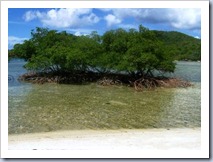
Also walking back, we stopped to take pictures of the mangrove trees (below), which grow in the brackish or seawater. They have huge roots that are on top of the water and most likely extend down tens of feet.

After our Bubbly Pool visit, it was time to snorkel again. We headed to Sandy Spit, which proved to be terrible snorkeling. We had a bad omen within seconds of putting our heads in the water and spying a large, tuna-like fish swimming within a few feet of the shore. Not only was the current strong in the area, but the reef was only a few feet beneath the water. In this situation, you must keep your body perfectly horizontal and your face in the water to avoid hitting any coral and possibly damaging it or yourself. I find it very claustrophobic to swim that close to sharp coral, especially, if you encounter a barracuda or other large, scary fish. Mangrove trees

Disappointed in the snorkeling, we dingy along the shore on the way back to the boat and stopped on a sandy beach that at one time had a small bar. To accommodate or more aptly take advantage of the thirty sailors, there are numerous bars throughout the islands, which range from anchored boats where you can tie up and a get a beer or shot of rum to fancy establishments with upholstered chairs, froufrou appetizers, live music, and drinks with umbrellas and multiple liquors like a Royal Navy Fog Cutter (Pusser’s Rum, gin, lemon juice, orange juice, orgeat syrup, dash of Cointreau, and club soda) or Deep Six (Pusser’s Rum, lime juice, sugar syrup, and champagne). 

Pusser’s is a BVI institution. Throughout BVI, there are Pusser’s stores, restaurants, and most of all, bottles of rum. Founded in 1655, Pusser’s is the “father of navy rum” and the original grog that was issued to sailors of Great Britain‘s Royal Navy from 1655 through 1970. It’s hard to imagine that rum was the daily libation on pitching ships, where attentiveness is key to safe sailing.Sunset

The breath of a beach, where we stopped near Sandy Spit, had a small, beat-up boat on it, which had been modified to enable people to sit around the pilothouse and order a drink. The boat was now nothing more than debris rising above wealth of riffraff and trash the waves deposited – cans, bottles, shoes, swim fins, buckets, fishing nets, dishes, utensils, and other stuff that had fallen off boats, or more likely, washed into the ocean.

As far as we can tell, there is no recycling in BVI and no desire on the part of the residents to consistently use trashcans rather than gullies, parkways, bushes, and the beaches. 

On many of the island, roosters, chickens and goats roam free. I don’t know whether these animals are eventually eaten or domesticated livestock returning to nature. On the deserted beach, near the dilapidated boat-bar, Rich found jaw bones from a small goat. Its teeth were blackened. I suspect that it had been barbequed in a fire pit we spotted on the beach. Self portrait_getting darker

Yes, I took one of the bones, which I cleaned with bleach and a toothbrush when I got home. It’s next to the deer jaw bones I found in Texas.

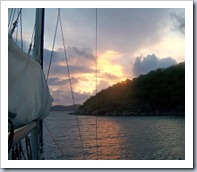
Above, you can see how dark we were by the fourth day… and slightly red. This stunning self-portrait was taken after we ate dinner and before we started to watch the sunset. Every evening, I smashed up some mint leaves with sugar and a squeeze of lime juice. I’d then divide the mixture into two glasses, add ice up to the top and fill almost to the top with club soda. Rich would then pour of splash of rum in my glasses and a finger or two into his. Now you know why he looks a bit wasted in the picture above!

Maximum Snorkeling and Sailing

This is a continuation of our British Virgin Island sailing adventure… Day three of our British Virgin Island sailing adventure started off poorly. Having burned my back to a crisp, I slept poorly. In addition, Rich and I were having sheet wars. I’d brought our own sheets since you never know what type of linens they’ll have on the boat. v-berth

While I tend to be very thorough in assessing what I need to pack, I missed an important detail. The pretty patterned percale sheets that I brought were for a twin bed (no wonder why I didn’t recall ever using them). The fitted sheet was long enough to fit over the cushions in the v-berth, but half as wide as necessary. I therefore put the top sheet on the bottom and rationalized that I could use the fitted sheet as a top sheet.

Obviously, this wasn’t the swiftest plan. The fitted sheet barely covered one of us and the elastic at the bottom made it even smaller. By our third night, Rich wised up and used one of the sheets that came with the boat to cover himself while I abused the fitted sheet, depending on my discomfort level. Check out the scramble of sheets and pillows in the v-berth above. Below shows the v-berth at the very front or forward of the boat.Forward cabin 

Keep in mind we both ended up getting nasty sunburns, which made it hellish to sleep. And above the v-berth was a hatch that we opened and closed throughout the night, depending on whether we were hot or cold. Rich tended to close it; I’d inevitably open. Add that it rained on-and-off many nights, making it imperative to quickly get up from a sound sleep and race around the boat closing windows and hatches. Multiple these activities by territorial wars over the four pillows and four sheets and the reality that Rich’s 6-foot, 3-inch body only fit diagonally in the v-berth!

Yes, it would make anyone crabby in the morning.

The morning of our third day, I was especially crabby because of the heavy winds and pelting rain during the night. Because we were both miserable, we got up with the sun, started the engine and were to George Dog by 6 a.m. The good news was that we hadn’t pay for the mooring ball because no one came around the night before to collect the money! 

George Dog is one of four canine-named islands, which includes West Dog, Great Dog, George Dog, and two bitty islands called Seal Dogs. The islands were named by sailors who mistook the barking noises made by Caribbean Monk Seals for that of dogs. They then discovered the seals were quite tasty and in a few decades ate them to extinction.Stern berth

After arriving at George Dog, we dried out the boat (many of the hatches and windows were open during the stormy night), had some cereal and milk, then pulled on our snorkel gear (which we stored in the back cabin along with all of our clothes, bottled water, shells, books, and electronic gear). I quickly forget that I was tired and cranky. The variety of fish, coral, filtered sunlight, and calmness of the water was unsurpassed.

After snorkeling around both sides of the reef, we tossed our gear into the boat, climbed into the dinghy and motored to a deserted beach on the opposite end of the island (below). I was enthralled with the sand near the water; it was composed entirely of seed-sized pieces of shells and rocks. I sat on the beach, completely absorbed in sifting through the sand, picking out tiny unbroken shells and interesting bits of coral. I then filled a baggy full of the sand, which I now have in a pretty glass vase. Gathering shells

Twenty feet or so from the shore, the finely crushed shells and rocks became a strip of small BB-sized pebbles. Past the pebbles was fine sand with larger rounded stones, chunks of coral, and jagged rocks from the cliffs and underwater reefs.

While I was focused on the composition the beach, Rich climbed on the rocky cliffs and returned with a couple of pieces of interesting coral.

As we headed for the dinghy, a small motor boat pulled up and deposited several people on the beach. By the reef, where we’d snorkeled less than an hour earlier, all of the mooring balls were taken. It was definitely to our advantage to get up early and race to the prime snorkeling spots. Dog Island

As we trimmed the sails, the sky darkened and the fluffy white clouds turned gray and heavy. By the time we reached Marina Cay we saw cracks of lightening and a few drops of rain started to fall. Nevertheless, because we planned on getting gas and water at the marina and also pick up a mooring ball, we had no choice, but to wait in the drizzle until the fuel dock was clear. As we approached the docks, the sky opened up and the rain pelted down.

Happily, the attendant ran out from the office, and helped us tie up to the dock (below). He was from Jamaica and wasn’t thrilled with B.V.I, which he found very hot and dry. From a distance, the islands look green, but as you closer, you can see much of the landscape is rocky with drought-tolerant trees and scraggily bushes, sedum, and cactus. Depending on the location, however some parts of B.V.I. are more green than others, owing to them receiving more rain and less afternoon sun. Eftihia at Marina Cay_stormy day

Jamaica, as the attendant at the fuel dock explained, has many springs and the flora is thick and lush. He told of a village where everyone drowned because during the night a spring rose up and submerged the village under many feet of water. The area is now a large lake!

At the far end of the fuel dock was an old fashioned red telephone booth from England. A camera, mounted across from the telephone booth, snaps a picture every fifteen seconds. If you stand in front of the booth, your picture will be captured. Later, you can go onto the Pusser’s Rum site and download your picture. You can also call friends and family on cell phone and have them log onto the site and watch you live.

I stood in front of the booth numerous times while we were on the fuel dock and later that day when we took our dinghy to Marina Cay. The first few images turned out horrible because of the rain and water drops on the camera lens. Here’s the best image of Rich and I. Pusser's Picture

Even though it was early in the day, after getting drenched at the fuel dock, we happily grabbed a mooring ball. Because of the bad weather, the marina was very crowded. After a quick lunch and dry clothes, we took the dinghy to the fuel dock to catch a commuter boat over to the Trellis Bay, on the east side of Tortola.

I’d been delighted with this tourist destination when we visited BVI seven years ago. The day we went, however, the pocked dirt roads and walkways were muddy. And the accumulation of trash, a mangy black kitten, and abandoned and tossed-together buildings overshadowed its charm and artist colony allure.

My attitude of Trellis Bay had been tainted even before we arrived. The commuter boat was actually a small ferry for the workers at the Pusser’s Marina Cay resort – islanders — who like the many natives we’d encountered in the past few days, have a love-hate relationship with tourists. We bring money into their communities and generated jobs, but our standards-of-living and our apparent unlimited dollars (or Euros) for food, drink, and entertainment, probably stings when they’re barely getting by on low-wage medial jobs. Trellis Bay

We tried to strike up a conversation with two of the women who had knife bags. They acknowledged that they were chefs and commented that they’d never leave their knives at work. It was obviously, however, that they weren’t interested in talking with us.

When we got to Trellis Bay, they disembarked and hopped into waiting cars. One man, who appeared to be associated with a diving school, had his own car and we could hear him offering to take another worker to a location on the island. Hitching a ride is a common means of transportation on an island with few cars and expensive gasoline. Man in the water

In spite of the disarray of Trellis Bay, the main attraction, Aragorn’s Studio, had thrived and was now triple in size. It offers everything from fabulous ceramics to woven baskets, wooden carvings, traditional reversible dolls, jewelry, clothing, and purses made from gourds. Many of the pieces would have been welcome in our collections, but Rich reminded me that we already have “so much stuff.”

The artist, Aragorn Dick-Read, makes huge metal structures, which during the full moon he fills with firewood and sets afire. The pieces are quite ornate and scattered around the studio. A large sculpture of a person stands watch over the studio, several feet out in the water (above). Trellis Bay trash

After a short time at Trellis Bay, we head to the dock to wait for the boat back to Marina Cay. It gave me plenty of time to shoot pictures of the accumulation of trash in the area. It’s astonishing that everywhere you turn in BVI there is junk. People dump their stuff everywhere… into fresh water creeks that run along the side of the roads to the beaches, streets, areas under construction (like openings in docks for utilities), under picturesque trees… in the water.

Towards the end of our trip, Rich and I took our dingy to a rugged beach across the water from Tortolla, the main island. Washed on shore was shoes, packaging, clothing, household good… and a medium-sized, white plastic bowl, which happened to complement the set of bowls on our boat.

Trash bin on dock

The water taxi back to Marina Cay was crowded with workers going over to the resort, including a startlingly handsome man of India descent with pierced ears and several metal bangles on his wrist. The mixture of people in BVI now includes people from other nationalities, whose influence is furthering adding to the diversity of the island. Our last night in BVI, we ate at the Drake Point restaurant at the Fort Burt Hotel. I had a tasty curry with mango chutney, and other Indian condiments.

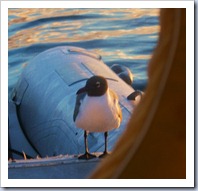
The picture below are some of the seagulls that we would feed every night from the back of our boat. They’re smaller than the seagulls you see in the Pacific Northwest and bright, bright white with jet black heads, and soft blue gray feathers on their wings. They are very beautiful and entertaining. They had no hesitations about riding on our dingy when we were under sail or hovering around us as we ate dinner topside.

Seagulls

Getting into the Swing of the Caribbean

Thursday was our first full day of sailing and an opportunity for Rooster Rich to rise with the sun, start up the motor and pull up lines before anyone else. He headed straight for The Baths on Virgin Gorda (below). This was one of our favorite places the last time we visited and a favorite with tourist, coming by sea or land. By the time we arrived, many of the mooring balls were already taken, so we opted for one that was opposite Devil’s Bay, a pleasant sandy beach with a roped off area for swimming. Baths from the water

Because of the rough water and reefs around the area, you can’t take your dingy ashore. There’s a mooring line that you can tie your dingy to and then swim the rest of the way. I don’t like this approach because even if you’re a great swimmer, the turbulent waves near the opening of The Baths can “wash” you ashore. Seven year ago, I landed on the beach, face first, rocks and sand down my bathing suit, and my dignity battered. In addition, it’s awkward and physically challenging to pull yourself up and back into the dingy after swimming back from The Baths.Find us at The Baths

The alternative was to swim from Efithia to Devil’s Bay, a lengthy and somewhat strenuous swim until you get close to shore where the tepid water gently kisses the sand (Can you see us in the picture to the left?). Rich had a dry bag in which we placed our camera, glasses, and other things we wanted to keep dry. As I had done the day before, I slathered sun block on my legs, arms, face, and chest. In the excitement, however, of seeing The Baths, I neglected to have Rich put sun block on my back. Within a few hours, my back was so badly sizzled that for the rest of the trip, I worse a sleeveless shirt, even when I snorkeled. Rock towers at The Baths

Rich, claiming that he’d never burned before, and therefore opted not to put on sun block. By day three, however, he wised up. By then, his back, legs, arms, and shoulders were well done and rather than slightly pink in the middle, they were red!

A short trail, south of Devil’s Bay, lead to another beach. As we approached, we could see a handful of small cairns or towers of rocks and coral that people had erected to mark the pathways or add to the landscape (above). As we turned the corner, I gasped. The beach was littered with dozens of cairns. It was very spiritual and picturesque. Before we left, I recommended Rich build a tower out of coral. The result is a bit phallic (below).

Several days later, I built a more respectful cairn at Bubbly Pool by Manchioneel Bay. Close up of Rich's tower

With the sun beating down on us, we headed to The Baths, which consists of gigantic boulders, the size of small houses, several stories in height and width, thoughtlessly tossed onto the beach, forming narrow passages and small pools of seawater. You amble through the boulder on narrow sandy paths and wooden steps. Using a rope, secured with heavy metal rings to a rock wall, we gingerly walked down a steep, slippery boulder into the grotto. At the bottom was a green pool of water that gently lapped at your ankles.

You can see me below, hanging onto the rope and leaning across one of the wooden stairs. In the lower picture, I’m standing on a house-sized rock.  Hang onto a rope at The Baths

After The Baths, we swam back to the boat, pulled up lines and headed to Great Dog, one in a series of small canine-named islands that have numerous National Park Trust Buoys for tying up and spending a few hours snorkeling or diving. Sailor, who heard barking when they anchored near these islands, named them Dog Islands. However, the barking they heard were from Caribbean Monk Seals. The seals also proved to be quite tasty and are now extinct. 

Surrounding the rugged coastlines of the Dog Islands are reefs that are teeming with tropical fish and many varieties of corals. Even though the currents were hefty, we snorkeled twice, going a different direction each time.Ladder at The Baths

Snorkeled-out and shriveled up from being in the water several hours, we headed for Gorda Sound and the bay by the Brias Creek Resort. The cheapest room at this very upscale resort is $585 in the summer (hot months) and from $810 to $1,710 during the winter. You need to make reservations for dinner, a four-course prix fixe for $75 per person plus 17% gratuity. If requested, the resort’s powerboat will pick you up at your sailboat or yacht then whisk you to the resort’s restaurant for lunch or dinner. After 5:30 p.m., they request “gentlemen wear trousers and a collared shirt” and “ladies wear suitable resort attire.” 

You can also reach the resort by dinghy; but if you’re dressed for dinner, you might look a bit disheveled when you arrive. The Baths_4

Having left our snazzy clothes at home, Rich and I settled for a humble, but tasty dinner of chicken kabobs (chicken, canned pineapple, bell peppers, and red onions) and potato bundles (sliced potatoes, onions, garlic, fresh basil, zucchini, olive oil, and Caribbean Spice wrapped in foil and placed on the barbeque). Afterwards, we piled into the dingy and headed to the resort.

In the water, on either side of the walkway from the Brias Creek Marina to the resort, are blue lights that give the water an eerie glow and attract swarms of two to three foot long barracudas. We saw a handful of these fish when snorkeling; they can attack and bite humans and are attracted to shiny objects like Rich’s and my wedding rings! Land crabs

The only part of the Brias Creek Resort that is open to non-guests is the bar and restaurant; nevertheless, Rich and I wanted to explore. While walking through a grove of trees, with flashlights in hand, we spotted numerous large holes on the ground with light orange crabs scampering in-and-out. This sighting was unusually because we were hundreds of yards from the water. I always thought that crabs live right next to the water.

We saw the same type of crabs near the airport on Tortola (above). Once again, they were far from the ocean. Although, a small fresh water creek flowed nearby.

When I edited this article, I typed “land crab” into Bing and amazingly, “land crab” is the common name for Cardisoma guanhumi, the crabs that we saw. There are several varies of these crabs in the Caribbean. When not turned into crab and rice dishes, they live in low-lying areas near mangrove swamps, salt ponds, wetlands, and marshes inside holes or burrows that go down on an angle to a larger living area where the crabs store food for winter dry spells. Julie and Rich at The Baths

Part of their burrows usually extends below the water line, creating alternative openings to the surface. Typically, they only venture out at night or when it’s raining to search of tasty morsels, which includes plants, dead things, and garbage.

Here’s a picture of Rich and I at The Baths. Our skin is still pale…

The Only Thing Not Laid Back is Their Driving

Sailing_day 1The flight from Seattle to Dallas was about 3.5 hours. I’ve always enjoyed this airport because it has many shops to see, in while waiting for your flight. It also has a circular maze of glass walls that you can meander through. Every few feet is a glass disc set in the floor. As you walk over a disc, a musical tone sounds. If you walk quickly, taking varying routes through the maze, you can create a tune. It’s very spiritual and serene inside the maze.
Before I could play in the maze, we grabbed a quick bite – bagel and cream cheese for me and pulled pork sandwich for Rich. We then boarded a four-hour flight to San Juan, Puerto Rico. Squished like sardines and limited to talking to each other and reading, Rich and I dozed for some of the flight and were happy to see twinkling lights after several hours of flying over the ocean.

From high above, Puerto Rico appears to be a hodge-podge of houses, buildings, and industrial sites. There are no tidy tracts of houses and tree-lined neighborhoods. Puerto Rico may be a U.S. territory, but it doesn’t appear to have evolved from being a second world country with a per capita income of less than $20,000 per year.

Road Town The small island is home to around four million people. In recent years, it’s become the permanent home of over 100,000 legal residents who immigrated from Spain, Argentina, Cuba, Dominican Republic, Colombia and Venezuela. In spite of the island being shoulder-to-shoulder people, both Rich and I would love to spend a day or two exploring the island by car or sailboat.

After a short lay-over with just enough time to buy an overpriced, dry submarine roll with two slices of rubbery American cheese, and greenish non-descript meat (it was disguised as a sandwich) we boarded a small plane for the final hop to Tortola, the largest of the British Virgin Islands.

We landed around 8:30 and spent an hour or so going through customs and waiting for our luggage to arrive. The plane was full, including a couple and their parents who were going to get married the next day. The rest of the people were either residents or heading for resorts or charter companies.

We were directed to a taxi van with another couple who were going to a resort at the far end of Tortola. They chattered about needing a drink, which is good advice for the faint of heart for the taxi driver immediately accelerated to forty or so miles per hour, even though the speed limit was considerably lower on the narrow, unlit, two-lane road. Although BVI drivers are supposed to drive on the left-hand side of the road, they continually cross the line, playing a constant game of chicken to see who will flitch first as they scramble around corners and cut each other off at intersections and wide sections in the roads. Bobby's

As I wrote seven years ago, it’s Disneyland’s Mr. Toad’s Wild Ride with taxis, cars, vans, small trucks, and motorcycles racing each other on narrow roads, lined with parked cars and pedestrians who don’t have the protection of formal sidewalks. It is a recipe for disaster. Sure enough, we read in one of the papers that a 22-year old girl was struck and killed by a speeding car several weeks earlier.

We arrived at the Conch Charter Marina in Road Town lickety-split and unloaded our two huge army duffle bags, Rich’s backpack, a sports bag of sailing equipment, my Eddie Bauer tote full of magazines, foods, and necessities, and finally my beloved netbook, Sputnik, on which I documented much of this trip, and Rich nightly downloaded information from his GPS and programmed way points for the following day’s sailing route.

We were pleasantly surprised by Eftihia, the 33.2 foot Beneteau sailboat we chartered. It has a large v-berth, white vinyl seats (better than upholstery when you’re wearing bathing suits most of the time), and a spacious kitchen with a large refrigerator.

Because we’d provisioned (i.e. ordered food, water, drinks, and ice) two weeks earlier, there was no need to rush to the big supermarket in town, Bobby’s (right), to buy what we needed for nine days of sailing. While there are small markets at various marinas, you never know what you’ll find and what’ll cost. Therefore, the best approach is to get what you need before you leave Road Town. 

In spite of having gotten up at 3:30 a.m. and hardly slept during the eighteen or so hours we’d been traveling, we were fully awake – especially since BVI iWalking back from Bobby'ss on east coast time and our west coast bodies were telling us it was only 7:30 p.m. After making up the v-berth with the linens we’d brought and stashing our clothing and gear in the boat, we grabbed three canvas grocery bags and walked a mile or so to Bobby’s.

Because the town has grown up considerably since we visited seven years ago, it took us a while to find the store, mainly because it doesn’t have a prominent sign and looks like a warehouse. Fortunately, it closed at midnight.

We primarily needed to buy fresh produce and fruit along with mint leaves, limes, and club soda to make mojitos using the bottle of rum the charter company had left on the boat.

Anything fresh in the BVI is very expensive and in limited quantities. We opted for three potatoes, two yellow onions, one red onion, a clove of garlic, a bag of lettuce, one mango, one bell pepper, three carrots, four locally grown cucumber pickles, two limes, one lemon, four cobs of frozen corn, two litters of club soda, dish soap, two cans of soda (to drink on the way back), and a bag of ice. The bill was $43. Rich's All-Stars

Happily, our three bags of groceries were much lighter than the half dozen bags of food and twenty pounds of ice we’d purchased seven years earlier when we opted not to provision. At the time, we barely staggered out of Bobby’s and across the street to the taxi stand.

This trip, we leisurely walk back to the marina. Still wired after putting away the food and thoroughly unpacking and putting away our clothes, sailing gear and the little bit of food we brought, we took a shower at the marina’s facility, We then stayed up until around 2 a.m. (11 p.m. Seattle time) talking and admiring the nearly full moon from the cockpit.

The next morning, as expected, Rich was up at the crack of dawn and dragged me out of bed for another trip to Bobby’s for ground pepper (Rich puts it on everything), a roll of paper towels, and a roll of toilet paper… it’s better to be safe than sorry. Above is Rich in his spank’n new, brown All-Stars, holding a bag from Bobby’s.

We ate the bagels that we’d brought and chatted with the man in the boat next to ours as we waited for the rest of our food, cans of Dr Pepper (Rich’s) and club soda (mine), bottled water, and ice to be delivered. It was then time to start the laborious process of going over the ins-and-outs of the boat with the charter company, and pay for insurance, park and cruising permits, and a hat with the charter company’s logo.

Finally, at around, 11:30 a.m. we hit the sea. We sailed for nearly three hours before reaching Cooper Island. By then, we were both exhausted fromJulie swimming at Cooper Island jetlag, the heat, stress of learning the particulars of the boat, and physical exertion of running back-and-forth from the boat to the charter company office, and up-and-down from the cockpit to the galley of the boat to get everything ready and checked out!

We easily grabbed a mooring ball at Cooper Island. Two minutes later, I flung off my clothes, pulled on a bathing suit and jumped into the astonishingly clear, warm, and aquamarine water (below is me on my back). It was heavenly. Rich joined me a little while later and I coerced him into swimming ashore. Most people, with their wits about them, take a dingy. Even though the shore looked close, it was a hefty swim.

Once ashore, we walked a bit, checking out the beach bar and restaurant that is associated with the Cooper Island Beach Club, and then swam gasped back to the boat. As if we weren’t already fully spent, we hopped in the dingy and motored over to a supposedly good snorkeling area.

It was the first time either one of us had donned fins, snorkels and masks in seven years. Rich was an old pro. I hyperventilated, gagged on sea water, fidgeted with my mask, and got very frustrated. Exacerbated, we returned to dingy then motored to the beach to pay for the use of the mooring ball ($25 per night).

Even though the lounge chairs on the beach are for resort guests, we decided to use two of them since there was hardly anyone left on the beach. We both instantly conked out under the shade of several palm trees.

Rested, we returned to the boat to cook dinner and prepare foods for the rest of the week – tuna salad (two cans of white tuna, lemon juice, slivers of lemon peel, and thinly chopped bell pepper), egg salad (eggs, chopped pickles and bell peppers, mayonnaise), and hummus (mashed canned garbanzo beans, olive oil, and Caribbean spice mix) for sandwiches. Our dinner was less dramatic, tortellini (brought from home) with olive oil and Caribbean spice mix, canned green beans (awful), and Jelly Bellys.

The end of our first day also marked sunburn phase I. I had liberally coated my legs, arms, face, and neck with Bullfrog sunscreen, which worked as expected to protect me from sunburn. I had neglected, however, to have Rich put sunscreen on my back. The hour of so swimming and snorkeling had singed my back.   Conch Marina

Putting a Face to a Soldier

(This article was written several weeks ago on a bobbing boat. It’s particularly apropos for Memorial Day)

The first leg of our British Virgin Island (BVI) sailing adventure started at 6 a.m. at the SeaTac Airport. Because we’d gotten up a 3:30 a.m. all I wanted to do was sleep. Happily, Rich and I were seated in a row with just two seats across. There would be no third person to see me snooze with my mouth wide open and head bobbing from side-to-side as the plane pitched.

Before all of the passengers had been seated, the man across the aisle from us struck up a conversation. He was lamenting the ridiculous charge of $8 for a blanket. He commented that he was “willing to pay two smiles, but not $8.” Then again, with airlines charging for checked luggage, snacks, and in some instances, use of the bathroom, every creature comfort, even a blanket, becomes fair game for a tacking on a fee.

The man, whose name we later learned was Nick, was wearing nondescript white shorts, a tee shirt, white socks, canvas shoes, and a baseball hat. He was eager to talk and was perpetually fidgeting, rubbing his nose, adjusting his hat, scratching his leg, and putting Chapstick on his lips. In spite of the early hour, he was wide-awake and eager to strike up a conversation. He was moving from Fort Lewis, an hour south of Seattle, to the Brooke Army Medical Center outside San Antonio, to be closer to his family. He let slipped that he had been in Afghanistan. My ears perked up.

Not wanting to miss details of his deployment, I fought the urge to sleep and listened to him recount his recent trip, snowboarding at Snoqualmie in eastern Washington. Rich, having been a snowboard instructor for six years, was delighted to talk shop about boards, snow conditions, and other tedious details on how to skim down a hill on a narrow board with your feet restrained in heavy boots.

I continued reading a TIME magazine. Ironically, the lead article was on a captain and his company’s attempts to reopen a school in Afghanistan. Sensing a break in the conversation, I handed the magazine to Rich, with a page open to a map of Afghanistan, and asked that he have Nick point out where he deployed. He was east of Kandahar in an area where the roads where lined with pomegranate trees and an occasional vegetable garden and trees with apple so thickly skinned that he couldn’t abide eating them.

From what we could gather, Nick joined the Army in 2007, after the construction business collapsed in Florida and his plans to travel abroad with friends fell through. He ended up leading a team that patrolled an area crawling with the insurgence. He spoke of the camaraderie and the extraordinary experience of training then closely bonding with members of his squadron.

One fateful morning, however, an improvised explosive device (IED) exploded during his patrol, knocking him unconscious for ten minutes. Later that afternoon, his team encountered another IED. Even though Nick appeared not be injured, the force of the IEDs damaged his equilibrium. His speech, memory, and balance were severely impacted.

Just as a baby is harmed when shaken too hard, an explosion or sharp jolt can cause ones brain to knock against the skull, causing traumatic brain injury (TBI). It’s estimated that two-thirds of all soldiers wounded in Iraq suffer from TBI. The rocket propelled grenades, mortars, and other explosive devices commonly used in Iraq create concussive shock blasts that damage the brain.

Even though Nick enjoyed living in Washington, he was excited about being with his family in Texas. He was hopeful his continual headaches would be alleviated. He explained how they can be completely debilitating, making it impossible for him to do anything more than wish them away. Several times during our conversation, he reached into his backpack for a prescription bottle and gulped down a pill.

It was heartbreaking to listen to him occasionally struggle to find the right word, especially after he explained that he loves to read and used to have a rich vocabulary. His constant fidgeting confirmed the damage that’d been done to his cerebral cortex. We gave him a card with our contact information and asked that he jot down on another card his contact information. He struggled to write his email address, clutching the pen and straining to keep his hand and arm steady.

We unfortunately lost his contact information during our sailing adventure. It would have been nice to have kept in touch. Or maybe not.

Nick put a face on the horrors of the Iraq and Afghanistan wars. He joined the Army on a whim when his plans to travel with friends fell through. In the end, he got his wish, traveling to a hellish country with men who became his closest friends, training, patrolling, and forming a tight unit to protect each other.

Then twice, on a fateful day, the normalcy of his life ended. We’ll never know the outcome of his rehabilitation or whether he moves forward with his life, getting a job, marrying, and having kids. In spite of everything, not a bitter or angry word came from his mouth. He was joyful and determined to grab every opportunity that came his way.

This Memorial Day, Nick is the face we’ll recall when we think about the thousands of men and women who’ve paid a high price to defend America.