• About
  • scribbles
  • Tribute to Rose

Rajalary

~ The adventures of Richard and Julie Lary

Rajalary

Tag Archives: Richard Lary

Two-Day Island Staycation

06 Sunday Apr 2014

Posted by rajalary in Food and drink, Travel

≈ 4 Comments

Tags

Brown Bear Baking, Deer Harbor, Doe Bay, Eastsound, Julie Lary, Lopez Island, Orcas Island, rajalary, Richard Lary, Rosario

Several years ago, Rich celebrated my birthday by planning an elaborate surprise staycation where he revealed the details of what we’d be doing at the last minute, including spending the night at the Waterfront Marriot, and enjoying a Sunday brunch at the top of the Space Needle.

This year, he decided to do the same, and once again, he refused to reveal the details until the last minute. On Saturday, before Rich left to show a potential client a home, he told me to pack outdoor gear and my hiking boots. Although, after some consideration, he revised hiking books to Keens.

With our bags packed, cats and birds feed, house secured, and bellies full from homemade pizza, we headed to our Mount Vernon home, where my mother lives. Every week, we do her grocery shopping, gather the trash and recycling (we don’t have garbage pick-up in Mount Vernon so we have to cart it back to Kirkland), restock supplies, cook (i.e. chocolate pudding, chopped liver, chicken soup, etc.) and other household tasks that aren’t done by her caretakers.

After shopping, Rich thumbed through our Entertainment Book to find a place to eat. Unfortunately, most of the restaurants aren’t located in Mount Vernon or Burlington. With few options, I recommended Taco Bell. We’re never disappointed by cheap, but satisfying burritos, chicken tacos, and 99-cent cheese roll-ups.

That evening, we watched a flick on TV, and made sure everything was ready for the next morning, when the alarm went off at 5:30 a.m.

Off to Orcas

The first stop of our two-day staycation was McDonald’s. In early March, they had a newspaper insert with buy-one-get-one-free coupons. The day we received the insert, Rich raced down to a local apartment complex, and scrounged through their recycling bins, harvesting a stack of coupons. For the past month, we’ve been eating lots of McDonald’s food, principally iced coffees with vanilla flavoring and caramel Frappuccino’s.

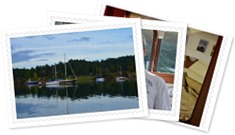
View Eastsound and Rosario

View Full Album

Plus, each time we used a coupon, we got a receipt, which invited us to take an online survey. When you take the survey, you’re given a code, which can be used for purchasing… wait for the drum roll… buy-one-get-one-free breakfast sandwich or cheeseburger.

On Saturday morning, armed with a code, we started the day with buy-one-get-one-free Egg McMuffins and coffees.

With food in our stomachs, we headed to Anacortes to take the ferry to Orcas Island. We had an enjoyable ride over, arriving around 9 a.m. Our first stop was Eastsound, which is the main town, smack dab in the middle of the wishbone-shaped island. I didn’t know what to expect, but was pleasantly surprised. It reminded me of an upscale seaside town on the east coast with cool inns and bed & breakfasts, art galleries, bookstores, quaint churches, and hip restaurants, serving organic, fresh-off-the-farm meals.

We wandered around, snapping pictures, and unwinding from the week. One of the highlights is the Emmanuel Episcopal Church, which is on the National Registry of Historic Place. It comprises several charming, whitewashed buildings, and has a large labyrinth, which I walked around, contemplating the day when we can move to our house in Coupeville, and become residents, and not just visitors to the islands.

With it lightly drizzling, we were on the lookout for a place to pull up a chair and sit until the weather cleared. We spotted Brown Bear Baking. As soon as we opened the door, we were struck by the aroma of fragrant breads, buttery pastries, and fresh-brewed coffee. Ignoring the display case of sweet and savory goodies, our eyes drifted to the round, crusty loaves of bread behind the counter. We chose the Kalamata olive and rosemary loaf, but the counter staff accidentally gave us the fig and apricot loaf. It was a nice surprise… so tasty that throughout our trip, we ripped off and ate big chunks. And we resolved to purchase another loaf the following morning before we left the island!

As a side note, I’m glad Brown Bear Baking is ferry-ride away because it would be hard to resist their unbelievable loaves of bread, beautiful quiches, mouth-watering croissants, gorgeous muffins, dreamy cakes, and other treats. It’s much easier to refrain from grocery-store baked goods!

Scoping out Resorts

Our first stop was Rosario Resort, which one of my favorite marinas, and where the Moran Mansion is located. It’s the crown jewel of the Puget Sound, and unlike most exclusive resorts, the public is welcome to wander the grounds, and walk through the main building, in this case, the mansion. Check out the photo gallery to see what makes the resort a memorable place to visit… and stay by boat or car.

And read about our adventure at Rosario four years ago.

Next, we headed to Olga, which is the town time must have forgotten. It consists of a closed general store, and tiny post office. Or maybe we blinked while driving through the town.

Actually, Olga is very much like most of Orcas Island, lightly populated with quaint shops, inns, and bed & breakfasts (like the Orcas Hotel), discreetly tucked among the trees, which hibernate during the winter months, and open up in the spring through the summer. You can also visit Olga Pottery, which has very pretty, Asian-influenced vases, pitches, cups, bowls, and plates.

Our next stop was Obstruction Pass, which Rich claims we’ve moored off of during one of our charter trips. From a boat, most of the coastline looks the same!

On the east side of the island is Doe Bay State Park, and Doe Bay Resort & Spa. The resort is a labor of love, and designed to accommodate visitors from those looking for a rustic experience of pitching a tent to those wanting a relaxing vacation, complete with spa treatments and yoga sessions.

Rich and I walked around and were in awe of the campsites with names like antelope, baer’s lair, coot corner, crow’s nest, eagle’s nest, grouse grove, heron, hollow log, hummingbird, minke, and warbler. Our favorite site was seagull’s bed, which is a small site, perched on a high-bank cliff, overlooking the water. Seal landing is a bit larger, but so close to the cliff-edge that there’s a small fence so you don’t walk over the edge if you sleepwalk.

We’ve never seen campsite, which are not only smartly designed to provide privacy, but feature dramatic views.

Nestled between the camp sites are yurts and dooms, some of which have queen-sized beds. Three of the yurts are located steps from the water like the beach yurt.

The hostel is an affordable, and no doubt warmer place to sleep in bad weather. Along with communal beds, there have several rooms for couples.

My choice would be one of their cabins with a kitchenette, bed, table and chairs, electricity, bathroom, and a heater!

Along with accommodations, the resort has a general store, spa (we saw a naked man climb into one of the hot tubs… eck!), restaurant, yoga studio, rentals (kayak, boat), and of course, strategically placed benches for viewing the scenery.

I’ve already planted a bug in Rich’s head that I want to stay at Doe Bay for my next birthday!

Cozy Room with Surprise Inside

Still nibbling on our bread, we headed west to Deer Harbor, where we checked in at the Deer Harbor Inn. Rich had purchased a Groupon to stay at the inn. Our room was in the Log Cabin Lodge, which has eight rooms, four on the top floor, and four on the bottom. They also have a couple of cabins.

Our second-story room was lovely with a large pine bed, and matching chairs, and table. On the fireplace was a picnic basket, much to our surprise, filled with food for the next morning, including English muffins, hard-boiled eggs, bowls of homemade granola, bananas, and packets of jelly. In the small refrigerator was milk, butter, orange juice, and bottles of water.

After putting our bags in our room, we drove down to Deer Harbor Marina. We were hoping they had the huge ice cream cones, which we usually order when we stay in the marina. However, it being late March and still chilly, they didn’t have ice cream. Instead, we found several chairs overlooking the marina, and continued nibbling on the Brown Bear Baking bread, pretzels, and drinks we’d purchased earlier in the day.
View Deer Harbor

View Full Album

A large black crow was also interested in what we were eating. He stood on top of the railing just a few feet from us. We marveled at the variety and color of his feathers. His head and cowl had tiny, soft, matte black feathers. His wings were covered with long iridescent black feather that glistened in the sun. The smaller feathers, covered the rest of his body, were deep, matte gray. Its legs and feet were covered with shiny black scales.

He (or she) was very elegant, and patient, waiting for us to place a few pieces of bread on the railing. He’d then pick them up, and fly down to a barrel where a pool of water had formed. After soaking the bread for a few moments, he’d gobble it down, and then fly to another bird, who was waiting with beak open for the regurgitated food.

When we switched to feeding the crow pretzels, he’d bury them in the planter boxes, no doubt for a future meals.

Once the crow flew off, we decided to take a walk around the marina. As we approached the end of a dock, a beautiful gray cat popped out of an open port hole on a small motorboat, dashed across the deck, leapt onto the dock, and raced towards us. It was a full-on cat attack!

She was eager to be pet, rolling over so we could scratch her tummy, and meowing her gratitude. She accompanied us to the boat where she lives. There was a cat bed in the pilot house where she must curl up at night.

Sticking to our Kool-Aide budget staycation, and not wanting a large meal after nibbling on bread all day, we opted to drive to a grocery store in Eastsound. We walked from one end of the store to the other until we settled on a bag of chicken tamales in green sauce (in corn husks), individual salads from the deli section, and a bag of Chips Ahoy chocolate chip cookies.

We returned to our room, and refrigerated the food, and then set out on foot for a walk around the area. We turned down the road to a residential area, and feed long blades of grass to two goats, guarding a boat repair facility, and then crossed over a narrow bridge to the other side of Deer Harbor.

At top of the hill was another marina. We thoroughly enjoy walking around marinas, looking at the boats, and strategizing how one day we hope to have a 35-foot Catalina sailboat, named Monkey About. “Come about” is a sailing term, and “Monkey” was the name of one of our cats, who passed away in Texas.

As we neared the end of one of the dock, we saw several birds perched on boats, squawking loudly. Less than 20 feet away, on a floating dock, was a bald eagle picking at a dead crab. Bald eagles are scavengers and have no hesitancy of taking food from other birds. Rich snapped quite a few picture before he flew away.

Back at the Deer Harbor Inn, Rich heated the tamales in the microwave in the common area, while I assembled the salads. While it might not seem like a fabulous dinner, we thoroughly enjoyed it in our cozy room, topped off with chocolate chip cookies.

Afterwards, we grabbed a couple of magazines, turned on the propane fireplace in the common area, and read for an hour or so. Sitting in front of a warm gas or propane is ten times better than a smoky, smelly traditional fireplace, which burns wood.

Warmed up, I recommended we hope in the hot tub. Rich was concerned because we forgot to bring our bathing suits, but I persisted, explaining everyone in the lodge had probably left for dinner, and most of the hot tub is obscured by the gazebo.

We took the minimum clothing with us, stripped down, hopped in the tub, and enjoyed the warmth and soothing bubbles, before jumping out, throwing on our clothes, and dashing back into the lodge. During that time, the only souls that saw us were some foraging rabbits.

Amazing Views with Each Turn

The next morning, we enjoyed a leisurely breakfast (the items in the basket left in our room), before going back to Brown Bear Baking for a loaf of bread to bring home. We then drove to Moran State Park. Opened in 1921, the park initially consisted of 2,700 acres donated by Robert Moran, a shipbuilder and former major of Seattle. A few years later, he donated another 1,000 acres. Today, the park is more than 5,200 acres with more than 38 miles of hiking trails from gentle forest loops to challenging ascents.
View Moran State Park

View Full Album

In the 1930’s the Civilian Conservation Corps (CCC), built trails, roads, bridges, and 21 buildings, including the Ellsworth Storey tower, atop Mount Constitution. For our jaunt, we chose the Mount Constitution Loop, which is 6.7 miles, rated “difficult.”

We parked by Mountain Lake, which is 917 feet in elevation. We then trudged up to the top of Mount Constitution, which is 2,409 feet in elevation. The first mile or so was heart-pumping hard. The next two miles was a steady, but tolerable uphill climb. It was worth getting to the top because even though the Ellsworth Storey tower doesn’t look impressive in picture, it’s four stories in height, and provides what is considered one of the top marine views in the nation.

Originally built as a fire lookout, the tower offers a 360◦ view of the San Juan archipelago, Vancouver Island, and the Cascade and Olympic Mountain ranges. Plus, the tower is superbly constructed out of sandstone with wrought iron railings, door hinges and knobs, and other details, forged and shaped by CCC blacksmiths. At the top of the tower is an enclosed room with beautiful paneling and a heavy wooden door with ornate handles and hinges. I’m was awestruck by the workmanship!

Our decent back down to Mountain Lake, nearly 4 miles, was quick. We then drove to Orcas Village to catch a 3:00 ferry to Lopez Island, where we’d have less than an hour “lay-over” until we could get on the ferry to Anacortes. We reasoned it would be fun to spend some time on Lopez rather than hang-out on Orcas for a “direct” ferry to Anacortes.

Our plan would have worked out if there hadn’t been a mishap with the second ferry. We ended up waiting in the ferry line on Lopez Island for nearly two hours… polishing off the rest of the fig and apricot bread, reading magazines, and trying to get a cell phone signal.
View Fun on Ferries

View Full Album

Nevertheless, with amazing weather, it was enjoyable hanging out on the island, people watching, and taking two ferries. And we got to Anacortes 5 minutes before the “direct” ferry from Orcas Island. As we drove way, we could see the “direct” ferry circling in the harbor, waiting for the ferry we’d arrived on to leave.

As we drove back to Mount Vernon to retrieve the groceries we’d purchased a few days earlier, we reflected on our wonderful staycation… and the opportunity to escape from work, household chores, gardening, caregiving, and the myriad of tasks that need to be done.

Plus, Tuesday and Wednesday evening, we enjoyed Brown Bear bread for dinner. I poached eggs in minced kale, parsley, spices, and wine. The eggs were then placed on two thick slices of bread, which had been drizzled with olive oil. Layers on top of the eggs was sliced tomatoes, lightly cooked asparagus, and cheese. I then cooked everything in a 400◦ oven for 15 minutes. The eggs were slightly soft, and made the dish magically when poked with a fork.
Tug Timing Around the Puget Sound

10 Thursday Oct 2013

Posted by rajalary in Sailing, Travel

≈ 2 Comments

Tags

Cypress Island, Julie Lary, rajalary, Ranger Tug, Rich Lary, Richard Lary, San Juan Sailing, San Juan Yatching, Shaw Island, Tug Time!

For the past six years, we’ve chartered a boat from San Juan Sailing/Yachting. This year, like the previous two years, we chartered Tug Time, a luxurious 29-foot Ranger Tug, with everything we could possibly want for the week. Familiar with the boat, we are able to thoroughly relax, not having to wonder how to use the instruments, light the stove and oven, flip the switches on the electrical panels, best way to grab a mooring ball or anchor, and myriad of other “things” one needs to know to go from point A to point B in a boat.

This trip, however, we were bogged down with worry.

In June, Rich was laid-off from IBM, less than two years before his retirement. Happily, he was given six months of severance and other benefits. Nevertheless, it hasn’t eased the challenge of getting another job. His focus at IBM was Linux device drivers for IBM servers, which is the opposite of what employers are seeking. Windows and software (versus hardware) development is the overwhelming focus in the Seattle area.

Meanwhile, I was working gangbusters as a freelancer on Microsoft short-term projects through June. With the start of Microsoft’s fiscal year in July, and announcement of re-organizations a few weeks later, the work dried up. And even though the agency I’d been contracting through kept saying they were going to be busy, no work came my way.

Adding to our stress, we’ve been juggling my mother’s care, listing for sale and then selling our Anacortes lot (yeah!!!), leasing our Coupeville house (we had three potential renters within a day!!), leasing my mother’s house in Sherwood, Oregon, refinancing Rich’s brother’s house to lower the payments (he’s quadriplegic and Rich oversees his finances), and keeping up our Kirkland (primary residence) and Mount Vernon (where my mother now lives) houses. I dream of the day when we have one house!

Shimmering Moon Over Cypress

Our last full day on Tug Time was a reflection of our present lives.

The night before, we had a magical evening anchored off Shaw Island. It was a quiet bay that we shared with several other boats, many of which probably belong to the residents of the island. As the sun started setting, I pulled out my binoculars, and watched a blue heron methodically walk on a floating dock, slowly lifting each leg, bending its knees backwards, and then carefully placing its foot a few inches forward, it’s long, graceful toe flexing, and then spreading out as he easing his weight from one foot to the other. The entire time, it surveyed the water, hoping to find an unsuspecting fish, which it could quickly snatch in its bill, and then swallow in a single gulp.

View Shaw Island

View Full Album

As the sun set, the ferries that chauffeured passengers and vehicles from island to island turn on their lights. In the dark of night, they look like sparkling fairylands gliding across the shimmering water. We never tire of watching them coming into view and then disappearing. But as the hour grows later, and the day’s activities catch up with us, fatigue takes over and we crawl between the flannel sheets, several warm comforters on top, falling asleep as Tug Time gently rocks in the water, and slowly swings as the wind changes direction.

After our customary breakfast of coffee, frosted mini wheat, milk, and a piece of fruit, we pulled up anchor, and headed to Cypress Island. We’ve been to Cypress Island many times to gaze at the view from Eagles Cliff. Two years ago, when we were admiring the panorama, Rich looked down at this foot, and saw an old coin. When he dusted it off, he realized it was an Indian head penny from 1890.

With clear skies and light breezes, our drive over to Cypress Island was uneventful until an alarm sounded. It took us several minutes to figure out it was the carbon monoxide detectors. The LEDs on the alarms indicted there was no power.

Rich checked the voltage of all of the batteries and realized the starter engine battery was dead. Having reset the inverter switch several time throughout our recent trip, Rich went to the back of the boat and noticed one of the four battery switches was off, so he turned it on. The issue was instantly solved. However, to make sure he was supposed to turn on this switch, Rich contacted San Juan Yachting. They concurred he’d taken the correct action.

We continued to Cypress Island where we easily grabbed and tied up to a mooring ball. We changed into shorts, and then took our dingy ashore. It was low tide, which holds the promises of finding interesting treasures along the waterline. A quick walk up and down the pebbly shore yielded several pieces of rusty metal, including a rat tail file (which I thought was a metal chopstick until Rich pointed out the threading), railroad tie, and several large nails.

Having arrived at Cypress before noon, we had lots of time to walk around the island and see places we hadn’t been before. Although, to be brutally honest, there isn’t a heck of a lot to see besides the Puget Sound and boats zipping between the islands.

View Cypress Island

View Full Album

Less than 50 people live on the island, which is around 5,500 acres in size. The only people I’ve ever seen are boaters and kayakers.

Having our fill of evergreen trees and picking pebbles off the beach, we returned to Tug Time for our customary afternoon cheese, salmon spread, crackers, white wine, reading or day dreaming. With several other boats in the cove, Rich couldn’t resist breaking out the binoculars to spy on them and comment on their mooring techniques.

With our trip nearing an end, it was hard not to lament that was probably our last charter on Tug Time. In the past, we’d immediately reserve the boat for the following year, but with Rich and I both searching for jobs, we’ll have to “wait and see.”

Adding to our angst is the responsibility of caring for family, wondering what we’re going to do about health insurance if we can’t secure jobs in the coming months, and the uncertainty of the economy with the lunacy of the Republicans.

Nevertheless, we were determined to enjoy our last few hours on the boat… assembling giant burritos from the last of our lettuce, tomatoes, peppers, refried beans, spicy chicken, and roasted green salsa. We then read until dark, admiring the full moon glowing on the still water. It was one of those perfect evenings where everything aligns perfectly like a Photoshopped picture.

After saying good-bye to the full moon, we crawled into bed, and flipped on the TV/DVD player in the forward cabin. We surfed the TV channels from Canada, and then watched the movie Lincoln with Daniel Day Lewis. We’d brought a stack of DVDs to watch on the boat when we weren’t reading. Most of the movies we brought weren’t memorable except The Queen with Helen Mirren. We’d had this DVD for weeks, but put off watching it, thinking it would be boring. However, it proved to be fast-moving, engaging, and well-acted. We enjoyed it more than Lincoln.

Before we turned off the lights, Rich started up the engine to make sure everything was charged.

Battery that Couldn’t

We planned on getting up at 6 a.m. the next morning to pack, and motor back to Bellingham before the rush of other charter guests at the fuel and pump-out docks. However, Rich couldn’t get the boat started! The battery for the starter engine was dead.

He located a pair of jumper cable, and thought he could use the charge from another battery to jump the starter battery, but no luck. The switch he’d turned on the day before connected all of the batteries so overnight, they must have ALL discharged. It didn’t make much sense because the other batteries were all charged the day before, and it was only the starter battery that was dead when the carbon monoxide detectors went off.

The only option was to call San Juan Yachting and ask them to send a boat, which could give us a jump. Because they were concerned there was a major issue with the boat, and may have to tow it, they sent a 48-foot Grand Banks, which looked small on the water, but huge next to the 29-foot Tug Time.

Once the two boats were rafted (tied) together, they jumped the batteries. We started up the engine, and were ready to return to Bellingham. We followed the Grand Banks for a while, and then told them we were okay and they should go ahead.

Back in Bellingham, we got 63 gallons of diesel at the fuel dock. Over the course of our 7-day trip, we went over 158 nautical miles from Deception Pass off Anacortes and Whidbey Islands to Victoria and Sydney, British Columbia to Roche Harbor, Friday Harbor, Shaw Island, and several other Puget Sound islands.

Because we’d one most of the packing and cleaning of Tug Time while waiting to be rescued at Cypress Island it took us barely an hour to unload and clean the boat when we got back to Bellingham and San Juan Yachting.

Stay tuned for more highlights of our trip.

Bagpipes to Beaver Dams

07 Wednesday Aug 2013

Posted by rajalary in Entertainment, Travel

≈ Leave a comment

Tags

Bog Hoppers, canoeing, Concrete, Enumclaw, Julie Lary, Marblemount, Pacific NW Float Trips, rafting, rajalary, Richard Lary, Scottish Highland Games, Skagit River

On Friday, Rich and I drove to Marblemount, Washington, an hour east of Mount Vernon in the North Cascades. Barely 2.5 square miles in size with a population of around 250 people, the town is one of the many small towns that dot the highway, including Concrete, which derived its name from the merging of two towns where the Washington Portland Cement Company and Superior Portland Cement Company plants were located.

Our trip to Marblemount was to take a canoe trip down the Skagit River, which is the second longest river in Washington, starting in southwestern British Columbia, Canada, and snaking its way to the Puget Sound. Every few years, heavy rains create flood conditions for town along the river, including parts of Mount Vernon.

The upper Skagit River is controlled by the Ross, Diablo, and Gorge Dams, which are part of the Skagit River Hydroelectric Project. The river is not only an important spawning habit for five types of salmon, but is desirable for white water rafting, kayaking, and canoeing.

Remember the five types of salmon by holding up one of your hands. The thumb represents chum. The index finger can be used to poke yourself in the eye so it represents sockeye. The middle finger is king because it’s the longest or what you’d use to flip someone off to show you’re “king of the road.” The ring finger is silver, like a wedding band. And the pinkie finger represents pink salmon.

We started our trip, through Pacific NW Float Trips, by meeting our river guide, Joe, at a gas station in Marblemount. Several other groups were going out that day, including a flock of rowdy kids, wearing disposable rain ponchos, who were getting ready to white water raft. I was happy our group consisted of Joe, Rich, and myself. Less is more when it comes to water sports.

Glacier Gravel from Concrete to Picturesque Pond

With two aluminum canoes on top of Joe’s car, and hope that the rain, which followed us from Mount Vernon was done for the day, we headed to a series of ponds for the start of our day-long adventure. The ponds had originally been gravel pits, excavated to make concrete. So much gravel had been removed that when beavers created dams, water filled the pits and they became serene ponds, excellent habitats for spawning salmon and other wildlife.

We paddled around a pond, with Rich and I in one canoe, and Joe in the other. It was very pleasant, but a bit sedate for my taste. I prefer a bit more adventure. Having circled the pond, Joe recommended we park our canoes, and walk around to learn more about edible plants in the area.

Joe was a walking encyclopedia of what was edible, along with alternative uses for some of the plants. We nibbled on plantain, shepherd’s purse stinging nettle (after Joe showed Rich what to pick, and what to avoid), and thimbleberries (which I’ve always mistaken for salmon berries). We were also told the leaves of thimbleberries make excellent toilet paper!

After learning a bit about foraging, we headed back to Joe’s truck to pick up two more canoes for the next leg of our adventure. A river guide in Florida during the winter, and also a guide in Alaska, Joe’s housing is portable and temporary. When guiding on the Skagit River, he lives in a large teepee, with a fire brazier for warmth.

Beaver Dam Lead to Tippy Canoe

Our next stop was Illabot Creek, which feeds into the Skagit River. Happily, this time, portage of the canoes was a few hundred feet. Earlier, to reach the ponds, we had to carry the canoes about a quarter mile. While not overly heavy, they’re long and awkward to hold.

Illabot Creek is haven to salmon and eagles, and has been recognized by American Rivers and The Nature Conservancy for its importance in providing a crucial habitat for wild Chinook salmon, steelhead, bull trout, pink, Coho, and chum salmon. The large number of salmon in the creek also make it a popular hangout for bald eagles.

What I immediately appreciated was the abundance of ripe blackberries on the trail along the creek. I wasn’t as elated with the foot-long garter snake Joe plucked from the grass. While pretty, the snake was a little too big for me to comfortably touch. One day I will get over my fear of snakes. One day!

In the meanwhile, later that afternoon, I had no hesitancies about petting the Northern Alligator lizard, sunning himself (or herself) on a concrete barriers. Lizards are cool. Snakes are scary.

No sooner had Rich and I plunked our butts into our canoe, we had to get out to carry it over a small beaver dam. The water came up to the bottom of our calves and was quite cold. As the afternoon progressed, we steadily got wetter…

Several times, we had to get out of the canoe to pull it over a beaver dam. Because the water was low, it wasn’t an issue and it was super easy – at least for me – to get back into the front of the canoe. After navigating over the dam, we came to a picturesque area with many reeds, and ducks hiding out along the shores. You could see small fish in the water, along with a multitude of plant life.

Joe shared the difference between reeds, willows and grasses, and pointed out various wild life and plants. Later, while nibbling on snacks, we spotted a beaver swimming across the water.

It was enjoyable navigating in areas, which would be impossible by foot or a larger boat. The canoes glided over the shallow areas, and were easy to paddle in deeper water.

On the way back, we seemed to have more difficulty getting over the beaver dams with my having to wade further out into deeper water to pull the canoe over the dam, while Rich struggled to get a foothold. At one point, the water was to the top of my thighs!

On the second to last dam, I’d already gotten into the canoe. I looked back to see Rich getting into the back when suddenly the entire canoe tipped to the side, instantly filling with water. I turned around again to see Rich sitting on the floor of the canoe. He was evidentially standing in the canoe and rocking it slightly from side-to-side to try to scoot it forward. When he went to sit down, he didn’t realize he wasn’t near the seat.

Joe instructed us to get out of the canoe, walk it to shore, and then tip it over. By the time we got the canoe up righted, I was soak from mid-chest down. Fortunately, it was warm outside, and I had a change of clothes in the car.

After getting the canoes loaded back onto Joe’s truck, returning to our car, and then changing into dry clothes, we joined Joe at Que Car BBQ for a tasty late lunch. I thoroughly enjoyed my pulled pork sandwich, and Rich had their chopped brisket.

It was a fabulous unexpected day with Joe, who proved to be an informative, confident, good-humored river guide. We would recommend Pacific NW Float Trips for canoeing or white water rafting down the Skagit River or other eco-tours and trips they lead on the Nooksack and Wenatchee Rivers. In addition, they offer a trip through the Swinomish Channel through Deception Pass.

Going Scotch

The last Saturday in June, we went to the Annual Pacific Northwest Scottish Highland Games and Clan Gathering in Enumclaw, Washington, east of Tacoma. Rich is half Scotch, which is where he probably got his height and good-looks!

We’d bought our tickets months in advance because I love Scottish heritage, especially the clothing. The performers, and many people in the crowd look dapper and disciplined in their kilts, starched shirts, vests, neckties, stylish tam-o’-shanters, ghillie brogues (shoes with laces and tassels), hoses (socks), and sporrans (bag worn in front… codpiece for Scotsmen).

We arrived earlier and my first thought was “It’s so small. We’ll be bored after a few hours.”

My initial perceptions were wrong.

The first hour or so, we wandered around the many booths in the Celtic marketplace, and stopped to ask questions at a couple of the clan tents. Each tent represents a clan, such as Bruce, Campbell, Craig, Ferguson, Fraser, Gordon, Gregor, Macalister, Macbeth, etc. The tents display memorabilia about the clan, such as I noticed the Morrison tent featured a picture of Jim Morrison from The Doors, who is of English, Scottish, and Irish decent.

There wasn’t a Robertson (Donnachaidh) tent, which is Rich’s heritage. We did locate the tartan designs for Robertson, which Rich didn’t like because they don’t contain enough green. Although, you can probably choose any kilt nowadays without fear of being attacked by an opposing clan. The days of Scottish aggression are over!

Hurling Stones, Sheaves, Weights, and Logs

Our next stop was the athletic competition. These events were originally used by chieftains and kings to choose the best men for their retinue by testing their strength, endurance, and agility. Many of the events were based on based on commonplace activities. For instance, farmers or crofters used pitchforks to toss bundles of straw (sheaves) onto the roofs of cottages that needed to be re-thatched. Today, the sheaf toss consists of using a pitchfork to chuck a 20-pound, burlap bag of straw up, and over a cross bar.

The Scottish hammer event may have derived from farmers’ mauls used to drive in fence posts or blacksmiths’ hammer. The hammer used today is 16 pounds, swung around the head, and then released. Putting the stone, from which the Olympic shot put derived, continues to use a rounded stone, weighing 17 to 23 pounds. The latter is called a braemar stone. The stone we saw used was somewhat oblong, and definitely not perfected rounded like a shot put.

View Scottish Athletic Events

View Full Album

The most anticipated event is the caber toss, the rules for which have changed little since the fifteenth century. The event starts by standing upright a 16 to 20 foot tall log, weighing between 80 and 130 pounds. The competitor then grasps the bottom of the log, and walks forward or backwards a couple of steps before flipping it end-over-end, with the hope it lands in the twelve o’clock position. If it lands to the right, the score would be one o’clock or three o’clock it’s 45-degrees from where the bottom of the log was originally positioned. Falling to the left of twelve o’clock could get a score of 11:30 or less.

First, the ability to balance a log vertically is crazy. And then rapidly walking, and for some competitors, running, with the caber is unbelievable. And for many of the men we watched, flipping the caber over is extremely difficult. When the caber is correctly tossed, the crowd bursts out in cheers.

We spent a considerable amount of time watching men and women compete in the various events. We were most fascinated, however, by Kristy Scott, an elite woman competitor who is super buff, and easily flung weights, stones, and sheaves as if they were as light as feathers. She may have set a world record that day for weight for height, which consists of tossing a 28-pound weight over a cross bar.

Googling her, we discovered she’s a weight lifter. In July, she lifted over 500 pounds. Her tossing a 26-pound weight is probably like me lobbing a cherry at Rich.

Actually, all of the women competitors were tall, muscular, and incredibly strong. And the men made Rich look like a dwarf. They were huge. Tall, stout, and muscular. All of the competitors wore kilts with tee-shirts and athletic shoes. One couple, Todd and Lyman Asay, work dramatic kilts with flames insets. Both had flaming red hair with Lyman’s hair in a thick braid, which extended past her waist.

Bagpipes, Drums, Dogs, and Dancing

We didn’t want to miss the opening ceremonies so we headed over to the main field, where we watched several pipers perform for judges. The judging is quite stringent with the tuning of pipes and playing ability being judged. Four pipes need to be tuned, the chanter, which is the small pipe the player blows, and the three drone reeds, the wood shafts on the shoulder.

Playing ability focuses on fingering, along with ability to regulate blowing in the bag. The latter creates a steady tone, which complements the melody pattern of the chanter. The bag piper is considered one of the most difficult instruments to master.

The competitions included individual piping and drumming, drum competition with entire drum corps, and pipe bands, which consists of drummers and pipers. For the opening ceremonies, all of the bands line up and parade together onto the field. The beauty of the uniforms coupled with the steady drone of the bagpipes and rhythm of the three types of drums (snare, tenor, and bass) is very powerful.

Check out this video from the 2012 Scottish Drumming Championship. View as full screen, and watch the drummers twirl their sticks, and their exaggerated arm movements.

View Highland Games

View Full Album

After the opening ceremony, we wandered over to the barns to check out the Scottish Highland Cattle and other farm animals native to Scotland. In another areas, dogs that originated in Scotland were competing and showcasing their skills in herding, agility, barrel racing, and more. Represented were cairn terriers, Welsh corgis, golden retrievers, Shetland sheepdogs, Irish water spaniels, collies, Gordon setters, Irish setters, Scottish terriers, white terriers, and hounds.

My favorites are the terriers, collies, and shelties; all three I’ve previously owned. Rich liked the corgis.

Our next stop was to briefly watch the highland dance competition with children and adults dancing the Highland fling, Sean Truibhas, Flora MacDonald, Scottish Lilt, Full Tulloch, Pas de Basque, Sailor’s Hornpipe, Earl of Errol, and other traditional dances. The dance steps are very intricate and performed in groups so if someone is off a step, it’s very noticeable.

Of special interest to Rich was the displays of Scottish artisans and crafts from long ago, including carding and weaving wool, blacksmithing, and woodworking.

We also watched the group 1916, which melded punk rock music with traditional Celtic music, including bagpipes and whistles. They have a cool, infectious sound that makes you want to dance (or at least rock to the beat).

On another stage was the Bog Hoppers, a Seattle-based Celtic folk punk group. They were super fun to watch because of their hill-billy clothes, wacky lyrics, and fabulous strings, including banjo, mandolin, guitar, fiddle, and bass.

When we walked out the gates, nearly nine hours after we’d walked in, our spirits were refreshed. It had been a great day in a beautiful location, seeing weights and cabers tossed, hearing and watching performers, petting dogs, learning about Scottish heritage, and much more.

This Time I Didn’t Bounced Outta’ the Boat!

07 Sunday Jul 2013

Posted by rajalary in Entertainment, Travel

≈ Leave a comment

Tags

apples, Julie Lary, Leavenworth, rafting, rajalary, Richard Lary, River Recreation, Wenatchee River, white water rafting

Several months ago, Rich and I attended a fundraiser, where we won two silent auction packages. One was a white water rafting trip on the Wenatchee River in eastern Washington through River Recreation

With the weather expected to be in the 90’s over the weekend, I wasn’t looking forward to baking on a raft, with the sun reflecting off the water, further radiating my skin. Friday evening, we sifting through the bathroom cupboards, searching for the scarcely used tube of sun block. Finding none, we moseyed down to the local Safeway. While there, we stocked up on bottled water for the trip, and bought breakfast fixings.

After a hearty breakfast of eggs, sausage, and hash browns, which Rich cooked, we hit the road.

Our first stop was a roadside stand where we bought $2 worth of local Bing cherries. We hastily wiped them on our shirts and popped them into our mouths. They were sweet and juicy, no doubt, picked from the tree hour earlier.

The drive out to Monitor, Washington, where River Recreation is located, is punctuated with fruit stands, and acres of fruit trees, laden with apples, cherries, and pears. They’re in neat rows, spaced to accommodate pickers and large wooden crates.

Wenatchee, which is a little over 2 hours east of Everett, and near where we were going to raft is considered the “apple capital of the world,” with 170,000 acres of apple orchards, comprising the majority of the apples produced in Washington, Crops include deep red to light green apples, Braeburn to Cameo, Cripps Pink, Fuji, Gala, Gingergold, Golden Delicious, Granny Smith, Jonagold, Pink Lady, Rome, Red Delicious, and Winesap.

Each year, 10-12 billion apples are handpicked in Washington State. It’s the largest agricultural product grown in the state, and 60% of the apples eaten in the nation come from Washington. It’s not surprise that Treetop has a plant in Wenatchee, with around 150 employees, producing low moisture, chilled and frozen apple ingredients for the food industry. In addition, the Aplet and Cotlets factory is in the area, along with smaller enterprising producing fresh and alcoholic apple cider, and other apple products.

Further down the road, we came to Leavenworth, which is an over-the-top tourist town with nearly every building architected and painted—including the auto repair shop – to resemble a Bavarian village. Even the Best Western is called the Icicle Village and Starbucks has a German theme. It’s quite a few blocks of shops, restaurants, hotels, outdoor stages, and landscaped areas idyllically, sandwiched between dramatic mountain ranges, which like Leavenworth, is blanketed in snow during the winter. It has year-round festivals and events, and is a popular place all times of the year because it’s family-friendly, closing to skiing, rafting, and other outdoor activities.

I’m not delighted by anything German so the town is more obnoxious than delightful to me. Nevertheless, with time to spare before our rafting trip, we put $1.50 in the meter, and decided to walk around the outdoor art festival. Before we could start walking, however, I was recognized by someone I worked with when I was a contractor at Microsoft Kinect for Windows.

Small world because I’d only worked with her a short time! It was fun to catch up and learn what was happening in the group.

With our fill of Leavenworth for the year, we hit the road and headed to Monitor.

One of the tour guides, described Monitor as two houses, a pallet factory, and River Recreation, the rafting company. According to the 2000 census, 342 people live in the Monitor zip code. It definitely had a has-been feel with dusty streets, and run-down buildings and houses. River Recreation was super cool, and a had a fabulous vibe with numerous picnic tables under umbrellas, large painted school buses, a warehouse full of wet suits, half a dozen tents for the guides under a grove of trees, and several large BBQs, fired up, cooking lunch for the guests. Rich and Julie at River Recreation

River Recreation oversees guided tours twice a day. A group of rafters go out in the morning, and return around 1 p.m. for lunch. A second group is asked to arrive before 1 p.m. Following lunch, they hits the rapids. We were in the second group, which provided time to work up a healthy appetite. Fortunately, they served barbequed chicken legs, pepper beef, green solid, three-bean salad, tortilla chips, watermelon, and white bread with soft-spread margarine. No doubt, it was Costco-to-table, but sufficiently tasty and filling.

After lunch, there was a bad rush to get wetsuits and booties. It’s the first time I’ve worn a wetsuit, which is comfortable once you pull it on, but quite the chore to pull up… especially when rushed. We were each given a paddle and PFD (Personal Floatation Device), and then herded onto two large school buses. Fortunately, the 90+ degree weather hadn’t manifested. It was overcast and delightfully cool.

During lunch, we were joined by another couple, Kevin and Christine, who live on Whidbey Island. The probability of sitting next to someone who lives on Whidbey Island, during a rafting trip in remote Monitor, Washington, is close to zero. They are a delightful couple who shared interesting information about island life, computing on the ferry, and the challenges of getting a job, which is akin to one’s field. In Kevin’s case, he used to create and archive media for Disney in Los Angeles. He’s an expert is converting media to various formats for print, video, and other digital formats. Currently, he works at Nintendo.

We were hoping to be in a raft with them, but because I needed to take a pit stop when rafts were being assigned, we ended up on other raft with a Russian couple who live in Richmond, Washington, a hedge fund manager who works in Bellevue, and his associate, an Asian woman, who was visiting from Chicago. Our river guide, Brian, was from Bellingham, just north of the Canadian border.

As we drove to the drop-off site, the overcast skies, and distant lightning and thunder, turned into a hefty rain shower, which let up once we arrived… and then started up again a few minutes later. It was a torrential downpour. Fortunately, we were wearing wetsuits so it didn’t matter if we got wet.

There was a large group of rafters, from another company, in the water when we arrived so we not only had to wait for them to paddle down the river, but wait until River Recreation put all 17 of their rafts (we were towards the back of the pack) in the water… each with a minimum of 6 rafters and one guide per boat. Do the math. There were lots of rafts and rafters taming the rapids that afternoon!

Prior to our departure, we listen to a safety lecture with instructions for what to do if you fall in the water, how to get back in the raft (or float down the river with your knees bent and toes out of the water), how to help someone into the raft, and also how to correctly use your paddle. I was surprised at the extent of the safety lecture… as if people regularly fall into the water…

The first few minutes of the trip was spent learning how to paddle as a team, and understand the instructions barked out by our guide. It didn’t seem overly strenuous. It would certainly be easier than paddling a canoe with Rich when I’m in the front doing most of the work, and he’s just steering!

Our first set of rapids was exciting, pitching the boat from side-to-side. My first reaction was “Let’s do it again!” And “do it again,” we did numerous times for the 3 hour trip, which included taking out the raft by a small dam, and walking around the dam before putting it back in. At one point, the guide asked if anyone wanted to ride the next rapid – Snow Blind — on the bow of the raft. Rich volunteered me.

I was able to get on the bow with my slippery wet suit, but fell back into the boat, which was the instruction from the guide should I fall. The two men in the front of the raft were able to prop me back up on the bow, just in time for me to see the raft dip down into a crater of water. I held on tight for another few rapids, and then we came to a doozy of a rapid. I was immediately flipped into the boat with a tsunami of a wave that landed on top of me, knocking off my hat, pasting my glasses to my face, and cleaning out my nasal and brain cavity. It felt like I was underwater for 20 seconds or more.

Drenched, I slithered back to my seat at the back of the raft, happy to keep a low profile for the rest of the trip. At least, I hadn’t fallen out of the raft! The first time I rafted on the Guadalupe River in Texas, I was sitting on top of a back rests, and flipped out of the raft when we hit the first (and only) rapid on the water.

Throughout the trip, we could hear thunder and saw lightening in the distance. And several times, we paddled through a downpour. Crazy weather considering it was supposed to be in the 90’s.

Towards the end of the trip, we came to calm water, and the guide described several “games” we could play. One was rodeo where someone stands on the bow of the boat, holds onto a rope, and leans back while the rest of the rafters paddled in a circle. The hedge fund manager was game. He stayed upright for a minute or so and then found himself in the river. Rich pulled him out.

Another game is between two people who lock oars, lean back and walk themselves towards each other using their hands on the handles of the oars. Rich’s and my height difference would have guaranteed that I fall into the water. No thanks!

Most of the rafts had willing participants in the game… falling it the water, and then being retrieved. It became obvious why they’d given detailed instructions at the start of our trip about what to do when one falls into the water, and how to get back into the raft.

By the time we got back, the rain had subsided. It was nice to change into dry clothes, say our good-byes to our raft-mates, and Kevin and Christine. Maybe we’ll bump into them when we move to Whidbey Island in a few years.

Tug Time Again!

25 Tuesday Sep 2012

Posted by rajalary in Sailing, Travel

≈ Leave a comment

Tags

Bellingham Bay, Julie Lary, Marine Life Center, ocra whales, Pender Bay, rajalary, Ranger Tug, Richard Lary, sailing, San Juan Sailing, San Juan Yatching, Tug Time!

It’s been a few days since we returned from our annual boating trip around the Puget Sound and Canadian Gulf Islands on the amazing “Tug Time”, a 29-foot Ranger Tug. Not only did we have extraordinary weather, and Rich expertly plotted the course and itinerary, but we found ourselves in the middle of a super pod of orca whales! It’s taken five years boating in the Northwest to see even one whale. To see dozens within the span of half an hour was unbelievable.

We started our trip very early Saturday morning after spending the night on the boat. We charter from San Juan Sailing in Bellingham, which allows you to attend the safety, orientation, and check-out meetings on Friday afternoon, along with stowing food, clothing, and other stuff on the boat so you’re ready to go in the morning.

Earlier in the day, Rich and I visited our Mount Vernon house to pick produce (piles of zucchini and cucumbers, which we gave to the San Juan Sailing staff), and also collect our boating gear, linen, pillows, and other stuff we’d been accumulating for the trip.

With an hour before the start of the mandatory safety meeting, we visited the Marine Life Center at the Port of Bellingham, where we watched a marine scientist feed a live crab to a hungry Giant Pacific Octopus. The latter quickly wrapped its body and tentacles around the crab, and according to the scientists either drilled a hole in the crab’s shell with its beak and slurped out the meat or crushed the crab, and then picked through the shell for edible morsels.

More pleasant to watch was the delicate shrimp, colorful sea urchins, starfish, and anemone, and humorous crabs. One tiny crab, with long thin legs camouflages itself by “gluing” bits of plant life to his body and legs. It resembled a fragile plant with long stems with puffs of greenery. According to the scientist, once a week, when the tank is refreshed with seawater, the crab re-decorates its body.

It was late at night before we slid into the cozy bed on Tug Time. We had to make an emergency trip to get Haagen Dazs bars… and three boxes of vintage candy. Throughout the trip, we made similar shopping excursions, such as buying giant ice cream cones at the Deer Harbor marine store on Orcas Island.

View album

Bellingham and Pender Island
VIEW SLIDE SHOW DOWNLOAD ALL

Because we were able to leave Squalicum Harbor very early in the morning, we were escorted into Bellingham Bay by a herd of seals, who camp out by the fish processing plant at the entrance of the harbor. I barely had time to grab my camera before they dove under the water in search of their breakfast.

Our first stop was the Canadian custom’s dock at Pender Bay, which was over five hours away (32 nautical miles) so there was no dawdling. Thankfully, we only had to wait a few minutes to pull up to the custom’s dock even though several boats were ahead of us. We docked, checked-in, and left within ten minutes. Our records in the Canadian database must say, “Dull, middle-aged, American couple. No need to ask too many questions.”

We had a choice of mooring balls in the Beaumont Marine Park, further into the bay. Using Rich’s new-fangled carabineer/polypropylene contraption, I was able to easily grab the pennant on a ball, tie-off to a cleat, thread in two lines, and then hand the lines to Rich to walk to the bow of the boat. In non-nautical terms, it significantly sped up grabbing and tying off to a mooring ball.

After a quick lunch, we took our dinghy ashore to hike around South Pender Island, and climbed Mount Norman. The highest point on the island at 320 meters (1,050 feet) Mount Norman was worth the effort of putting one foot in front of the other for 4 long, steep miles. The view from the top is spectacular. Check out the pictures!

The next morning, we dilly-dallied before heading to our next destination. As we headed out of Pender Bay, Rich saw a collection of boats in the distance, and on channel 16 (Coast Guard) on the VHF radio, a boater mumbled about seeing an orca whale. I quickly turned to channel 79, which is used by the whale boat operators. Rich meanwhile, gunned Tug Time!

View album

Orca Whales
VIEW SLIDE SHOW DOWNLOAD ALL

Minutes later, Rich stopped the boat, and I clambered onto the bow with camera in hand. The whales were coming from three different directions, most likely we saw three different pods of whales, converging in what’s known as a super pod. By law you can’t get too close to the whales, and because the whales were coming from several directions, the best plan was to stop, wait, watch, and hope they swim close to your boat.

Ten minutes later, we were rewarded with four or five orcas surfacing within a few hundred feet of Tug Time! You can see how close they got in several of the pictures. Unfortunately, they swim crazy fast, and are above water for only a few seconds.

Panoramas from Seattle Chinatown

13 Sunday May 2012

Posted by rajalary in Seattle

≈ Leave a comment

Tags

Julie Lary, rajalary, Richard Lary

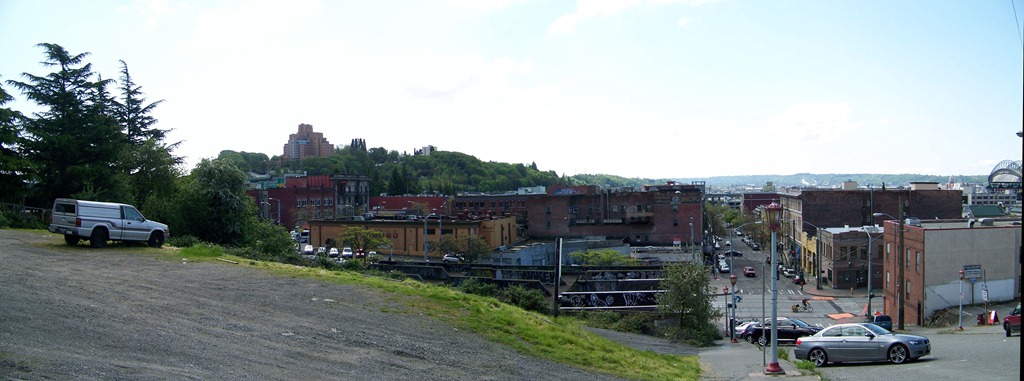
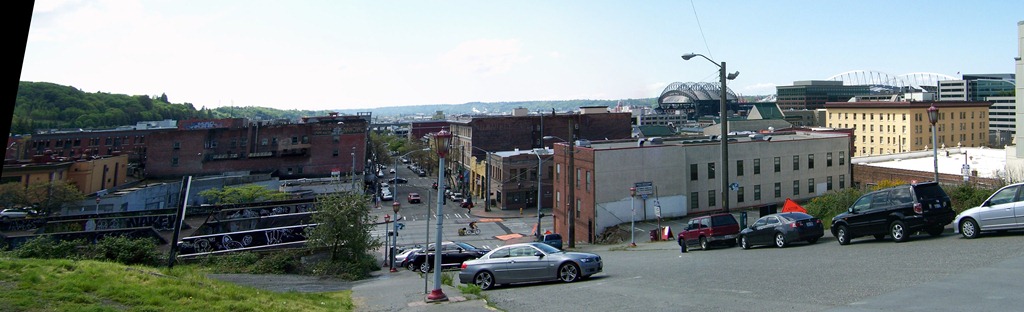
I took several pictures of Chinatown from atop a hill, which I stitched together. Chinatown stitched_2Chinatown stitched

Uncooperative Anchor Leads to Annapolis

04 Thursday Aug 2011

Posted by rajalary in Sailing, Travel

≈ Leave a comment

Tags

Annapolis, Baltimore Inner Harbor, Carol Catie, Chesapeake River, Dobbins Island, Julie Lary, Little Dobbins Island, Magothy River, Maryland State House, Richard Lary

In my last article about our May east coast sailing adventure, we were staying in a delightful marina in Baltimore. We woke to clear skies, enjoyed our usual breakfast of cereal and bananas, coiled our lines, and then eased out of the slip. As we sailed out of Baltimore Inner Harbor, we enjoyed seeing the many cargo ships, waiting to be unloaded and loaded.

Because it was Sunday, there were few boats on the water and little activity on the shore. As the wind picked up, we raised our sails and tacked back-and-forth, and then circled around the Baltimore Lighthouse several times, trying to peek inside through the tattered curtains.

A few days later, Rich purchased a small watercolor of the lighthouse at an art gallery in Annapolis. The painting now hangs in his office, next to his many other sea-themed paintings.

That evening, we dropped anchor by Dobbins Island, a small, kidney-shaped island in the Magothy River, which is a popular for partying, water-skiing, and hanging out in the calm and shallow water. When we arrived, quite a few boats were anchored, and many small boats and dinghies dotted the shore with people in bathing suits, sun-tanning, drinking libations, and talking loudly.

Across from the island, was a large house, which had a sizable replica of a lighthouse, complete with a bright light on the top. The house, built on Little Dobbins Island is very controversial because it was constructed without permits. In 2005, the county ordered the lighthouse, pool, and gazebo be torn down. Fortunately, for us, the lighthouse stood and was operational, six year later.

We enjoyed a pleasant dinner and evening, reading and planning the next leg of our trip. Around 10 p.m., we decided to call it a night. Rich checked his GPS one last time to make sure our anchor was holding. It hadn’t!

We threw on warm clothes, started the engine, pulled up the anchor, and circled around to find a good place to once again anchor. After two attempts, the anchor held when the engine was revved up in reverse. Rich reset the GPS to track a circle around the anchor, and we once again got ready for bed.

Throughout the night, Rich woke briefly to check the GPS. If our boat started to drift, the GPS was supposed to sound an alarm. Around 3 a.m., Rich woke and thought the water breaking against the boat sounded funny. He flicked on a flashlight, picked up the GPS, and screamed, “We’re dragging anchor! Get dressed!”

Rich threw on some clothes, started the engine, and pulled up the anchor. I was a bit slower and more thoughtful, flipping on the “instruments switch” in the control panel, and popping off the cover of the depth meter as I scrambled onto the deck.

View album

Baltimore Inner Harbor and Magothy River

VIEW SLIDE SHOW DOWNLOAD ALL

It was pitch black outside, but I could see three things: The anchor lights on top of the masts of the two sailboats by Dobbins Island, and the light in the mini lighthouse on Little Dobbins Island. The latter was maybe 100 feet away, which meant, we drifted across the Magothy River and were dangerously close to grounding the boat.

When we studied the GPS track, days later, there was no doubt that we’d grounded the boat, but it’d miraculously rocked off the sand and was “floating” when we discovered we were no longer anchored.

With the depth meter, we could navigate into the deeper areas of the Magothy so we had a least a few feet of water beneath our keel. To make matters worse, it was rainy, windy, and cold outside. Barefoot with rain gear, I tried to discern where Rich wanted me to drop the anchor, but was often drown out by the wind or the anchor would hit bottom within a few second, but not catch and the boat would quickly drift from where he wanted to anchor. Our first three attempts were failures. One attempt was perfect, but as the boat started to spin around, we noticed we were within a foot of a channel marker.

Another attempted seemed to hold, allowing us time to dry off and make some coffee. But after watching the GPS for an hour, we saw once again, we were dragging. Throughout the ordeal, words were exchanged until we came to our senses and realized screaming at each other wasn’t going to make the anchor hold.

For our final attempt, around 5 a.m., we decided to drive away from the island and the other sailboats to deeper (20 feet) water. The anchor held, but with an hour until daybreak, we opted to have another pot of coffee, catch a few winks while sitting up in the galley, and then, sail to Annapolis.

Tired, but relieved we didn’t have to call a towboat, we pulled up anchor as the sun started to rise. The anchor as surprisingly heavy, and as it got towards the top, I noticed a red string tangled in the chain. At the end of a string was a brick. The extra weight of the brick may have been enough to set the anchor! The boat, a 32-foot Hunter, had only a light anchor, ten feet of chain, and the rest was line (rope). There probably wasn’t enough weight to hold the boat in windy weather, especially on a sandy bottom.

The morning was drippy and very windy. We raised the sails and Rich let me take the wheel. We flew down the Chesapeake at up to 7 knots! It was some of the most accelerating and fun sailing I’d ever done. I stood up, feet wide apart, hands gripping the wheel as the boat skimmed across the waves.

Rich took over as we approached Annapolis so I could research the marinas in the area. There are a lot of marinas and not finding the Annapolis City Marina, we called the harbormaster. We were looking in the wrong place! Plus, the lack of sleep had caught up with us.

The harbormaster, recognizing we hadn’t the foggiest idea what we were doing, asked if we wanted to stay along the seawall. “Sure, why not? What’s the seawall?”

We were directed down a narrow channel, smack dab in the middle of downtown Annapolis. Because it was mid-morning, we got a perfect spot and didn’t have to negotiate, thankfully, around many boats.

Unfortunately, Rich, unlike me who’d tied off the boat and was walking back-and-forth on top of the seawall, didn’t realize the sidewalk was a few feet beneath the seawall. As he stepped off the boat, he stumbled and fell off the seawall. I thought he’d broken something. The harbormaster wanted him checked out by a paramedic.

Annapolis, however, proved to be lucky place for us. After a few days of taking Advil and a little hobbling, Rich was back to normal with nothing more serious than a few bumps and bruises.

View album

Annapolis, Maryland

VIEW SLIDE SHOW DOWNLOAD ALL

After eating lunch, we walked a few blocks to the United States Naval Academy. After having our ID checked, we waltzed over the visitor’s center to watch a short flick and then take a formal tour of the campus. I didn’t know what to expect because visiting a military academy isn’t high on my list. However, I was enraptured with the architecture, size of the buildings, and the physical, mental, and emotional rigors cadets must undergo during their four years at the academy.

The tour guide’s husband and son had both gone through the academy so she could relay first-hand the challenge of the Plebe Summer and the first and subsequent years in a cadet’s life. Plebe Summer is “designed to turn [1,200] civilians into midshipmen.” It’s seven weeks in length with each day beginning at dawn with rigorous exercise (in Maryland humid heat) and ending at dawn. There’s no television, leisure time or movies.

Those who survive Plebe Summer, return home for a few weeks before starting their first year, which is equally regimented with midshipmen earning more privileges and freedoms as they complete each of their four years at the academy. A typical schedule is:

  • 5:30: Arise for personal fitness workout (optional)
  • 6:30: Reveille (all hands out of bed)
  • 6:30-7:00: Special instruction period for plebes
  • 7:00: Morning meal formation
  • 7:10: Breakfast
  • 7:55-11:45: Four class periods, one hour each (midshipmen can choose to earn one of 22 majors that lead to a Bachelor of Science degree)
  • 12:05: Noon meal formation
  • 12:15: Noon meal for all midshipmen
  • 12:40-1:20: Company training time
  • 1:30-3:30: Fifth and sixth class periods
  • 3:30-6:00: Varsity and intramural athletics, extracurricular and personal activities; drill and parades twice weekly in the fall and spring
  • 5:00-7:00: Supper
  • 7:30-11: Study period for all midshipmen
  • 11:00: Lights out for plebes
  • Midnight: Taps for upper-class

Midshipmen are issued several different uniforms and hats, which they must keep in regulation condition and wear for almost everything they do from attending classes (khaki pants and blue shirt) to working out (blue shorts and white tee-shirts or fatigues for military exercises) to getting an ice cream in downtown Annapolis (white pants, shirts, and shoes). They march to meals, are expected to keep their rooms ready for military inspection, and are required to be in their rooms, studying for several hours per night. They are also issued a cap, which they wear for four years, and then ceremonially throw up in the air upon graduation.

Since 1845 more than 60,000 young men and women have graduated from the academy, served in the military, and then gone onto various careers, including President and nearly-President of the United States (Jimmy Carter and John McCain). Click hereto see the photos on the academy’s site.

Once accepted into the academy, everything is paid for including tuition, housing, food, books, computers, uniforms, dry cleaning of uniforms, athletic gear, and personal toiletries. Plus, midshipmen are given a monthly allowance for extras they may want to buy!

I recall the tour guide saying it costs around $350,000 per cadet over a four-year period. Do the math. To graduate 1,200 midshipmen costs $420 million!

The entire 338-acre campus of the Naval Academy is a National Historical Landmark. Founded in 1845, the academy is home to numerous magnificent Beaux-Arts style buildings built by Ernest Flagg, a brilliant architect. The largest is Bancroft Hall, which is the largest college dormitory in the world with 1,700 rooms, 4.8 miles of corridors and 33 acres of floor space. The central rotunda and first two wings were built in 1901-1906. It later was expanded to encompass eight wings on five floors.

View album

Navel Academy in Annapolis, Maryland

VIEW SLIDE SHOW DOWNLOAD ALL

The Hall has its own zip code. It houses midshipmen, has offices for officers and chaplains, a barbershop, bank, travel office, small restaurant, textbook store, laundromat, uniform store, cobbler shop, post office, gymnasium, full medical and dental clinics, and optometry and orthopedic clinics.

The next stop in our tour was the Naval Academy Chapel, which had dramatic stained glass windows and a serene ambiance. In the crypt beneath the chapel is John Paul Jones, America’s first naval hero who exclaimed “I have not yet begun to flight,” when the ship he was on, the Bonhomme Richard, was confronted by the British frigate HMS Serapis. After heavy fighting and extensive damage to both ships, Captain Pearson of the Serapis surrendered. A few days later, the severely damaged Bonhomme Richard was sunk.

As a side note: Yesterday, for Seattle’s Seafair, Rich and I were on the USS Bonhomme Richard. We’d applied and been accepted to take an all-day trip on a military vessel, but didn’t know whether we’d end up on a Canadian ship, U.S. Destroyer, U.S. Coast Guard ship, or the Bonhomme Richard. A few days before, I was writing about John Paul Jones and when I learned he’d commanded the Bonhomme Richard, I tracked down Rich and announced I knew which ship we’d be on. Sure enough, I was right!

The massive marble and bronze sarcophagusin which Jones’s body is interred is a bit creepy. My imagination doesn’t allow me to get past the vision of a skeleton with bits of putrefied flesh, yellowed teeth, tangled hair, disintegrated clothing, and tarnished war metals.

After visiting the chapel, we scurried to Preble Hall, where the U.S. Naval Academy Museum is located. We found this exhibits so interesting we returned the next day. I was enthralled by the Class of 1951 Gallery of Ships, one of the world’s finest collections of warship models from the 17thcentury to modern times. The ships, made of wood and bone, were built to show what the actual ship would look like when completed. The detail of the ships is extraordinary.

By the time we left the museum, Rich was in a lot of pain from his fall earlier in the day. We returned to the boat so Rich could lay-down while I busied myself by cleaning the outside of the boat with buckets of water (from the river), white-wall cleaner, and a sponge. It kinda’ fun… if you only do it once or twice a year during a charter.

As the day drew to a close, groups of midshipmen started to emerge from the Academy to enjoy the cool evening, frequent restaurants, shops for stuff, visit with other midshipmen, etc. They wore white pants or skirts, white shirts, white hats, and white shoes. They walked with confidence and civility, and most likely, relief with the end of the school year drawing to a close. Many were probably days away from graduating and getting assigned to a ship or other role within the Navy.

The streets were also filled up with local folks: Couples on dates, parents with young children, pierced and tattooed teens with their skateboards, senior citizens holding hands, and boat-owners, like Rich and I. It was a perfect evening for strolling, bopping into the many small shops that line the narrow streets, people- and cadet-watching, and of course, tracking down and eating ice cream (our priority).

Downtown Annapolis is picture-perfect with historical brick buildings, including the capital buildings, charming restaurants and shops, ornate early American churches, boutique inns, and extraordinary row houses from the simple to ornate. I loved walking around Annapolis!

The next day, we awoke to flooding. Unusually high tides combined with unusually large amount of rain resulted in water seeping through the seawall and covering the parking lot and bricked plaza with a foot or so of water. Most of the water didn’t reach the nearby buildings, but did make a mess of the recycling and trash that’d been left out for garbage pick-up. Check out the pictures in the slide show.

Within a few hours the water receded, and life returned to normal. We chose to further explore Annapolis, taking a bridge across Spa Creek to an older part of town where a small maritime museum was located. Unfortunately, when we arrived, there was a cadre of teachers and parents waiting for bus-loads of children. We opted to skip the museum, in spite of the occasional dribble turning into a full-blown downpour. By the time we got back to the boat, we were soaked!

We spent the rest of the day ditching raindrops as we toured the Maryland State Buildings (Annapolis is the capital of Maryland), St. Anne’s Church (each kneeling bench was covered with a unique needlepoint pillows, which must have taken the members years to create), Banneker-Douglass Museum, and the Annapolis National Historical District, which has more than 1,500 restored and preserved buildings and houses.

That evening, we once enjoyed the ambiance… and I worked up the courage to stop a group of midshipmen and ask whether they’d pose with me for a picture. They were very polite and patiently answering my numerous questions.

We spent the rest of the evening, sitting in the cockpit of our boat, marveling at the city and its residents until our eyelids grew heavy. Sadly, we climbed into the galley, falling asleep listening to the voices outside. The next morning brought clear skies as we pushed off the seawall and headed to our next destination.

Newer posts →

Subscribe

  • Entries (RSS)
  • Comments (RSS)

Archives

  • December 2025
  • December 2023
  • November 2023
  • November 2022
  • May 2022
  • April 2022
  • February 2022
  • January 2022
  • November 2021
  • June 2021
  • May 2021
  • April 2021
  • March 2021
  • January 2021
  • December 2020
  • October 2020
  • September 2020
  • July 2020
  • June 2020
  • May 2020
  • April 2020
  • March 2020
  • January 2020
  • December 2019
  • November 2019
  • October 2019
  • September 2019
  • August 2019
  • July 2019
  • June 2019
  • May 2019
  • April 2019
  • March 2019
  • February 2019
  • January 2019
  • December 2018
  • November 2018
  • October 2018
  • September 2018
  • July 2018
  • June 2018
  • May 2018
  • April 2018
  • February 2018
  • January 2018
  • December 2017
  • November 2017
  • October 2017
  • September 2017
  • August 2017
  • July 2017
  • June 2017
  • May 2017
  • April 2017
  • March 2017
  • February 2017
  • January 2017
  • December 2016
  • November 2016
  • October 2016
  • September 2016
  • August 2016
  • July 2016
  • June 2016
  • May 2016
  • April 2016
  • December 2015
  • November 2015
  • August 2015
  • July 2015
  • June 2015
  • March 2015
  • February 2015
  • January 2015
  • December 2014
  • November 2014
  • October 2014
  • September 2014
  • August 2014
  • July 2014
  • June 2014
  • May 2014
  • April 2014
  • February 2014
  • January 2014
  • December 2013
  • October 2013
  • September 2013
  • August 2013
  • July 2013
  • May 2013
  • April 2013
  • March 2013
  • February 2013
  • January 2013
  • November 2012
  • October 2012
  • September 2012
  • August 2012
  • July 2012
  • June 2012
  • May 2012
  • April 2012
  • March 2012
  • February 2012
  • January 2012
  • December 2011
  • November 2011
  • October 2011
  • September 2011
  • August 2011
  • July 2011
  • June 2011
  • May 2011
  • April 2011
  • March 2011
  • February 2011
  • January 2011
  • December 2010
  • November 2010
  • October 2010
  • September 2010
  • August 2010
  • July 2010
  • June 2010
  • May 2010
  • April 2010
  • March 2010
  • February 2010
  • January 2010
  • December 2009
  • November 2009
  • October 2009
  • September 2009
  • August 2009
  • July 2009
  • June 2009
  • May 2009
  • April 2009
  • March 2009
  • February 2009
  • January 2009
  • December 2008
  • October 2008
  • September 2008
  • August 2008
  • July 2008
  • June 2008
  • May 2008
  • April 2008
  • March 2008
  • February 2008
  • January 2008
  • December 2007
  • November 2007
  • October 2007
  • September 2007
  • August 2007
  • July 2007
  • June 2007
  • May 2007
  • April 2007
  • March 2007
  • February 2007

Categories

  • Cat Diaries
  • Computers and Internet
  • Coupeville
  • Entertainment
  • Family
  • Food and drink
  • Gardening
  • Health and wellness
  • Hobbies
  • Holiday
  • Home Improvement
  • Invocations
  • Microsoft
  • Motorcycle accident
  • Mount Vernon
  • Movies
  • News and politics
  • Politics
  • Puget Sound Islands
  • Rich Lary Realtor
  • Rose's Writings
  • Sailing
  • Seattle
  • Texas Life
  • Travel
  • Uncategorized

Meta

  • Create account
  • Log in

Blog at WordPress.com.

  • Subscribe Subscribed
    • Rajalary
    • Join 108 other subscribers
    • Already have a WordPress.com account? Log in now.
    • Rajalary
    • Subscribe Subscribed
    • Sign up
    • Log in
    • Report this content
    • View site in Reader
    • Manage subscriptions
    • Collapse this bar