Bagpipes to Beaver Dams

Tags

, , , , , , , , , , ,

On Friday, Rich and I drove to Marblemount, Washington, an hour east of Mount Vernon in the North Cascades. Barely 2.5 square miles in size with a population of around 250 people, the town is one of the many small towns that dot the highway, including Concrete, which derived its name from the merging of two towns where the Washington Portland Cement Company and Superior Portland Cement Company plants were located.

Our trip to Marblemount was to take a canoe trip down the Skagit River, which is the second longest river in Washington, starting in southwestern British Columbia, Canada, and snaking its way to the Puget Sound. Every few years, heavy rains create flood conditions for town along the river, including parts of Mount Vernon.

The upper Skagit River is controlled by the Ross, Diablo, and Gorge Dams, which are part of the Skagit River Hydroelectric Project. The river is not only an important spawning habit for five types of salmon, but is desirable for white water rafting, kayaking, and canoeing.

Remember the five types of salmon by holding up one of your hands. The thumb represents chum. The index finger can be used to poke yourself in the eye so it represents sockeye. The middle finger is king because it’s the longest or what you’d use to flip someone off to show you’re “king of the road.” The ring finger is silver, like a wedding band. And the pinkie finger represents pink salmon.

We started our trip, through Pacific NW Float Trips, by meeting our river guide, Joe, at a gas station in Marblemount. Several other groups were going out that day, including a flock of rowdy kids, wearing disposable rain ponchos, who were getting ready to white water raft. I was happy our group consisted of Joe, Rich, and myself. Less is more when it comes to water sports.

Glacier Gravel from Concrete to Picturesque Pond

With two aluminum canoes on top of Joe’s car, and hope that the rain, which followed us from Mount Vernon was done for the day, we headed to a series of ponds for the start of our day-long adventure. The ponds had originally been gravel pits, excavated to make concrete. So much gravel had been removed that when beavers created dams, water filled the pits and they became serene ponds, excellent habitats for spawning salmon and other wildlife.

We paddled around a pond, with Rich and I in one canoe, and Joe in the other. It was very pleasant, but a bit sedate for my taste. I prefer a bit more adventure. Having circled the pond, Joe recommended we park our canoes, and walk around to learn more about edible plants in the area.

Joe was a walking encyclopedia of what was edible, along with alternative uses for some of the plants. We nibbled on plantain, shepherd’s purse stinging nettle (after Joe showed Rich what to pick, and what to avoid), and thimbleberries (which I’ve always mistaken for salmon berries). We were also told the leaves of thimbleberries make excellent toilet paper!

After learning a bit about foraging, we headed back to Joe’s truck to pick up two more canoes for the next leg of our adventure. A river guide in Florida during the winter, and also a guide in Alaska, Joe’s housing is portable and temporary. When guiding on the Skagit River, he lives in a large teepee, with a fire brazier for warmth.

Beaver Dam Lead to Tippy Canoe

Our next stop was Illabot Creek, which feeds into the Skagit River. Happily, this time, portage of the canoes was a few hundred feet. Earlier, to reach the ponds, we had to carry the canoes about a quarter mile. While not overly heavy, they’re long and awkward to hold.

Illabot Creek is haven to salmon and eagles, and has been recognized by American Rivers and The Nature Conservancy for its importance in providing a crucial habitat for wild Chinook salmon, steelhead, bull trout, pink, Coho, and chum salmon. The large number of salmon in the creek also make it a popular hangout for bald eagles.

What I immediately appreciated was the abundance of ripe blackberries on the trail along the creek. I wasn’t as elated with the foot-long garter snake Joe plucked from the grass. While pretty, the snake was a little too big for me to comfortably touch. One day I will get over my fear of snakes. One day!

In the meanwhile, later that afternoon, I had no hesitancies about petting the Northern Alligator lizard, sunning himself (or herself) on a concrete barriers. Lizards are cool. Snakes are scary.

No sooner had Rich and I plunked our butts into our canoe, we had to get out to carry it over a small beaver dam. The water came up to the bottom of our calves and was quite cold. As the afternoon progressed, we steadily got wetter…

Several times, we had to get out of the canoe to pull it over a beaver dam. Because the water was low, it wasn’t an issue and it was super easy – at least for me – to get back into the front of the canoe. After navigating over the dam, we came to a picturesque area with many reeds, and ducks hiding out along the shores. You could see small fish in the water, along with a multitude of plant life.

Joe shared the difference between reeds, willows and grasses, and pointed out various wild life and plants. Later, while nibbling on snacks, we spotted a beaver swimming across the water.

It was enjoyable navigating in areas, which would be impossible by foot or a larger boat. The canoes glided over the shallow areas, and were easy to paddle in deeper water.

On the way back, we seemed to have more difficulty getting over the beaver dams with my having to wade further out into deeper water to pull the canoe over the dam, while Rich struggled to get a foothold. At one point, the water was to the top of my thighs!

On the second to last dam, I’d already gotten into the canoe. I looked back to see Rich getting into the back when suddenly the entire canoe tipped to the side, instantly filling with water. I turned around again to see Rich sitting on the floor of the canoe. He was evidentially standing in the canoe and rocking it slightly from side-to-side to try to scoot it forward. When he went to sit down, he didn’t realize he wasn’t near the seat.

Joe instructed us to get out of the canoe, walk it to shore, and then tip it over. By the time we got the canoe up righted, I was soak from mid-chest down. Fortunately, it was warm outside, and I had a change of clothes in the car.

After getting the canoes loaded back onto Joe’s truck, returning to our car, and then changing into dry clothes, we joined Joe at Que Car BBQ for a tasty late lunch. I thoroughly enjoyed my pulled pork sandwich, and Rich had their chopped brisket.

It was a fabulous unexpected day with Joe, who proved to be an informative, confident, good-humored river guide. We would recommend Pacific NW Float Trips for canoeing or white water rafting down the Skagit River or other eco-tours and trips they lead on the Nooksack and Wenatchee Rivers. In addition, they offer a trip through the Swinomish Channel through Deception Pass.

Going Scotch

The last Saturday in June, we went to the Annual Pacific Northwest Scottish Highland Games and Clan Gathering in Enumclaw, Washington, east of Tacoma. Rich is half Scotch, which is where he probably got his height and good-looks!

We’d bought our tickets months in advance because I love Scottish heritage, especially the clothing. The performers, and many people in the crowd look dapper and disciplined in their kilts, starched shirts, vests, neckties, stylish tam-o’-shanters, ghillie brogues (shoes with laces and tassels), hoses (socks), and sporrans (bag worn in front… codpiece for Scotsmen).

We arrived earlier and my first thought was “It’s so small. We’ll be bored after a few hours.”

My initial perceptions were wrong.

The first hour or so, we wandered around the many booths in the Celtic marketplace, and stopped to ask questions at a couple of the clan tents. Each tent represents a clan, such as Bruce, Campbell, Craig, Ferguson, Fraser, Gordon, Gregor, Macalister, Macbeth, etc. The tents display memorabilia about the clan, such as I noticed the Morrison tent featured a picture of Jim Morrison from The Doors, who is of English, Scottish, and Irish decent.

There wasn’t a Robertson (Donnachaidh) tent, which is Rich’s heritage. We did locate the tartan designs for Robertson, which Rich didn’t like because they don’t contain enough green. Although, you can probably choose any kilt nowadays without fear of being attacked by an opposing clan. The days of Scottish aggression are over!

Hurling Stones, Sheaves, Weights, and Logs

Our next stop was the athletic competition. These events were originally used by chieftains and kings to choose the best men for their retinue by testing their strength, endurance, and agility. Many of the events were based on based on commonplace activities. For instance, farmers or crofters used pitchforks to toss bundles of straw (sheaves) onto the roofs of cottages that needed to be re-thatched. Today, the sheaf toss consists of using a pitchfork to chuck a 20-pound, burlap bag of straw up, and over a cross bar.

The Scottish hammer event may have derived from farmers’ mauls used to drive in fence posts or blacksmiths’ hammer. The hammer used today is 16 pounds, swung around the head, and then released. Putting the stone, from which the Olympic shot put derived, continues to use a rounded stone, weighing 17 to 23 pounds. The latter is called a braemar stone. The stone we saw used was somewhat oblong, and definitely not perfected rounded like a shot put.

The most anticipated event is the caber toss, the rules for which have changed little since the fifteenth century. The event starts by standing upright a 16 to 20 foot tall log, weighing between 80 and 130 pounds. The competitor then grasps the bottom of the log, and walks forward or backwards a couple of steps before flipping it end-over-end, with the hope it lands in the twelve o’clock position. If it lands to the right, the score would be one o’clock or three o’clock it’s 45-degrees from where the bottom of the log was originally positioned. Falling to the left of twelve o’clock could get a score of 11:30 or less.

First, the ability to balance a log vertically is crazy. And then rapidly walking, and for some competitors, running, with the caber is unbelievable. And for many of the men we watched, flipping the caber over is extremely difficult. When the caber is correctly tossed, the crowd bursts out in cheers.

We spent a considerable amount of time watching men and women compete in the various events. We were most fascinated, however, by Kristy Scott, an elite woman competitor who is super buff, and easily flung weights, stones, and sheaves as if they were as light as feathers. She may have set a world record that day for weight for height, which consists of tossing a 28-pound weight over a cross bar.

Googling her, we discovered she’s a weight lifter. In July, she lifted over 500 pounds. Her tossing a 26-pound weight is probably like me lobbing a cherry at Rich.

Actually, all of the women competitors were tall, muscular, and incredibly strong. And the men made Rich look like a dwarf. They were huge. Tall, stout, and muscular. All of the competitors wore kilts with tee-shirts and athletic shoes. One couple, Todd and Lyman Asay, work dramatic kilts with flames insets. Both had flaming red hair with Lyman’s hair in a thick braid, which extended past her waist.

Bagpipes, Drums, Dogs, and Dancing

We didn’t want to miss the opening ceremonies so we headed over to the main field, where we watched several pipers perform for judges. The judging is quite stringent with the tuning of pipes and playing ability being judged. Four pipes need to be tuned, the chanter, which is the small pipe the player blows, and the three drone reeds, the wood shafts on the shoulder.

Playing ability focuses on fingering, along with ability to regulate blowing in the bag. The latter creates a steady tone, which complements the melody pattern of the chanter. The bag piper is considered one of the most difficult instruments to master.

The competitions included individual piping and drumming, drum competition with entire drum corps, and pipe bands, which consists of drummers and pipers. For the opening ceremonies, all of the bands line up and parade together onto the field. The beauty of the uniforms coupled with the steady drone of the bagpipes and rhythm of the three types of drums (snare, tenor, and bass) is very powerful.

Check out this video from the 2012 Scottish Drumming Championship. View as full screen, and watch the drummers twirl their sticks, and their exaggerated arm movements.

After the opening ceremony, we wandered over to the barns to check out the Scottish Highland Cattle and other farm animals native to Scotland. In another areas, dogs that originated in Scotland were competing and showcasing their skills in herding, agility, barrel racing, and more. Represented were cairn terriers, Welsh corgis, golden retrievers, Shetland sheepdogs, Irish water spaniels, collies, Gordon setters, Irish setters, Scottish terriers, white terriers, and hounds.

My favorites are the terriers, collies, and shelties; all three I’ve previously owned. Rich liked the corgis.

Our next stop was to briefly watch the highland dance competition with children and adults dancing the Highland fling, Sean Truibhas, Flora MacDonald, Scottish Lilt, Full Tulloch, Pas de Basque, Sailor’s Hornpipe, Earl of Errol, and other traditional dances. The dance steps are very intricate and performed in groups so if someone is off a step, it’s very noticeable.

Of special interest to Rich was the displays of Scottish artisans and crafts from long ago, including carding and weaving wool, blacksmithing, and woodworking.

We also watched the group 1916, which melded punk rock music with traditional Celtic music, including bagpipes and whistles. They have a cool, infectious sound that makes you want to dance (or at least rock to the beat).

On another stage was the Bog Hoppers, a Seattle-based Celtic folk punk group. They were super fun to watch because of their hill-billy clothes, wacky lyrics, and fabulous strings, including banjo, mandolin, guitar, fiddle, and bass.

When we walked out the gates, nearly nine hours after we’d walked in, our spirits were refreshed. It had been a great day in a beautiful location, seeing weights and cabers tossed, hearing and watching performers, petting dogs, learning about Scottish heritage, and much more.
East Cleveland’s Crumbling Heritage

Tags

, , ,

Yesterday I was aimlessly browsing the Internet and came across a story about murders in East Cleveland, Ohio. Three bodies had been found, two in an abandon house. The video showed large, turn-of-the-century houses, which had fallen into disrepair.

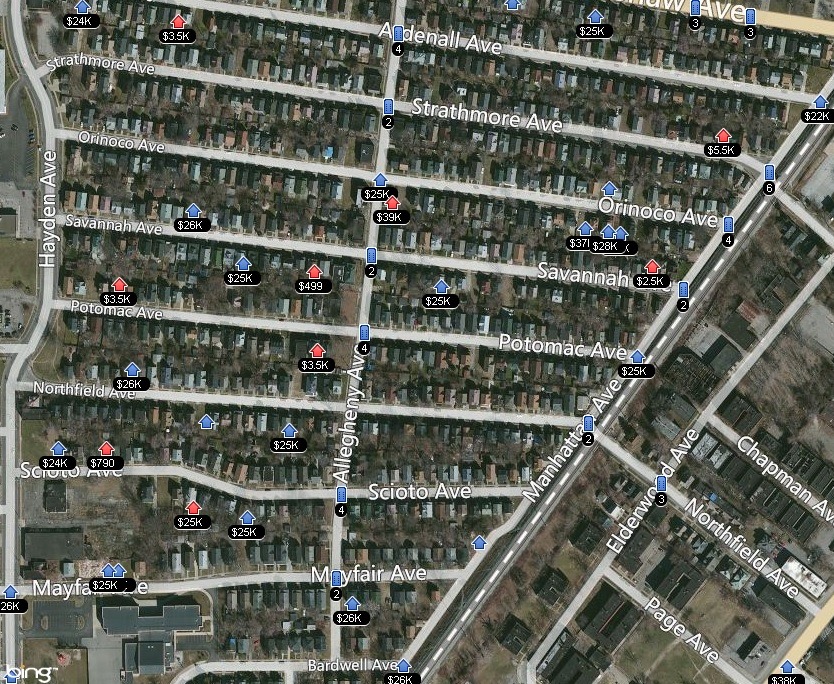
According to East Cleveland Mayor Gary Norton, there are 2,500 vacant and abandoned homes in the city’s three square miles. In the entire Cleveland metro area, there are nearly 76,000 vacant residences. Snapshot of streets in East Cleveland

Last year, the population of Cuyahoga County, which comprises the Cleveland metro area, was 1,265,111. Homeownership was around 62% from 2007 through 2011, with an average of 2.34 people per household. And in 2011, there were 620,830 housing units, which included apartments.

Doing rough calculations, around 12% of housing units are vacant in the Cleveland metro area. However, the percentage of abandoned houses is probably considerably higher because 62% of the population lives in houses!

Cleveland, like many Midwest cities, was once bustling with industry. Located on the shores of Lake Erie, Cleveland was a shipping hub – water and railroad — for iron, steel, machinery, and automobiles. It was also the location of the lamp division of General Electric, National Bindery, and other light industries. At one time, nearly a million people lived in East Cleveland. Today, that number has dwindled to less than a third. The per-capita income is just $16,000 per year.

Blocks of stately Colonial Revival, Greek Revival, Federal, and Neoclassic homes on narrow, deep lots were built to house workers and their families between 1910 and 1920. Many of these houses were probably owned by the same family for generations, with children growing up and moving out, and returning when they’re parents could no longer care for the houses or passed away.

Built at the turn-of-the-century, they featured hardwood floors, carved banisters, inset cabinets with leaded glasses, and woodwork around the window. Many had basements for furnaces, and large double sinks for doing laundry. Attics were common, and were probably primarily used for storage. In the backyards were garages and outbuildings, along with a small patch of grass for the kids. The fronts had porches for cooling off during the summer months. Some had beautiful rock work and carved banisters.

These houses were built to last with quality materials, which is why most are still stand, even in disrepair.

Curious about the inside of the houses, and type of houses that have been abandoned, I went onto Zillow, and browsed the houses in East Cleveland near the Cleveland Metropark Zoo. What I found was startling. Houses are being auctioning, starting at $500!

While most of these houses are in horrific shape, undoubtedly filled with varmints, rotting wood that makes them dangerous to renovate, and antiquated electrical and plumbing, some look to be in “okay” shape, their owners simply not having the money to make the mortgage payments.

Pages of houses are foreclosed. And some are selling for a fraction of their worth. One house was purchased in 2005 for $67,500, and is currently selling for $3,500. Crazy!

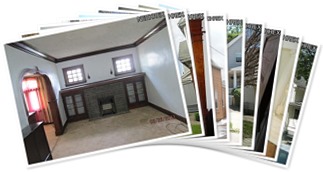
Here’s a snapshot of what I found (check out the album above to see pictures of the houses):

Table of East Cleveland houses

It’s anyone’s guess as to what’s going to happen to the abandoned and reduced priced houses of East Cleveland (and those in other struggling Midwest cities like Detroit). These houses are our heritage. Most are a century or more in age. However with people in East Cleveland earning an average of less than $1,500 per month, and high unemployment it’s doubtful people will be hustling to purchase these houses and fix them up for future generations.

The irony is some of these houses are worth less than an outfit featured in Vogue magazine. Think about it. A pair of Jimmy Choo shoes, Valentino dress, and Gucci bag cost more than a 3-bedroom house in East Cleveland!

See, Buy, Lease in Under Three Months

Tags

, , , , ,

Next Saturday, a retired couple of their daughter will be moving into our future home in Coupeville, on Whidbey Island. It’s bitter-sweet.

At the moment, it’s feeling more bitter than sweet. A few years from now, it’ll be super sweet. Saccharine sweet! Gooey chocolate cake sweet!

Our getting the house was unexpected, and definitely not something we planned on happening.

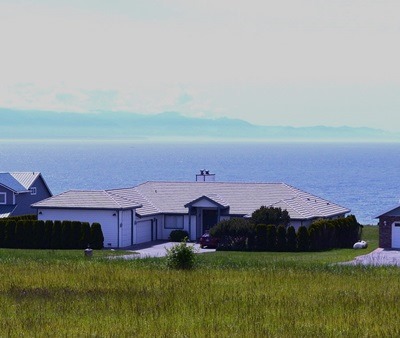
As many readers may know. When Rich and I lived in Texas, we strategized on how to get back to the Pacific Northwest, having previously lived in Portland, Oregon. Our solution was to purchase a 1.5 acre lot in Anacortes on Fidalgo Island in 2003. Located on a hill, the lot had a view of Padilla Bay and March Point, where at night, the lights of the oil refineries twinkled like a fairyland. During the day, tankers arrived from Alaska, laden with oil, which was pumped to the refineries via large pipes that extended across the bay to the ships. Coupeville house from front

We’d planned to build our retirement home on the lot, and live happily ever after. However, as time passed the trees started to grow, obscuring our view. Other homeowners were faced with the same diminishing views. Going against the neighborhood covenants, several homeowners chopped down select trees to improve their view. This created friction between other homeowners, most of whom were high enough on the hill so their view wasn’t affected or had purchased a view corridor (i.e. right to cut down trees that blocked their view).

Years ago, Rich and I should have “secretly” chopped down trees that were destined to block our view. Nevertheless, last year, Rich and I had hired an architect to sketch some house plans, based on our vision for the perfect house. It instantly became clear we’d need a three-story house in order to see over the trees. More telling, it would cost at least $500,000 to build a basic house. Landscaping, adding a lengthy driveway, and choosing higher-end interior finishing would add to the costs.

We therefore decided to sell the lot. And starting in the fall of 2014, we would explore houses north of Seattle, up through Bellingham. Rich wanted with a house with a west-facing view of the Puget Sound (preferably the shipping lanes), along with room for our motor home, and preferably in a rural area with few covenants. I wanted a “nice” house with space for a vegetable garden and fruit trees, a fabulous kitchen, and a room where I could do hobbies.

Bike Ride to Nix Island Life

In April, Rich was browsing through Zillow and saw several houses on Whidbey Island. I was against living on Whidbey, which is 35 miles in length, making it the fourth longest and fourth largest island in the contiguous United States. You have two options for getting on and off the island: Drive north to Mount Vernon, head west for 20 miles, and then cross over the Deception Pass Bridge or you can take a short ferry ride from Mukilteo (20 miles or so north of Seattle) to the southern tip of Whidbey. The ferry, however, is usually very crowded with waits between 30 minutes and two hours!

Once you get on the island, you need to drive quite a distance to get anywhere. Plus, the largest city, Oak Harbor, is kinda’ grungy and sad. The main “industry” is the Whidbey Island Naval Station.

Nevertheless, the houses on Whidbey were appealing with amazing views of the Puget Sound, large lots, and affordably priced, as compared to other waterfront properties in the Seattle and Everett metropolitan areas.

I decided that I was being narrow-minded about Whidbey and Oak Harbor, and agreed to tour the area via bicycle. The first weekend of May, Rich scouted out a route along the waterfront. As we headed up a huge hill, I noticed a “for sale” sign and realized it was one of the houses Rich had shown me on Zillow.

And a few minutes later, we came to another house for sale.

Then it occurred to me, Rich has planned the route to purposely pass by the houses for sale. Sneaky.

The third house we came to had everything we were seeking. It was about an acre in size with room for the motor home and garden. Plus, it had a cool two-level deck with a hot tub on the top deck. It was located on a bluff overlooking the Puget Sound, and was 15 years old with a nice kitchen, from what we could see from the window.

Using my cell phone, we left a message for the realtor, and decided to continue our bike ride until she called. Down the road, we stopped at a fourth house, which was out of our price range. However, Rich struck up a conversation with the next door neighbor, who turned out to be a mortgage broker. After indicating we were interested in the house down the street, he made a call to a friend who was a local realtor.

Later in the afternoon, we chatted with the realtor who told us the house we were interested in was under contract; however, if we visiting his office, later that afternoon, he’d be happy to show us a couple of houses in the area.

Because he couldn’t meet for several hours, we decided to grab a quick lunch, drive back to Mount Vernon to drop off our bikes and take care of my mother, and then return to Oak Harbor.

One, Two, Three… Done

The first house we visited was three stories with a master bedroom and bathroom on the top, kitchen and great room in the middle, and two small bedrooms, a bathroom, and small den on the bottom. The house had been beautifully refurbished with hardwood floors, modern light fixtures, soft colors, and attractive window coverings. However, we realized we’d have to significantly downsize since the great room was barely large enough for a small sofa, a couple of chairs, and a dining room table.

In addition, the house was behind a large sand bluff. It was obvious that over the years, acres of sand had built up around the house. The picnic table and benches outside one of the lower bedrooms could no longer be used with the tops of the benches nearly covered with sand.

The second house was down the road in Coupeville. I’d studied the pictures of this house on Zillow and was intrigued by its Asian-influenced design, and a large cupola on the top, which offered a 360-degree of the area.

As we turned the corner, by the Lavender Wind Farm, the house came into view. It was splendid with interesting architecture, sun-bleached wood, and the large oblong cupola, perched on the top of the house. I could hardly wait to get out of the car.

The realtor prefaced our viewing by saying the house was part of an estate. We entered through a side door off the garage, and were greeted by mouse traps on the floor, worn cabinets, and grimy floors. While the kitchen was large, it needed significant work with scruffy oak cabinets, older appliances, and Formica counters. The dinette had a lovely sunroom-like window, but looking at the ceiling, you could see extensive water damage.

While the design of the house was amazing, it was disappointingly in disrepair. Walking to the master bedroom, on the main floor, we passed by a small guest bathroom with a mauve toilet and sink, and matching wallpaper. The master bedroom offered dirty carpet and a dark walk-in closet.

The staircase to the second floor was like the inside of a lighthouse with a circular staircase, and paneled walls. As you descended, you wondered when you’d reach the top. It was claustrophobic and musty. The second floor had two bedrooms (one with a missing window), a large, airy den, which overlooked the dining room below, and a bathroom, which was ghastly. A small door to the right of the toilet was open, and you can see the attic, littered with mouse traps. Excellent selling point!

The circular staircase continue to the cupola, which would have been the house’s third floor. The view was spectacular. You could place a couple of chairs in the cupola and look every direction. However, even though it was cool outside, it was very warm in the cupola. And from the cupola, you could see the many issues with the roof, which was badly in need of immediate repair!

Even though I loved the design of the house, Rich and the realtor labeled it as a “project.” It would cost tens of thousands of dollars to replace the roof, flooring, fixtures, and the many other issues, which plagued the house. Even the greenhouse, attached to the side of the garage was caving in with broken windows and rotted shelves.

The next house we visited was three door down. We’d already pointed out to the realtor that it was out of our price range. However, he insisted we see it. The owners of the house were there and invited us inside. We toured quickly, which was enough time for Rich to decide, “This was the house.”

While I hyperventilated, Rich chatted with the realtor. Monday morning, Rich’s 61st birthday, he worked with mortgage broker, we’d met on Saturday, to put together the papers for the loan. We were immediately pre-approved. That afternoon, Rich made an offer. The owners counter-offered. Rich came back with a number, and they accepted…

…as I continued to hyperventilate.

The next thirty-days flew by with Rich liquidating assets, attending the home inspection, and completing additional paperwork on our finance. With scarcely an issue, the house closed on June 6th. A few days later, we picked up the keys and I got to see the house I’d barely seen earlier.

Welcome to Coupeville

Sometimes “things” happen for a reason. If Rich hadn’t looked on Zillow, and I hadn’t suggested we ride around Whidbey… and if we hadn’t stopped to look at another house where we met the mortgage broker, who connected us that day to a realtor, and if Rich hadn’t been hasty to make an offer two days later, we would have never gotten the house. Because six days after it closed, Rich was laid-off from IBM.

We would have never qualified for a loan with Rich out-of-work, and me working as an independent contractor. And we certainly won’t have considered looking for a house until Rich got another job.

The day we got the keys to the house, a Saturday, we were a bit doubtful about our decision. Once we opened the door, however, and stepped inside, we knew we’d made the right choice. The design of the house is perfect for our lifestyle and future aspirations. It’s one-story with only a few steps to get in and out of the house. It has a two car garage, with a third, taller garage for a small boat,

our kayak… trailer, and Rich’s substantial collection of tools.

I’m thrilled with the laundry room, which will be the location of kitty litter boxes, and cat chow! It has a large master bedroom that looks out over the water, along with two other bedrooms. Plus, it has a nice office off the front door, where Rich and I can work. The kitchen is sizable with a great view, and lots of work space. In addition, it has a built-in desk with bookshelves for cook books.

There’s plenty of space for our furniture and collectibles so I won’t have to figure out what to leave behind.

The best part, however, is outside. Not only is the view spectacular, but there’s lots of room to plant a garden and fruit trees, along with space for a chicken coop (can you say “brown eggs?”). In the backyard, I plan to tear up some of the grass for lavender, salvia, irises, hydrangea, and other sturdy flowering bushes.

For the past few weeks, we’ve watched a parade of ships passes by including Victoria Clipper, cruises ships coming from and going to Seattle, tugboats pulled barges laden with goods, pleasure boat of every size, and commercial vessels.

Overhead, we’ve marveled at the jets from the Naval Air Station and seen countless small Kenmore Air seaplanes, shuttling passengers to-and-from the Puget Sound and Gulf Islands, Canada, and Washington.

We’ve also seen bald eagles swooping across our yard, and out over the bluff, rabbits scurrying between the bushes, quail, doves, and numerous other birds. In the field across from our house, we’ve seen deer, and one evening an owl.

Weighing our Options

While we’d planned to lease out the Coupeville house until we were ready to “move,” we didn’t anticipate having to do so immediately. We were hoping to enjoy the house through the summer. But, with Rich having lost his job, we escalated our plans, and listed the house on Friday, July 5th. Within a day, we have three potential renters.

In addition, the people chosen by the rental agent, wanted to move into the house with two weeks. Eck!

For the past few weeks, Rich and I have been scrambling to make repairs to the house, including cleaning and painting some of the walls, repairing toilets, replacing the range hood, replacing the mailbox, repaired a cabinet door, replaced towel bars, steam cleaning the tile in the kitchen… fixed leaking gutters, and spending half a day trimming overgrown bushes, uncovering stepping stones hidden under layers of sand, removing thistles from the far end of the property, and much more!

The good news is that our house will be leased a month before our first mortgage payment is due. AND the lease covers the mortgage, lawn care, and a touch of the taxes. In the end, the house will cost us a few thousand dollars a year!!

We’re hopefully that we’ll be able to move into the house in a couple of years! In the meanwhile, we’ll be finishing the remodel of our Kirkland house so it can be sold, crossing our fingers that our Anacortes lot sells, and maintaining our Mount Vernon, where my mother lives.

Invocation #25: Wisdom

Tags

, , , ,

It is asked: Wisdom, where is it found?

Wisdom is everywhere, but not easily found. It does not come of its own. It must be sought after.

It comes of living and experiencing. Of opening the eyes and ears to let in the sights and sounds of Man and Nature. Of opening the mind to receive the thoughts and opinions of others.

It is thinking and weighing; rejecting or accepting new ideas; practical and visionary.

It is understanding your feelings and the feelings of others; the giving and taking, from and to life.

It is doing and not doing. It is wanting to know and grasping the knowledge. It is being right and being wrong, and knowing the difference.

It is born of pain and anger, of laughter and tears; of fear and courage. It is born of all that makes up humanity.

Wisdom, a prize beyond measure, where is it found? Anywhere and everywhere, but mostly within oneself.

Seek it, and ye shall find it.

When reading my horoscope, I often wonder if I’m matching my current experience to that of the horoscope, like a self-fulfilling prophecy. Or is the horoscope a premonition of what’s to come. My grandmother’s invocations are often like premonitions, weather vanes pointing me in a certain direction.

I suddenly get an urge to post an innovation. I pull out the stack of innovations she typed on her manual typewriter, on half sheets of papers. It amazing how many times the topic addresses an issued I’ve struggling with in my life. Presently, I’m fixated on many issues, which seem overwhelming, in spite of their triviality in the grand scheme of my life.

Yes, Rich got laid off from IBM, but it doesn’t mean he won’t get another job; perhaps a job he likes better, with rewarding challenges, inspiring co-workers, and good pay.

We found our “dream house” in Coupeville, made an offer, and it closed within six days of Rich losing his job. If we’d waited to look for a house, it’s highly likely we would have qualified for a loan with Rich being out of work. Even more miraculous, within a day of listing the house for lease – because we’re not ready to move – we received three offers!

Our Kirkland house is rapidly increasing in value so we’re going to be finishing the remodeling of the master bathroom, and downstairs laundry and family rooms so it’ll be ready to place on the market in two years. And my work as a contract writer and creative project manager is satisfying. The only problem is it’s the slow period for Microsoft, and I may not have any work for a few weeks until everyone returns from the Microsoft Worldwide Partner Conference (WPC), and starts to renew contracts and solidify projects for the fiscal year.

The one issue that I can’t overcome, however, is my relationship with my mother, who lives in our Mount Vernon house. She’s reached the point where her mobility consists of moving less than 50 feet a day because arthritis has destroyed the cartilage in one of her hips joint. When she walks, you can hear the bones grind against each other. Years ago, fear prevented her from going to the doctor, to get therapy and possibly a hip replacement. In her frail condition, she’s now a poor candidate for surgery. She doesn’t want to take pain killers because irrationally feels if she needs one pill today, she’ll need two tomorrow. Instead, she lays on her bed all day, “cooking her hip” with a heating pad.

Adding to this ailment is advanced dementia, which could be the results of mini strokes, Alzheimer’s or Parkinson Disease (her mother had the latter), or her attempts to starve herself to death, and thereby malnourish her brain. Whatever the disorder, she struggles to dress or feed herself, let alone more challenging tasks like reading a book, writing a letter, cooking or cleaning. Most days, she reads the same newspaper over-and-over again, stares out the window or at the ceiling, laments her situation, conjures thoughts of everyone who’s wronged her, and waits for a Visiting Angel to arrive and care for her.

Her obstinacy prevents her from turning on the television before 10 o’clock at night (she never watched much TV), and the only person she calls is Rich to report something that’s gone wrong.

Returning to my grandmother’s invocation on wisdom.

While my mother had a super high IQ, her mind never grew. She rejected the opinions and beliefs of others, clutching to her views and perceptions as if they were precious gold. Widowed when she was forty, she proclaimed herself “free” and “independently wealthy,” eschewing work, and volunteering for a range of organizations, many of which asked that she not return because of her attitude and propensity to clash with organizers and other volunteers.

In the end, she became a recluse, staying home instead of getting involved with the activities at the senior center just a mile down the road. The few friends she had dissipated, no doubt realizing the relationship was one-sided with her rarely calling or writing. The people who did stop by were neighbors or were paid to clean her house, make meals, and manage her care.

The wisdom my grandmother professed of “giving and taking, from and to life,” wasn’t part of my mother’s DNA. She gave little and expected much more in return. She complained about having to deal with her in-laws the last year of their lives. Yet, didn’t visit her parents the last years of their lives, attend their funerals, or help dispose of their assets after their deaths, even though it was a short flight from Portland, Oregon to Burbank, California.

Years ago, I wish I had the courage to say “enough” and let her stumble through life. I suppose I never said “enough” because I’d like to think I know “right from wrong,” and wrong would be to take the easy route of walking away from someone who doesn’t have the initiative, determination, and most of all the wisdom, to conduct their life without the constant assistance and intervention of another.

Invocation #24: New Years

Tags

, , ,

On this, the second day of the year 1985, O Lord, we want to offer up a Thank You for allowing us to come this far in Time.

We are appreciative of each New Year added to our life span, and mean to bring credit to each one.

While most of us seniors are past the point of seeking new worlds to conquer, there is still much to see, much to do, much to give, and much to understand. And in all that we want to be active participants.

All we need, O Lord, is the help of two magic words; good health. With all else is possible; without it, much is lost.

We humbly ask, O Lord, for the precious gift of good health; in mind, body, and spirit.

This invocation was written in January 1985. At the time, my grandmother was 77 years old. She would live another 13 years, passing away in her sleep. Until the last few years of her life, she was active, gardening, cooking, cleaning, writing, walking to the grocery store to shop, and taking care of her husband, Morris, who was a few years older.

If she had aches and pains, she rarely complained. She pushed through, looking forward to each day and an opportunity to experience something new. In the afternoons, she watched The Merv Griffin Show, delighting in his guests, and his unique humor. She also liked to watch the Dick Cavett Show; who was significantly more intellectual with wry observations and more worldly guests.

My grandmother’s curiosity and zeal for knowledge never waned. Her comments, “much to give, and much to understand,” was central to her personality. Fortunately, she was blessed with the two magic words, “good health,” which extended to her mind, body, and spirit.

This Time I Didn’t Bounced Outta’ the Boat!

Tags

, , , , , , , ,

Several months ago, Rich and I attended a fundraiser, where we won two silent auction packages. One was a white water rafting trip on the Wenatchee River in eastern Washington through River Recreation

With the weather expected to be in the 90’s over the weekend, I wasn’t looking forward to baking on a raft, with the sun reflecting off the water, further radiating my skin. Friday evening, we sifting through the bathroom cupboards, searching for the scarcely used tube of sun block. Finding none, we moseyed down to the local Safeway. While there, we stocked up on bottled water for the trip, and bought breakfast fixings.

After a hearty breakfast of eggs, sausage, and hash browns, which Rich cooked, we hit the road.

Our first stop was a roadside stand where we bought $2 worth of local Bing cherries. We hastily wiped them on our shirts and popped them into our mouths. They were sweet and juicy, no doubt, picked from the tree hour earlier.

The drive out to Monitor, Washington, where River Recreation is located, is punctuated with fruit stands, and acres of fruit trees, laden with apples, cherries, and pears. They’re in neat rows, spaced to accommodate pickers and large wooden crates.

Wenatchee, which is a little over 2 hours east of Everett, and near where we were going to raft is considered the “apple capital of the world,” with 170,000 acres of apple orchards, comprising the majority of the apples produced in Washington, Crops include deep red to light green apples, Braeburn to Cameo, Cripps Pink, Fuji, Gala, Gingergold, Golden Delicious, Granny Smith, Jonagold, Pink Lady, Rome, Red Delicious, and Winesap.

Each year, 10-12 billion apples are handpicked in Washington State. It’s the largest agricultural product grown in the state, and 60% of the apples eaten in the nation come from Washington. It’s not surprise that Treetop has a plant in Wenatchee, with around 150 employees, producing low moisture, chilled and frozen apple ingredients for the food industry. In addition, the Aplet and Cotlets factory is in the area, along with smaller enterprising producing fresh and alcoholic apple cider, and other apple products.

Further down the road, we came to Leavenworth, which is an over-the-top tourist town with nearly every building architected and painted—including the auto repair shop – to resemble a Bavarian village. Even the Best Western is called the Icicle Village and Starbucks has a German theme. It’s quite a few blocks of shops, restaurants, hotels, outdoor stages, and landscaped areas idyllically, sandwiched between dramatic mountain ranges, which like Leavenworth, is blanketed in snow during the winter. It has year-round festivals and events, and is a popular place all times of the year because it’s family-friendly, closing to skiing, rafting, and other outdoor activities.

I’m not delighted by anything German so the town is more obnoxious than delightful to me. Nevertheless, with time to spare before our rafting trip, we put $1.50 in the meter, and decided to walk around the outdoor art festival. Before we could start walking, however, I was recognized by someone I worked with when I was a contractor at Microsoft Kinect for Windows.

Small world because I’d only worked with her a short time! It was fun to catch up and learn what was happening in the group.

With our fill of Leavenworth for the year, we hit the road and headed to Monitor.

One of the tour guides, described Monitor as two houses, a pallet factory, and River Recreation, the rafting company. According to the 2000 census, 342 people live in the Monitor zip code. It definitely had a has-been feel with dusty streets, and run-down buildings and houses. River Recreation was super cool, and a had a fabulous vibe with numerous picnic tables under umbrellas, large painted school buses, a warehouse full of wet suits, half a dozen tents for the guides under a grove of trees, and several large BBQs, fired up, cooking lunch for the guests. Rich and Julie at River Recreation

River Recreation oversees guided tours twice a day. A group of rafters go out in the morning, and return around 1 p.m. for lunch. A second group is asked to arrive before 1 p.m. Following lunch, they hits the rapids. We were in the second group, which provided time to work up a healthy appetite. Fortunately, they served barbequed chicken legs, pepper beef, green solid, three-bean salad, tortilla chips, watermelon, and white bread with soft-spread margarine. No doubt, it was Costco-to-table, but sufficiently tasty and filling.

After lunch, there was a bad rush to get wetsuits and booties. It’s the first time I’ve worn a wetsuit, which is comfortable once you pull it on, but quite the chore to pull up… especially when rushed. We were each given a paddle and PFD (Personal Floatation Device), and then herded onto two large school buses. Fortunately, the 90+ degree weather hadn’t manifested. It was overcast and delightfully cool.

During lunch, we were joined by another couple, Kevin and Christine, who live on Whidbey Island. The probability of sitting next to someone who lives on Whidbey Island, during a rafting trip in remote Monitor, Washington, is close to zero. They are a delightful couple who shared interesting information about island life, computing on the ferry, and the challenges of getting a job, which is akin to one’s field. In Kevin’s case, he used to create and archive media for Disney in Los Angeles. He’s an expert is converting media to various formats for print, video, and other digital formats. Currently, he works at Nintendo.

We were hoping to be in a raft with them, but because I needed to take a pit stop when rafts were being assigned, we ended up on other raft with a Russian couple who live in Richmond, Washington, a hedge fund manager who works in Bellevue, and his associate, an Asian woman, who was visiting from Chicago. Our river guide, Brian, was from Bellingham, just north of the Canadian border.

As we drove to the drop-off site, the overcast skies, and distant lightning and thunder, turned into a hefty rain shower, which let up once we arrived… and then started up again a few minutes later. It was a torrential downpour. Fortunately, we were wearing wetsuits so it didn’t matter if we got wet.

There was a large group of rafters, from another company, in the water when we arrived so we not only had to wait for them to paddle down the river, but wait until River Recreation put all 17 of their rafts (we were towards the back of the pack) in the water… each with a minimum of 6 rafters and one guide per boat. Do the math. There were lots of rafts and rafters taming the rapids that afternoon!

Prior to our departure, we listen to a safety lecture with instructions for what to do if you fall in the water, how to get back in the raft (or float down the river with your knees bent and toes out of the water), how to help someone into the raft, and also how to correctly use your paddle. I was surprised at the extent of the safety lecture… as if people regularly fall into the water…

The first few minutes of the trip was spent learning how to paddle as a team, and understand the instructions barked out by our guide. It didn’t seem overly strenuous. It would certainly be easier than paddling a canoe with Rich when I’m in the front doing most of the work, and he’s just steering!

Our first set of rapids was exciting, pitching the boat from side-to-side. My first reaction was “Let’s do it again!” And “do it again,” we did numerous times for the 3 hour trip, which included taking out the raft by a small dam, and walking around the dam before putting it back in. At one point, the guide asked if anyone wanted to ride the next rapid – Snow Blind — on the bow of the raft. Rich volunteered me.

I was able to get on the bow with my slippery wet suit, but fell back into the boat, which was the instruction from the guide should I fall. The two men in the front of the raft were able to prop me back up on the bow, just in time for me to see the raft dip down into a crater of water. I held on tight for another few rapids, and then we came to a doozy of a rapid. I was immediately flipped into the boat with a tsunami of a wave that landed on top of me, knocking off my hat, pasting my glasses to my face, and cleaning out my nasal and brain cavity. It felt like I was underwater for 20 seconds or more.

Drenched, I slithered back to my seat at the back of the raft, happy to keep a low profile for the rest of the trip. At least, I hadn’t fallen out of the raft! The first time I rafted on the Guadalupe River in Texas, I was sitting on top of a back rests, and flipped out of the raft when we hit the first (and only) rapid on the water.

Throughout the trip, we could hear thunder and saw lightening in the distance. And several times, we paddled through a downpour. Crazy weather considering it was supposed to be in the 90’s.

Towards the end of the trip, we came to calm water, and the guide described several “games” we could play. One was rodeo where someone stands on the bow of the boat, holds onto a rope, and leans back while the rest of the rafters paddled in a circle. The hedge fund manager was game. He stayed upright for a minute or so and then found himself in the river. Rich pulled him out.

Another game is between two people who lock oars, lean back and walk themselves towards each other using their hands on the handles of the oars. Rich’s and my height difference would have guaranteed that I fall into the water. No thanks!

Most of the rafts had willing participants in the game… falling it the water, and then being retrieved. It became obvious why they’d given detailed instructions at the start of our trip about what to do when one falls into the water, and how to get back into the raft.

By the time we got back, the rain had subsided. It was nice to change into dry clothes, say our good-byes to our raft-mates, and Kevin and Christine. Maybe we’ll bump into them when we move to Whidbey Island in a few years.

Poke Bag of Pearls

Tags

, ,

This evening, while shuffling through my grandmother’s papers, I came across several pages torn out of a diary from 1956. Being frugal, my grandmother must have saved the pages, which she hadn’t written on, and 37 years later used them to jot down what she called “pearls of wisdom,” from her poke bag.

She started writing the pearls on March 17, 1993, adding new observations, and putting to paper ones from years early… no doubt written on scraps of paper. The short observations “Loot” and “Forethought” were taken from two snips of paper, tucked in the diary. The latter written on the back side of a promotion for flooring, roofs, insulation, and other household services.

Enjoy the start of my grandmother’s pearls:

March 17, 1993

They say that even fools know enough to gather up the little pearls of wisdom their senses encounter as they trod along life’s pathways. Let’s open up my poke bag and see what I’ve gathered up or concocted.

Finding the use of the word “poke” with “bag” unusual, I looked it up. The noun poke, meaning a bag or sack, dates from the 14th century. The idiom, “a pig in a poke,” refers to concealing something in a sack. It can also infer a buyer was duped by buying a low-quality pig because they didn’t carefully check what was in the bag before making the purchase.

December 18, 1969

Envy, smoldering in the eye, sets the whole brain afire

The club hostess’ lament: Many hands are willing to slice the pie; few are willing to bake them. Rose_cropped

Knowledge is where you find it. Finders keepers.

Loot

Talking about statistics: If you have one foot in the oven, and one foot in the refrigerator, one the average, you’re comfortable.

March 23, 1986, 5:00 a.m.

Stepping out the front door to get the newspaper, I was almost overcome by the fragrance that filled the air. A sweet hardy perfume.

Orange blossoms? Lemon? Lilac?

I took a deep breathe, but couldn’t tell which. The perfumer could outdo Mother Nature in creating fragrances.

Then I hear it. The absolute quiet. Not a car was rolling down the street or zipping around the corner.

A rare moment in time and I was privileged to experience it.

September 24, 1992

When the sound of laugher is stilled, the silence reverberates forcibly with the threat of despair to come.

March 16, 1993

Try as I might, I still cannot find anything good to say about illness and pain. Except perhaps they service to remind us that our bodies are not made of iron or steel. And even they break under pressure.

Can anyone go through a reasonable spin of life without ever experiencing pain or sickness? How lucky for them. Or unlucky?

Forethought

By the time I figure out what I’m doing wrong, I’ve done it.

Rose Ridnor

Invocation #23: December

Tags

, , ,

We are now in December, the final month of the year 1984.

The year sped by all too quickly marked by days that were good, and days not so good, by times of serenity, and times of turmoil.

But we have survived. And so has the world.

When we turn the page to the New Year, it will be as a new beginning. A fresh start. A fresh new leaf to be writ upon.

All we ask O Lord is that the hand that write be firm and steady; and the ink that flows from the pen be bright with faith and vitality.

That we be given your blessing of good health so we may be able to maintain our lives on our own.

And that the world be blessed with good feelings towards all its people, and between all its nations.

At first thought, I had nothing profound to supplement this invocation written by my grandmother nearly 30 years ago. But, thinking about, when I was a child, I wanted time to speed up, but my grandmother said the older I got, the faster the years will click by.

She was correct.

As a child, the days seemed to drag. Graduating from elementary school seemed like an eternity. Going from junior high to senior was scary, but the three years flew by. And before I knew it, I was walking on stage to accept a college degree.

Time goes quickly, and unless you put on the brake and occasionally do something memorable and enjoyable, you can find yourself decades later only able to remember the work, challenges, and tedium of day-to-day life.

While vitality and faith are essential for a worthwhile life, it’s equally important to have the curiosity and courage to take on new challenges, breaking free from the familiar to explore new opportunities: Even for a day. Hike a forested trail, rent a foreign flick, eat at an ethnic restaurant, read a daring book… shop at a thrift store… doing something, anything that makes the days, the week, or maybe the month memorable.

Invocation #22: Guard our Tongue

Tags

, , , , ,

It is written: “O Lord, guard my tongue from evil and my lips from speaking guile.”

In every way O Lord, we try to take that duty upon ourselves; to guard our tongues and the words they say.

Yet, try as we might , in the heat of anger, or pain, or frustration, even in innocent tactlessness, we get carried away, and our mouths spew out words they would not utter in calmer moments.

And, we must concede, sometimes with the thoughts of protecting the sensitivities of another, we bend the truth or are insincere. We might even manipulate the words to put ourselves in better light.

It is hard, O Lord, to keep such tight control over our tongues that they utter naught, but saintly pronouncements. We are of the earth, and not the heavens.

Please let it be, O Lord, that they whom we have hurt try to understand and forgive our lapses, we will try to understand and forgive theirs.

My grandmother was the oldest of five sisters and four brothers in a family that emigrated from Russia following World War I. One sister, Matilda, was killed by a stray bullets fired by a Russian soldier galloping through their village during a pogrom. A brother got sick while hiding out in a dank basement, mostly likely during another pogrom.

I don’t know the exact details of their voyage to America, but know they went through Ellis Island, and ended up living a few blocks away from Hester Street… in a cold-water flat. Her father, Solomon Powell, tried many trades from laundry service to furrier.

When his first wife died, he married her cousin, Dora, and they had two sons. The youngest, Arthur Powell, was the only one to go to college, and not end up doing blue collar work. Through determination and exceptional business savvy, he founded Kravco Company, once one of the largest private shopping center management companies in the United States.

The rest of the Powell family trudged through, working at shipyards, dry cleaners, printing companies, and other jobs that keep the gears of society running.

My grandmother, Rose “Powell” Ridnor, married, Morris Ridnor, the only son, and youngest of a family of seven daughters. Morris, had flaming red hair, and was usually called by his nickname Red. He had numerous jobs from taxi driver, car salesmen, to chauffer, and finally, an assembly person at Lockheed Martin, in Burbank, California. His small stature made him a valued asset because he could squeeze into tight sections of the planes.

My grandparents never had much: A cute bungalow in Burbank, with a garden in the back (and chickens during World War II), and car in the garage.

In spite of having little, my grandmother was deeply grateful for everything she had, and took extraordinary pleasure in the ordinary. She delighted in the hibiscus bush that crept up the side of their house, chives flowers in salads, a crisp matzos at Passover, hot cup of coffee in the morning, doves cooing in the morning, and reading the paper while standing over the heater vent.

I find it stranger, therefore, that she’d write about guarding one’s tongue when I can’t recall anything foul coming out of her mouth. She’d experienced tragedy as a young girl, seeing her brother and sister die in Russia. The voyage to America may have seemed like an adventure for the few days, but certainly not luxurious in steerage. Living in a crowded tenement in New York, especially with the responsibility of being the oldest child, must have been challenging. And the years prior, during, and directly after World War II were difficult on her with Red serving or a chauffeur driving across country for weeks at a time.

Through all of this hardships, she was gracious, thoughtful, and loving. Whatever she spoke “in the heat of anger, or pain, or frustration and even in innocent tactlessness,” she must have had cause, and this small misstep was quickly forgotten.

Invocation #21: Ledger of Life

Tags

, , , , ,

It is said that we are — each of us — the sum total of our deeds. That in the Ledger of Life there are two columns: One for good deeds, the pluses; one for bad, the minuses.

Just as we would not want to erase any of our pluses, so cannot erase the minuses. How we live our lives is recorded.

While we strive to do good, endeavoring not to add to the minus column, there they are: The minuses.

All we ask O Lord is when the last entry in our Ledger is recorded, and the columns totaled, that the glow from our good deeds outshine the dark of our minuses. And whoever reads our Ledger, will be inspired to acclaim, “Ah this was a good and giving life.”

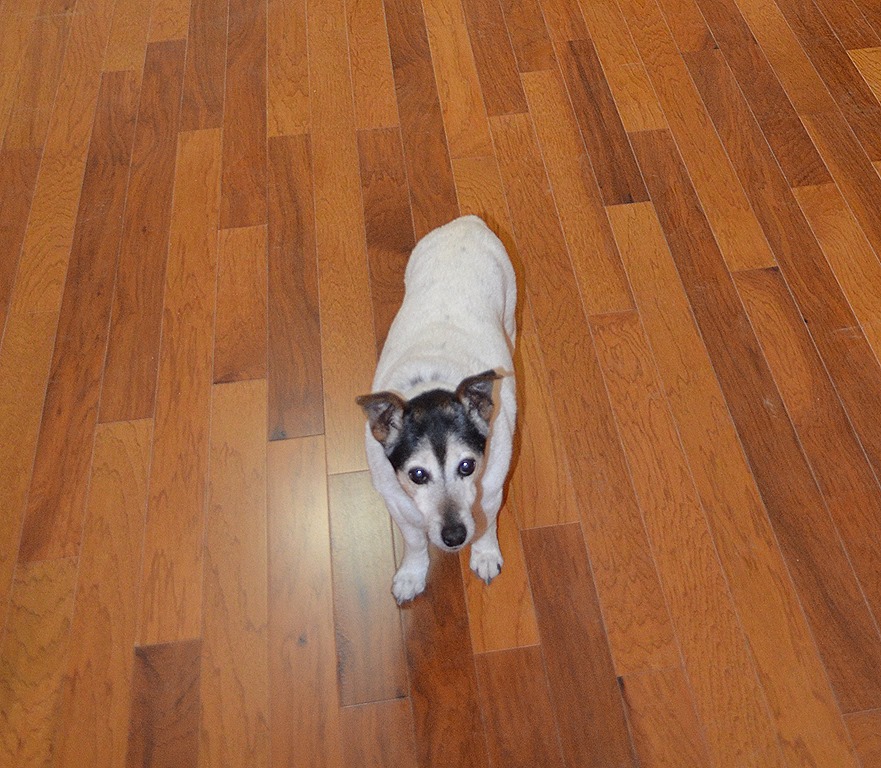
This morning, crying inconsolably, I brought Cyrano, our rat terrier, to the vet, knowing within the hour, I would be ending his nearly 16-year old life. While we’d had him barely four month, the prior years of his life, spent with my mother, he’d brought us joy, and added to our lives.

Rich called him “Buddy.” I preferred “Sneezy” or “CyraNose.”

His health had declined rapidly. We’d been carting from place-to-place. Every other weekend, he traveled with us to Sherwood, Oregon, where we’d been fixing up my mother’s house. He’d lived in this house for most of his life and was no doubt confused by it being torn up, and then reconstructed with new paint, flooring, refinished cabinets, and much more. Cyrano Lary at Sherwood house

After a long day at the house, we’d trudge up the stairs to our room at the Tualatin Motel 6, conking out on the bed until we began again the next day.

On alternate weekends, he visited my mother in Mount Vernon, happy to lay on the carpeting or join us in shopping for groceries and other supplies.

And during the week, he lived in Kirkland, hanging out with cats, chasing squirrels in the backyard, and sharing the futon with Lila at night (they got along very well, and even sat on the front seat of the car together).

The first weekend in March, he was very crabby and discontent during our final weekend working on the Sherwood house. He’d landed poorly while jumping out of Rich’s truck. And the next day, he missed a few steps while coming down the stairs in the Sherwood house.

He started limping, and favoring his right foot. By Sunday afternoon, he was very uncomfortable so we placed him in the truck where he could sleep undisturbed, and keep warm with the Oregon sun shining through the windshield.

When we returned to Kirkland, late Sunday night, we had hopes that his leg would improve. It grew progressive worse, as did his energy level. By the time we took him to Mount Vernon, last weekend, Rich was carrying him everywhere.

Not only was Cyrano struggling to breath, but he was distressed, struggling to pee or poop. Monday I made an appointment to bring him to the vet this afternoon. However, when I got home from work on Monday, I knew it would be his last car ride.

I cried and cried Monday night, seeing his discomfort and struggle to walk with his right leg dragging, and the other leg also starting to give out.

This morning Rich had to get up earlier for a final trip to Oregon to oversee the installation of a gas fireplace (we don’t want the renters to use the fireplace for burning wood). I stayed in the bed until 7 o’clock, quickly dressed, woke up Cyrano, and then took him outside for one last walk in the backyard. He could muster only a few feet.

I scooped him up in a towel, placed him in the car, and cried.

The vet was compassionate, saying he had heart failure, his lungs were congested, and most likely a disc slipped in his spine (or was crushed), resulting in the paralysis of his legs.

I called Rich on my cell phone, and held it up to Cyrano’s ear so he could hear Rich’s voice one last time.

I’m sure Cyrano’s ledger is a long list of pluses with few minuses. He loved cats, chasing leaves, running in the waves, long walks, sleeping under the covers, car rides, shredding tissues, nibbling on carrots, Nylabones … and so much more. He is missed. And will always be loved and have a special places in our hearts.