Invocation #3: December, 1983

We are here today, O Lord, to celebrate the Festival of Chanukah. The time of a miracle. When one day’s flame of light was kept going for eight.

We too have witnessed a miracle. Our own. We have kept our Lamp of Life burning to a length of years not granted to everyone.

At times it was hard. At times easy. At times the light burnt so brightly it shed a glow upon all who came near.

At times an ill-wind blew and made the flame to flicker, but always a protective hand came up to shield it.

If once we took our Lamp too lightly, we now know how precious a gift it is. Not be abused or neglected.

So we ask, O Lord, that for the rest of our days, you grant us the power and the will to tend our Lamp; to keep on doing and not being done for. To keep the flame bright and unclouded so we may share its light with others.

After reading this invocation, I immediately sent the following spiritual message to my grandmother Rose, holder of the Red-Pen-of-Perpetual-Corrections, “You wrote fragment sentences. Lots and lots of fragment sentences!”

I had many heated discussions with her about my tendency to insert an occasional fragment sentence when a short phrase was more appropriate than a grammatically-correct sentence. And now I see, she was a flagrant fragmenter!

Onto the invocation…

My grandmother passed away a month after her 90th birthday. Her husband, Morris, followed a year later. She lived a healthy life, eating small meals, keeping active with gardening, and housework, and remaining mental astute through reading and writing.

She was 83 years old when she wrote the invocation above where she gave thanks for her “lamp of life burning to a length of years not granted to everyone.” It’s a beautiful turn-of-words, but more lyrical is her desire to “keep the flame bright and unclouded so [she] could share its light with others.”

It’s a selfless statement to want life not just for you, but to help others. The ability and willingness to continuing “doing,” whether one’s life work, hobbies, tending to others, or day-to-day activities is what keeps ones lamp burning bright.

Dahlia Philosophy

Last weekend, I went to the Puyallup [Washington] Fair. I’d never been before, but believing the hype was convinced it was going to be fantastic. It wasn’t. Marketed as “one of the biggest fairs in the world, and the largest in the Pacific Northwest,” it fell short in several areas.

I’m old fashioned. Relishing cavernous buildings jam-packed with animals and agricultural products. I want to see tables overflowing with fruits and vegetables, pies, cakes, breads, canned goods, stalks of wheat, jars of seeds, and giant sunflowers with blue ribbons by the best. Show me rows of quilts, hand-sewn clothes, stuffed animals, macramé, knitting, tatting, weaving, crocheting, painting, and everything in-between. Let me walk in awe through buildings full of floral bouquets, cut flowers, potted plants, and landscape displays. I want to cheer for the winners and hope the losers do better the next years.

The Puyallup Fair dabbles on the edge of what I would consider a state fair. It has 4-H exhibits, but primarily what’s exhibited is cats (I’m not making this up) and artwork by local students. They have enormous pumpkins and elaborate displays by local granges, but only a few tables of vegetables. For the most part, they have booths for agriculture groups, gardening clubs, local and government agencies, commercial exhibits (i.e. magic pots, knives, cleaning products, pain relief remedies, rain gutters and roofing, freeze dried mixes, and of course, snake oil disguised as health remedies), carnival rides, petting zoo, entertainment, and ghastly food, including deep fried butter.

One section of the flower display was notable; it featured cut dahlias along with a jaw-dropping, identical bouquets of dahlias, grown by a Dan’s Dahlias in Oakville, Washington.

When I lived in Oregon, a part of my yard was dedicated to growing dahlias.

You have the option, when growing dahlias, to leave them in the soil and wait to see if they pop up in the spring. Or, like me, around Thanksgiving, you spend half a day digging them up the plants, cutting off the stems, and then laying the tubers (usually covered with mud) on newspapers in a cool, dry spot like the garage. Every week or so, I would shake off the dirt. Around the New Year, I would divide up the tubers, and choosing the healthiest ones, which were then packed in straw.

In the springtime, when the tubers began to sprout, I’d plant them in the ground. As they grew, I’d tie the stems to bamboo stakes so they won’t tip over.

Was it worth the effort? Absolutely. I loved picking huge bouquets of dahlias and being able to give away my excess tubers to other flower-lovers.

In a sense, dahlias are like employees. You can leave them alone, hoping they continue to producing at a high level. Or you can nurture them. Help them strengthen their skills, keep them engaged by providing challenging projects, and when necessary, encourage them to expand into other areas to augment their experiences.

Kayaking Across Alki

During the Labor Day weekend, we loaded our Hobby Cat kayak onto the car and headed to Alki Beach, the westernmost point in West Seattle. It was early in the morning so we got a parking spot across from a launch ramp and easily carried the kayak into the water.

It took us about an hour to pedal across the Sound to downtown Seattle. Along the way, we passed the container shipping facilities and waved to several ferries, gliding to and from Bainbridge and Vashon Islands.

We went as far as Discovery Park, before we made the journey across the water, back to Alki.

Hopefully, we’ll have a couple more sunny weekends so we can see other parts of Seattle from our kayak!

Invocation #2: November 16, 1983

Again, O Lord, we are here to spend an afternoon with our fellow members. We are aware that at this time of life we are privileged to be still sharp of mind and sound of body; that we are able to leave our homes and travel about.

Unfortunately there are those upon whom age has laid a heavy hand. They are not able to get out, but must spend their days within confined walls.

For those unlucky shut-ins we want to offer this prayer:

May they find something in each day to bring them laughter; something to bring them pleasure; something to make them feel less alone; something to make them eager to greet another tomorrow.

O Lord, let them find reason each day to make them glad to be alive.

There are so many definitions for “glad.” There’s delight, gratitude, cheerful willingness, and pleasure. It’s a strange word. Flat and bland. Yet, it’s the word my grandmother Rose chose to associate with life – “glad to be alive.”

She gathered broad statements – “something in each day to bring them laughter,” and “something to make them feel less alone” – and tied them into a bouquet with a ribbon of “glad.”

In sense, Rose tied many incidents together with a ribbon of glad. After my father passed away, when I was nine, my grandparents would visit nearly every Saturday. I was thrilled to see my grandmother because of her ability to see the good in the bad and turn despair into hope.

I had a grim childhood — repressive, unyielding, forbidding, and dark. The bright spot was my grandmother. Seeing her every week, made me glad because she found a way to make me laugh, feel less alone, and most of all, gave me the courage to face another tomorrow, and believe someday everything would be better.

Re-inventing scribbles

In the early 90’s, I worked at Tektronix (oscilloscopes and other test equipment) for a non-conventional manager who insisted everyone use an Apple Computer. This was a time when primarily designers, creative professionals, and schools were using Apples. I was thrilled with my compact Macintoshwith its built-in screen, hard disk drive, and carrying case.

It was portal, easy-to-use, and best of all, had an intuitive graphical user interface. It was the latter that planted the idea I could become a writer/graphic artist/marketer extraordinaire. scribbles writing

A few years later, I started scribbles, witha considerably larger Macintosh, outrageously expensive ink jet printer, and software from my then boyfriend who owned a printing company, which employed graphic artists and typographers using Macintoshes. My first jobs were laying out data sheets for Tektronix and other high-technology companies, along with drawing technical illustrations using Freehand.

While I eventually returned to  the corporate world, I always longed to return to producing marketing communications from conception through writing, design, and printing (or more commonly, posting online).

This morning, I recreated the scribbles logo. It’s a bit more ornate than the original, and more cyan than marine blue, but it still conveys my tagline, “Adding color and eloquence.” Tomorrow, I’ll work on getting my Washington business license, and design a website.

Now all I need is clients… hint, hint!

Invocation #1: November 2, 1983

Here we are again, O Lord, to spend a few hours in friendship with our fellow members.

We are none of us without problems, without pains and aches, but we leave them all behind to come here and think of other things and talk of other matters.

Help us, O Lord, to maintain this attitude of balance between our physical needs and our mental needs, so we may continue to lead a hopeful, fulfilling life.

This being the first invocation, I’m sure my grandmother, Rose, agonized over the words, wondering whether her words would invoke introspection or simply be ignored. She put a lot of thought into what she wrote, unlike me who slams out sentences as fast as I can type.

My “attitude of balance” is to get the words down as fast as possible so I can move onto another project. Using a PC, I can easily go back and make changes, correct typos, and move around paragraphs.

Rose, however, used a typewriter. Making changes meant having to cross-out and retype. She had to be thoughtful and deliberate when she wrote. She had to balance the mental need to express herself with the physical aspect of having to type and retype a passage if she had carelessly hit the wrong keys are started typing before she had a complete train-of-thought.

The “attitude of balance,” however, she refers to in this invocation undoubtedly has nothing to do with writing or typing. The balance she juggled was between her writing and the need to be a good wife – keeping the house tidy, making meals, gardening, shopping, and keeping in touch with friends and family.

Rose came from a large family of five sisters and three brothers. Her husband, Morris, had seven sisters. Many lived close by, frequently visiting, and often seeking her support and wise advice. Her writings speak of the challenge of having to stay neutral or watch what she said to keep peace within the family.

Maybe it was this balancing act, which moved her to write about creating equilibrium between ones physical and mental needs.

Weightlessness

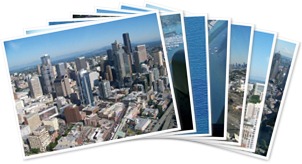
After visiting the Museum of Flight, several weeks ago, Rich and I headed across Boeing Field to Helicopters Northwest. Through Groupon, we’d purchased a thirty minute flight around downtown Seattle. Rich, however, asked if the pilot would fly us over Bainbridge Island, where we hope to move in the coming years.

Unfortunately, the flight was in the late afternoon, which had grown hazy and unusually hot. The latter was a “good thing” because the pilot removed the door on

his side of the helicopter, cooling off the interior and providing an unobstructed view out the right-hand side of the helicopter.

I saw in the front with a digital camera; Rich was in back with a camcorder.

It was the second time I’ve been in a helicopter and the experience is akin to being on an amusement ride where gravity is hold you down onto your side or against the side of a spin cylinder. The weightlessness is both soothing and exhilarating.

We became Peter Pan and Wendy soaring over the Puget Sound, Bainbridge Island, the Sea-Based X-band Radar being pushed back to Alaska by tugboats, powerboat and sailboats cutting across the water, Shilshole Marina, downtown Seattle, and finally, south Seattle and Boeing Field. Even though the helicopter travels at over 110 miles per hour, the only hint of movement is the constant changing of the landscape.

The only drawback of a helicopter is the thrill of the ride ends too quickly.

Rich in Color

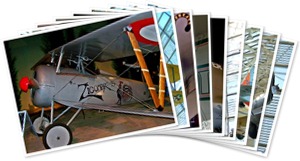
The photo editting software I use is called Photoscape. It has amazing capabilities, including making Rich multiple colors. I shot these photos on the day we visited the Flight Museum and took an helicopter ride over Bainbridge Island and downtown Seattle.

This slideshow requires JavaScript.

Tour of the Flying Fortress

A few weeks ago, Rich and I visited the Museum of Flight in Seattle. This is our second year where we’ve gone and then in the afternoon, taking a helicopter ride courtesy of a discounted Groupon. Our plan-of-action was to see the parts of the museum, which we hadn’t seen the previous year, principally, the World War I and World War II galleries.

After getting our wristbands, Rich wanted to go back outside and check out the planes we’d never seen before. He was particularly interested in the Boeing B-17F Flying Fortress. After learning, we need to enter our name in a drawing to get a tour of the inside of the plane; Rich huffed back into the museum and submitted our names.

The drawings was going to be held in 30 minutes or so, providing us with an opportunity to see a smidgen of the T. A. Wilson Great Gallery, which is a giant glass structure with over 40 aircrafts suspended from the ceiling and on the ground. It’s breathtaking. You can easily spend several hours gawking at the aircrafts and snapping photos.

However, thirty minutes passed quickly and we zipped back to the table where they draw the names for the B17F tour. Amazingly, our ticket was drawn first. I could feel Rich’s humor immediate improve.

With ticket in hand, we waltzed outside along with two other men whose names were also drawn. The B-17F, owned by the museum is the most authentically restored B-17F in the world, and the other one, which is capable of being airborne. According to the tour guide, “no amount of money was spared in restoring the plane.” Boeing — as much a part of Seattle as Starbucks, Nordstrom’s, and Microsoft – provided a blank check.

Over 12,700 Boeing B-17 Flying Fortresses were built, starting in the 1930’s. Improved over the years, the heavy bomber aircraft became pivotal during World War II for bombing missions, most notably the Eighth Air Force raids on Germany and occupied territories. They were built tough to hold a crew of ten along with 8,000 pounds of short-range or 4,500 pounds of long-range bombs, and up to thirteen machine guns in the nose, tail, gun turret beneath the plane, two in the middle, and one behind cockpit. A further advantage of the B-17F was its ability to fly at 10,000 feet for ten hours at 200 to 250 miles per hour.

The B-17B at the Flight Museum was built in 1943 at Boeing’s Plant II. A year later, it left for the European Theater, but was never used in combat. Instead in November 1945, it was withdrawn from service and shipped to Altus, Oklahoma for disposal. A year later, it was stripped of war-making items and plunked in a War Memorial park in Stuttgart, Arkansas.

In 1953, it was purchased and turned into an aerial sprayer and later used for fighting forest fires, and as a tanker. In the late 60’s it appeared in several movies, including Tora Tora Tora, and the Memphis Belle. By 1991, it was in terrible shape, but was fortuitously purchased and installed at the Museum of Flight, where restoration began.

Ten years later, Rich and I got to tour the plane!

While Hollywood portrayed the glamour of being a World War II fighter pilot and crew member, it must have been miserable. Miserable!

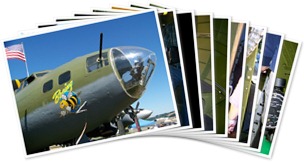
The aircraft is as it names, implies, a flying fortress. There’s no heat so everyone wore heavy uniforms that were heated, along with gloves, hoods, helmets, boots, and an oxygen mask. Everyone was trained to constantly watch their individual oxygen regulators to make sure it was working – see the blinking “eye” in the B-17 album.

One crew member, usually a smaller man, would crawl into the tail section and shoot one of the machine guns. Another man would climb into the turret beneath the plane, lie on this back with his feet in stirrups, and spin around 360-degrees, firing at enemy planes. Two men sat in the nose of the plane, ready to shoot their machine guns. Two men stood in the middle of the plane, with no protection from the weather, as they fired machine guns. The navigator also had a gun, and was located behind the cockpit. In the cockpit were two pilots. The ten men stood or sat on a “swing seat” behind the navigator and fired a machine gun by looking through the “blister” on top of the plane.

These men stood at their post for up to ten hours. The “bathroom” was a tube that extended out of the plane with a metal funnel at one end. The tour guide noted the crew was very careful to make sure the funnel – icy cold – never touched any part of the skin. The kitchen was a thermos of hot coffee with paper cups.

The tour guide said that up to 1,000 B-17’s would fly in format, and then drop their bombs at once – carpet bomb – over Germany, France, and other axis strongholds. It also mentioned that there were huge fatalities with over half of the B-17’s being shot down.

It took over an hour to go through the Boeing Bee, the B-17, at the Museum, but it was certainly worth the time. Afterwards, we saw most of the World War I and II galleries. There’s so much to see… next year!

Riding the USS Bonhomme Richard

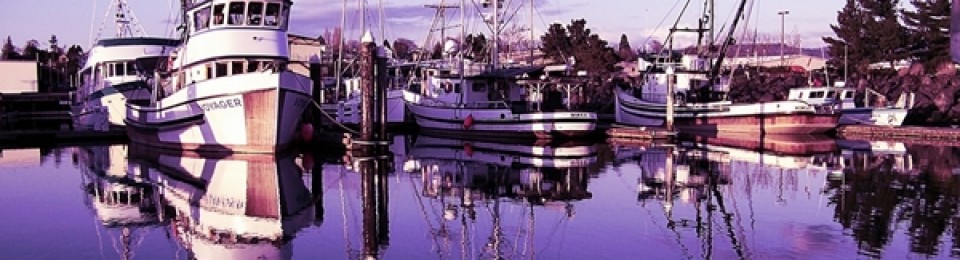
As part of the Seattle Seafair, you could sign up to ride on a military vessel. Rich and I were lucky to have been chosen to ride on the largest ship, the USS Bonhomme Richard (means “Good man Richard” in French), an amphibious assault ship named in honor of John Paul Jones’ famous frigate, which sunk after successfully securing the surrender of the British frigate, the HMS Serapis.

The Bonhomme Richard we boarded, along with several hundred people, including Sea Scouts and ROTC cadets, is 844-feet in length, 106-feet wide, and can carry 1,800 troops along with a crew of 1,200 officers, sailors, and marines. In its well and top decks, it can carry three Landing Craft Air Cushions (LCAC), several M-1 Abrams tanks and Amphibious Assault Vehicles (AAV), and a dozen or more Harrier jets, and assorted helicopters. It’s amazing how many different types of helicopters existing from two-seater attack helicopters (very cool) to behemoth cargo helicopters that can carry up to 37 troops along with equipment and supplies.

We were one of the first passengers to get on the ship, which afforded us the opportunity to ask lots of questions and walk around and see the many aircrafts before the ship left port.

When the ship “pushed off” around 10:30, several tugboats pulled it off the dock and guided it past container shipping facilities where several men on top of a huge crane were taking pictures of the ship… at the same time people on board were snapping their pictures.

Once in open water, we zipped along until we were opposite Bainbridge Island. I tracked our route via my magical Windows Phone!

Around noon, they started to serve lunch, which was quite a production and took several hours. We were towards the back of the line and as we approached the food, an officer shouted out that there was no line if you wanted chicken. I told Rich, he was going to have to skip getting a hamburger or hotdog…

The barbequed chicken was delicious! The only drawback was the “chicken line” only offered baked beans and potato chips, instead of salads and other goodies. Although, after gobbling the chicken, the “hamburger and hotdog line” dwindled down to a few people, presenting an opportunity for Rich to get a hotdog, at least ten cookies, potatoes salad, and an apple!

After lunch, the two LCACs were launched. They resemble giant black beanbags with a flat deck, two huge fans at the back, and mechanical equipment along the edges. The drivers sit in a small cab with four windshield wipers that whap back-and-forth as the LCAC kicks up sprays of water.

Even though, they look awkward, LCACs can go up to 45 miles per hour. While in the well deck of a ship, tanks and other vehicles, along with equipment and troops – up to 75 tons — can be loaded onto a LCAC. The giant air cushion then flops out of the ship and zooms to land, dropping off its cargo and then returning to the ship to carry more.

Joining the Bonhomme Richard was a destroyer, Coast Guard ship, and several small Naval vessels. To further ensure the safety of the ship, there were several armed sailors, stationed strategically around the ship. It was kind of’ creepy, seeing fully-armed sailor walking the decks.

As the ship headed back to downtown Seattle, the sailors and marines were told to line up around the upper deck. It was very cool to see them. And as we approached downtown, they saluted their host city.

It was an amazing day! We can’t wait to sign up again next year!