• About
  • scribbles
  • Tribute to Rose

Rajalary

~ The adventures of Richard and Julie Lary

Rajalary

Category Archives: Travel

Where Our Forefathers Walked

05 Tuesday Jul 2011

Posted by rajalary in Travel

≈ Leave a comment

(Continuation of our east coast adventure in early May) After a restful sleep and shower at the Day’s Inn in Arlington, Virginia, we hit the road for Alexandria, and once again thanked our “lucky stars” for helping us to get a rental car the night before, following our late arrival in Washington D.C.

With the heat and high humidity, Virginia is verdant and beautiful with green deciduous trees, flowering bushes, and emerald green lawns. We passed street-after-street of beautiful historical houses surrounded by blooming peonies, azaleas, rhododendrons, wisteria, lilacs, morning glories, hydrangea, honeysuckle, and ornamental grasses. Virginia makes my heart pitter-patter even if I keep hearing the voice of people I know who’ve lived in the South, and speak fervently about the dreaded humidity and heat of Virginia summers.

We had no problem finding parking a parking spot in downtown Alexandria, across from the Stabler-Leadbeater Apothecary Museum, a retailer, wholesaler, and manufacturer of herbal botanicals, which was founded in 1792. After feeding the parking meter, with a tour map in hand, we set out along the narrow, occasionally cobblestoned streets to seek out and snap pictures of historical shops, houses, and taverns.

Because much of downtown Alexandria has been gentrified with the historical buildings restored rather than taken down, on nearly every block a building or street is listed on the National Register of Historical Places. I was in awe of the ornate, Georgian row houses with tall rectangular windows, shutters painted in contrasting colors, pretty entryways, low picket or metal fences, and tall brick chimneys.

I immediately longed to move from our suburban home with a big yard to a cute little row house. Then it occurred to me, these houses were building in the 1700’s when plumbing consisted of a pitcher and washbasin for a sink, and a chamber pot for a commode. In addition, the kitchens were probably small, requiring a table for preparing foods, shelves for dishes, and a fireplace for cooking. Accommodating a modern kitchen with a stove, oven, dishwasher, double-sink, refrigerator, and cupboards, would require major remodeling, electrical, and plumbing, and most likely, the need to expand into another room.

In addition, the only light that comes into a row house (unless located at the end of a row) is through the windows in the front and rear of the house… and if your house is on the National Register, you need to keep the original windows. The most difficult aspect – at least for me – would be the proximity to the street. The front doors of the row houses we saw were a handful of steps from the edge of the sidewalk. Pedestrians walk within a few feet (or inches) of your front windows and doors. Closing your drapes doesn’t become a choice, but a necessity.

Okay. Skip living in a historical row house in an east coast city!

After an hour or so, we decided to duck into The Lyceum, a grand hall, built by the Alexandria Lyceum and the Alexandria Library Company in 1839 for lectures, scientific experiments, and “quiet reading.” The building was later used as a Civil War hospital, private home, office building, nation’s first Bicentennial Center, and currently Alexandria’s History Museum. While small, the museum provided information about the area, founding of the United States, and of course, the Civil War.

Also of interest was the Gadsby Tavern, built in 1785. The tavern and associated hotel became the center of Alexandria’s economic, political and social live in the late 18th and 19thcenturies. Visitors included George Washington, Thomas Jefferson, John Adams, James Madison, and James Monroe.

Recently, a portion of the tavern’s basement was restored. From the sidewalk, you can walk down a small flight of stairs to a large window, which allows you to look down into a cistern, for storing water, and also a portion of the basement for cold storage. Food was kept cold by storing below ground.

Nestled among the houses was Christ Church, the first Episcopal Church in Alexandria. Completed in 1773 by Scottish merchant John Carlyle, the church was regularly attended by George Washington and Robert E. Lee.

I was too short to look inside the church, but Rich said there were “gated” sections of pews, which were assigned to local families for their use.

The churchyard, surrounding the church had dozens of worn gravestones, which had been moved throughout the decades for construction and during the Civil War, when they had been stacked against the parish walls. From the late 1700’s to 1809, it’s estimated around 1,000 people, including eleven African-Americans were interred in the scarcely half-acre churchyard.

Located in the center of Alexandria is Market Square, one of the oldest continuous operating farmers’ markets in the nation where local farmers, including George Washington (who owned five farms in Mount Vernon) used to sell their crops.

The square was also used for public meetings and military operations. According to a website on historical Alexandria, “In 1755, Gov. Robert Dinwiddie designated George Washington (age 23) colonel and commander-in-chief of all Virginia forces; and Washington is known to have reviewed and possibly drilled the local Fairfax County militia and the militias of four other counties in Market Square. Later, as the colonies prepared for the Revolution, George Washington was appointed commander of the Fairfax independent militia companies, and he reviewed the militia troops in Alexandria’s Market Square in early January 1775. On June l5, 1775, the Second Continental Congress selected George Washington as commander-in-chief of the Continental Armies.”

After wandering through historical Alexandria for a few hours, and seeing that our parking meter needed to be feed, we drove to a few miles to the Torpedo Factory Art Center. I was super excited about seeing the factory because I’d read about it in advance and knew it has become one of the largest visual art centers in the country with 82 artist studios, six galleries, an art school, and the Alexandria Archaeology Museum.

The multi-building complex was built after World War I by the U.S. Navy to manufacture torpedoes. Production continued until 1945 when the buildings were used for a government storage facility. Years later, the city of Alexandria renovated the building into working studio spaces for artists and craftspeople.

Rather than look at art, our goal for visit the Factory was to grab a quick lunch, and then head to Mount Vernon.

The Factory beaconed us and we ended up spending over an hour quickly walking through the three floors of extraordinary art from paintings to photography, jewelry, ceramics, sculpture, beadwork, lithography and prints (they have a larger area filled with art presses), and glasses. I could have spent all day casually wandering through the galleries.

Finding something decent to eat for lunch was a different matter with three to four fast food joints in the Factory’s food court. We settled on splitting a plate of dreadful Chinese fried noodles, mystery meat, and vegetables (primarily cabbage). Nauseated, but our stomachs full, we set out for Fort Ward.

Located a short drive from downtown Alexandria, Fort Wardis the best preserved of the Union forts and batteries built to protect Washington D.C. during the Civil War. Today, it looks like a giant park with a handful of canons and signs, pointing out how the site was used. The latter isn’t readily obvious mainly because warfare wasn’t overly sophisticated during the Civil War. Essentially, battalions of men would race up hills, over berms, and around other obstacles. The battalion in the most strategic location or with canons would kill most of the men in the other battalion; thereby becoming the winners.

Thousands upon thousands of men would be killed in a single day, left to rot on the battlefield their single-shot muskets at their sides. It was a macabre and horrible war. It’s estimated 620,000 Americans died from battle deaths or disease during the war.

After visiting Fort Ward, we drove to Mount Vernon, passing the George Washington Masonic National Memorial. This colossal memorial and museum sit on top of a hill, overlooking downtown Alexandria. Running short on time, we skipped seeing it, which in retrospect was wise.

I was expecting the Mount Vernon Estate and Gardensto take an hour or two to tour. Ha!

The estate and associated visitor centers, gardens, and buildings are extensive, and if you dawdled, could take all day to visit. Along with buying a ticket to see Washington’s house, we decided to go on a 45-minute cruise of the Potomac River, which runs along the back of the estate. Unfortunately, the gloom of the day didn’t lift so the cruise wasn’t overly scenic, but it was a nice opportunity to sit down, relax, and nibble on popcorn as we viewed the shoreline.

This slideshow requires JavaScript.

Prior to getting on the boat, we zoomed by Washington’s tomb, which I found creepy. The burial vault, which also houses Martha and other members of the Washington family, is quite sizable. In the middle is Washington’s ossuary, no doubt, containing not much more than his bones, dentures made from hippopotamus teeth, and war medals, which unlike flesh and clothing, taking longer to disintegrate.

Following the boat ride, we visit the pioneer farmer site, which was representative of Washington’s farming operations on his plantations. People in period clothing were on hand to elaborate on farming techniques, the “joys” of being a slave, and the operation of his innovative 16-sided barn.

Yes, unlike what Michele Bachman believes, the founding fathers may have expressed a dislike for slavery, but weren’t hesitant to use them to boost their personal fortunes. In the case of Washington, there were 316 slaves at Mount Vernon, including 123 owned by Washington, 40 leased from a neighbor, and 152 dower slaves, which were part of his wife Martha’s first husband’s estate.

Wikipedia notes, “As on other plantations during that era, his [Washington’s] slaves worked from dawn until dusk unless injured or ill and they were whipped for running away or for other infractions. They were fed, clothed, and housed as inexpensively as possible, in conditions that were probably quite meager. Visitors recorded contradictory impressions of slave life at Mount Vernon: one visitor in 1798 wrote that Washington treated his slaves “with more severity” than his neighbors, while another around the same time stated that ‘Washington treat[ed] his slaves far more humanely than did his fellow citizens of Virginia.’ Washington’s writings show that he had a low opinion of the honesty and willingness to work of his slaves, as well as of the ability of his overseers to control them. The overseers were given written authorization to whip those slaves he considered to be in need of such ‘correction,’ including female slaves.”

Although, Washington was the only prominent, slaveholding Founding Father to emancipate his slaves, which he did following his and his wife’s death.

As noted previously, Rich and I must have been asleep through American history, because neither one of us knew that Washington had slaves. And discovering he was an enthusiastic slave-owner sored much of our visit to Mount Vernon.

We rambled across the estate, interpreting everything we saw with a bias. “Gee, could Washington had accumulated and worked 8,000 acres of fruit and vegetables, formal gardens, nurseries and greenhouse for propagating new plant and seed varieties, and an extensive fishing operation if he to pay for labor versus working slaves from dawn to dusk, six days a week?”

Plus, George and Martha extensively entertained, keeping the domestic slaves hopping from slaughtering animals and preparing meals to laundering and ironing clothes and linens, cleaning the mansion, and doing what’s necessary to ensure horses and carriages were ready at a moment’s notice.

Not only did slaves have to do all of the work around the estate, but they had to make their own clothes and shoes, grow and prepare their own food, and somehow care for their children and personal needs.

Okay, looking past the slavery issues, there were many innovations on the estate, which were noteworthy. There were small outdoor privies or toilets called necessaries with drawers in the bottom to collect human waste. This waste, along with that of farm animals was placed in the dung repositoryto decompose and be turned into fertilizer for crops.

Washington inherited the mansion from his father and expanded and remodeled it several times. To create a stone-like exterior, the walls were sprayed with a mixture of paint and sand. The interior is surprisingly ornate with marble fireplaces, baroque ceilings and carved molding, rich wood paneling, large oil paintings, and elegant drapery and furniture. Check out a virtual tourof the mansion.

Hands down, our favorite part of the estate was visiting with Martha Washington. We were about ready to leave and saw a building, which we hadn’t gone into. The attendant at the door told us to enter quietly because “she had guests.”

Inside were rows of chairs with a small stage with period furniture and knick-knacks. Seated on an upholstered chair was Martha Washington in an ornate dress, talking about her life at Mount Vernon. The woman playing Martha was extraordinary. You could ask her any question and in a conversational tone she’d respond, speaking as if it was still the 1700’s.

Rich and I were mesmerized. She talked about how various politicians didn’t support Washington, creating strife and questioning his ethics. One politician she refused to name. I believe she was referring to Patrick Henry who opposed the United States Constitution and refused to attend the Constitutional Convention of 1787, claiming he “smelt a rat in Philadelphia.”

If you closed your eyes, it sounded as if she was talking about the mendacity and “terrorist tactics” of today’s Republicans who refuse to support anything President Obama proposes!

Running out of time, and needing to get to Rock Hall, Maryland to get on the boat we were chartering, we had to zoom through the Ford Orientation Center and Donald W. Reynolds Museum and Education Center, two large complexes with fascinating exhibits and educational galleries and theaters. If we visit the east coast again, we’ll have to visit Mount Vernon once again.

Favorite Pictures (so far) from Victoria

20 Monday Jun 2011

Posted by rajalary in Travel

≈ Leave a comment

Yesterday afternoon, we got back from a whirlwind, three-day trip to Victoria, B.C. by Victoria Clipper, a high-speed (30 knots) jet boat. I just downloaded the 167 pictures we took. Here are a few of my favorites… Rich pretending to be a water can and me getting friendly with Plaster Man, Parliament Building, Market Square, and the favorite of cuisines at a local restaurant (never heard of Canadian cuisine):

View album

Victoria, BC
VIEW SLIDE SHOW DOWNLOAD ALL

Lots of Trees, no Vampires

13 Sunday Mar 2011

Posted by rajalary in Travel

≈ Leave a comment

Continuation of our trip along the Washington coast in late December… We had a long drive to our next stop, Sequim. Along with way, we passed through Forks, a tired timber town of less than 3,200 people (without fangs). Named after the forks in the nearby Quillayute, Bogachiel, Calawah and Sol Duc rivers, its biggest employer is the Clallam Bay Corrections Center and tourism surrounding the quest to find Bella Swan, Edwin Cullen, and a host of other vampires and miscreants. There was a multitude of stores selling Twilight clothing and collectibles, along with tours of the town.

Aberdeen_2Having safely traveled through vampire territory, we headed to Neah Bay, the most northwest point of the continental United States and also the home of the Makah Indian Nation. The town of 900 people is known for its eco-tourism and exceptional halibut, ling cod, and sea bass fishing. Across from Neah Bay is Vancouver Island, Canada.
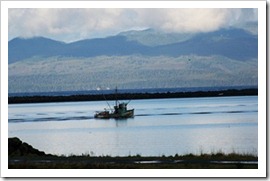
Rich was looking forward to walking around Cape Flattery trail, considered one of the most breathtaking views on the Pacific Coast. Because the trail is part of the Makah Indian Reservation we needed a visitor pass. With the day getting late, and knowing we could only stay at Neah Bay for an hour or so, we simply drove through the area. While Rich ran into a local supermarket to buy us something to drink, I climbed on top of the motor home and snap the photo to the right of a fishing boat leaving Neah Bay. Neah Bay boat

The drive to a campground in Sequim was longer than expected with our arriving moments before the sun disappeared for the day. We slipped into a secluded spot near the restrooms and were the only people in the park, besides the camp host.

It being our last night on the road, Rich decided to splurge and purchased two 50-cent tokens for the shower. Even at home, we usually shower together. But with no family showers at the campground, we decided to use the shower in the men’s room. We figured we’d be “safe” for the fifteen minutes it took to jointly shower. What we didn’t count on was the shower stopping after three minutes (one token) instead of six (two tokens).

I’d dawdled in rinsing off because I thought we had plenty of time. When the water abruptly stopped, I was covered in suds in areas, which can be challenging to rinse. Rich, dripping wet and naked, had to make numerous trips to the sink around the corner, dampen a wash cloth, and then sprint back to the showers so I could wipe off the soap.

Oh the fun of camping when you’re trying to cut corners!

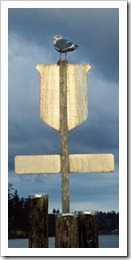
SeagullThe next morning brought sunshine, but no relief from the biting cold. Bundled up with hats, scarves, and gloves, we wandered towards the water, across a charming covered bridge, and then across a floating dock, where a seagull peacefully perching on a sign, taking in the sites or maybe wondering where he might swoop down and snag a tasty fish.
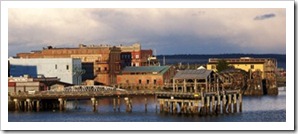
After an hour or so, we pulled up camp and headed to Port Townsend. As we approached, the sky darkened and snow started to lightly fall, adding to the accumulations of snow already on the streets. We enjoyed a quick lunch in the motor home before venturing out to the Northwest Maritime Center, a recently completed complex with a chandlery; boat-building facility; warehouse to store kayaks, skulls, and other small boats; coffee shop, meeting rooms, and much more.

Port TownsendCatty-corner to the maritime center is the Jefferson County Historical Society. Because it was very cold outside with intermittent snow, sleet, and rain, we decided to see the exhibits, which are housed in the Port Townsend City Hall building, and former municipal court room, fire hall, and jail. The latter was my favorite because it contained an exhibit called “Sin at Sea Level: Bars & bordellos, shanghaiing, smuggling, murder, mutiny, and other mayhem in early Port Townsend.” The ladies-of-the-night were very enterprising and their photographs showed many to have been very attractive.

Motorhome on ferryIn the courthouse were intriguing relics from Chinese and Japanese immigrants who set up shops and influenced the culture of the area. Most likely many didn’t have much money when they left their native lands so they probably couldn’t afford to bring only a few trucks of possession to America. What they chose to bring included inkwells, pens, mahjong tiles, ornate clothing, and ceramics.
A large toolbox of woodworking tools, including a variety of lathes for creating spindles was of interest to Rich. Many of Port Townsend’s historical homes are ornate with Victorian details.

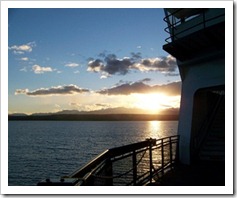
FerryLate in the afternoon, we drove the motor home onto a ferry and headed to the east side of the Puget Sound, Coupeville on Whidbey Island. The blustery day turned into a spectacular sundown as the ferry left the dock. Sipping coffees and nibbling on the last of our snack foods, we reflected on our trip along the Washington coast and how for the most part, we hadn’t been impacted by the weather.
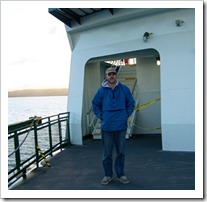
Little did we know it would take an hour to drive ten miles along the snowy, congested street that runs from downtown Burlington to Mount Vernon. Rush hour traffic combined with a sudden snow storm made for very slow driving!Rich on ferry

This summer, we’re looking forward to returning to the Olympic Forest for a few days of camping and hiking. If you take a ferry from Seattle to Bremerton, it’s an hour’s drive to the east side of the forest and another hour or so to the coast.

The cats are equally excited about going because they like the attention, sleeping in front of the heater vents on the floor of the motor home, and scratching in their litter box when we’re trying to sleep.

Las Vegas Pictures

24 Monday Jan 2011

Posted by rajalary in Travel

≈ Leave a comment

I just realized that I never posted the pictures I took in Las Vegas last October. We arrived late in the afternoon at the Rio, which is across the freeway from Caesar’s Palace. Our “standard” room was on the 2oth floor with a great view of the strip and surrounding area.

Before hitting the casino, we decided to take a quick dip. On the way to the pools, Rich, incredibly, bumped into someone he knew at IBM. A technical convention was underway at the Rio Convention Center, which focused an IBM technology.

Small world!

Neither Rich or I gamble, although, last time we visited Las Vegas, we spent a chunk of the evening, feeding penny-slot machines. At the time, the slots were very loose and we ended up several dollars ahead.

This trip, the slots were so tight that we quickly burned through $3, betting just a few cents at a time. I was close to tears.

Wisely, Rich put the loss into perspective, explaining I probably would have had an ear-to-ear grin if I’d spent the $3 on iced coffee from Starbucks. True.

Happily, an hour later, I was sipped a creme- and ice-infused coffee concoction as I watched a turrential downpour outside the newly built City Center.  We were both felt we’d won the jackpot by being in the right place at the right time to see curtains of rain stream down the sparkling skyscrapers with bolt of lightening, adding to the excitment.

The next morning, from the 20th floor of the Rio, we woke to lightening and were thrilled to see it streak across the desert as the sun started to rise. Check out some of our photos from the evening and next morning..

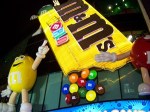
M&Ms are better when they’re gigantic!
Rich took this dramatic shot of Paris and the Bellagio

I need to use a tripod! Happily this picture turned out.
Rich Lary
Rich on the Las Vegas strip
Excaliber shot from New York New York

City Center reflection
I love the boldness of this huge McDonald’s sign
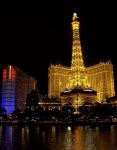
Paris Casino
Paris Casino taken from the Bellegio

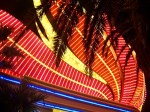
I hope the Flamingo never gets torn down… the lights are great!
Reflection in a City Center building

Rio Casino
Picture of Rio from our window
This was shot after the rainstorm. The sky was perfectly clear.
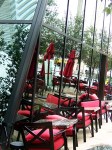
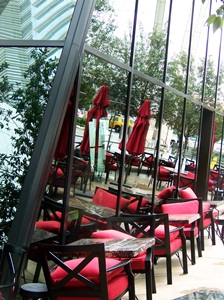
Chairs at outdoor cafe at City Center

Shot during the rainstorm. The foreground is a wall of water.
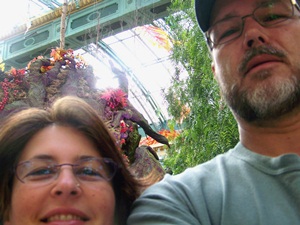
Richard and Julie Lary
Our self-portrait in the Bellegio

Rounded Rocks and Giant Logs

16 Sunday Jan 2011

Posted by rajalary in Travel

≈ Leave a comment

As I start to write this blog entry, questions about the weather are of great interest. Supposedly one to three inches of snow are going to fall on the Seattle area, in the next hour or two. (As I post this entry, I can report, we received several inches of snow, which turned to slush by the next morning and was history after an hour of warm rain). Kalaloch campground

There was no speculation about the weather several weeks ago when we were heading north along the Washington coast to the Olympic “rain” Forest. Rain, sleet, hail, and snowflakes were in the forecast. Happily, while overcast, we had very little rain as we drove to our next campsite at Kalaloch.

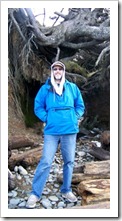
Rich at KalalochWe passed through thick groves of trees with umbrellas of moss, blocking the sunlight and creating a fairytale land below filled with gnomes living in hollowed-out tree trunks, industrious squirrels in pea coats who barter in pine nuts, and a couple of mean-spirited trolls. At any moment, I expected a plucky gnome to dash onto the road from behind a thicket of trees.
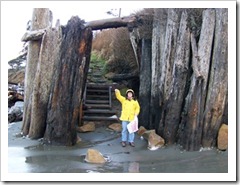
The boundaries of the Olympic National Forest meander, crossing over Highway 101 for a dozen or miles and then abruptly ending until you reach another patch of the forest. You don’t need to read the signs along the sides of the road to know whether you’re entering or leaving the forest. Decades of clear-cutting and harsh lumbering has turned what was once rainforests into scraggly strand of evergreens or miles of stumps with gigantic piles of dried branches and riffraff left by loggers.

Kalaloch_2The timber companies leave their apologies for the destruction they wrought by erecting signs indicating when they last logged and the date of their next pillage. While I recognize lumber is necessary for building houses, buildings, furniture, and much more, it’s ravaging of the land is heartbreaking.
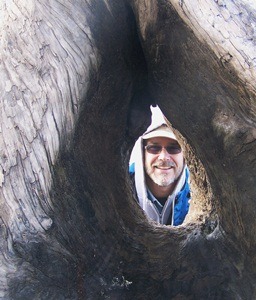
The seas probably looks no different. If we could drive through them, we’d probably be aghast at the drop in marine life and the sea floor littered with refuse from society.

Rich at Kalaloch_2Man is very destructive and more prone to excuses and justifications than finding solutions and alternatives.

Happily, “Socialism in America,” more specifically, Woodrow Wilson who signed the National Parks Service Organic Act, and Franklyn D. Roosevelt’s Works Progress Administration (WPA), created a legacy, enabling common folks like Rich and I to enjoy the wonders in the Olympic National Park and Olympic Coast National Marine Sanctuary.

As we approached the campground, we stopped at Kalaloch Lodge, a sturdy shingle-covered lodge built in 1953, but reminiscent of the types of improvements made by the WPA. It offers a spectacular view of Kalaloch, a strip of coast between the Quinault and Hoh Rivers. The name Kalaloch is a corruption of the Quinault term k’-E-le-ok, pronounced Kq–â-lā’–ȯk, meaning “a good place to land,” “canoe launch and landing,” or “sheltered landing.”Red cedar_2

Because it was pouring when we visited the lodge, we didn’t stay long. A hop-skip-and-a-jump away is the Kalaloch Campground, which must have been built decades ago because there are no hook-ups (water, electricity, etc.) and the campsite are very small, most are designed for pitching a tent and parking either a car or truck.

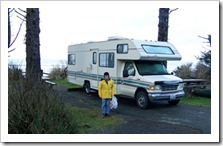
Only a few spots can accommodate a motor home or truck and trailer, which together are no more than 21-feet. Our motor home is 28-feet long, but because it was the middle of the winter, we were able to drive around until we found a larger campsite, which also had the perfect view… out over the ocean!Kalaloch_3

By the time it got dark, many of the campsites in the “loop” were occupied with larger “rigs” having to partially park on the street. I kept thinking how the campground had looked fifty years ago when camp meant pitching a tent, unfolded tables and chairs, setting up a grill, and using ice chests for keeping food cold… and away from bears.

We knew there were bears in the area because up by the bathrooms were large metal chest with signs telling you to put food in the chests or lock in campers or cars. Red cedar

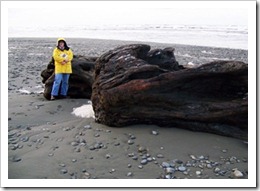
To get down to beach, we walked just a few feet and descended down a steep wooden staircase, protected by a wall of tall logs lashed together. Until you get onto the beach, you can’t understand why the wall of logs is necessary. The waves seem no stronger than on other parts of the coast. The sand is smooth and soft. But then it becomes clear.

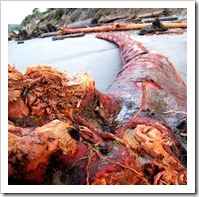
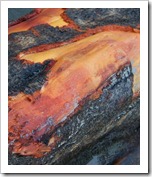
The flotsam and jetsam that have washed up aren’t ordinary. There are giant red cedar logs, the bases taller than me and more than hundred feet in length. Tangles of enormous branches and trunks, which have washed down rivers and streams from the Olympic forest are scattered across the beach, often making it necessary to step over a trunk or climb among the branches to continue walking along the coast.Stone_2

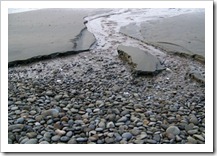
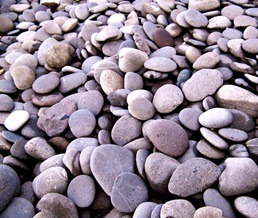
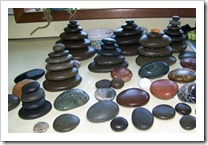
While many beaches have ocean-washed pebbles, Kalalach has smoothed stones, some as large as cantaloupes; although, they’re more like flattened cantaloupes. Rich and I were both enthralled by the rocks, picking through the piles to find the ultimate stones to help create mini rock towers.

Below are what the rocks looked like after I watched and piled them up by the sink in out Mount Vernon We need to figure out what type of glue to use to make them into permanent rock towers for our garden and gifts.  Stones

Even though it was super cold outside and we’d see lots of rain the previous days, we were able to walk along the beach as the sun started setting the day we arrive. And the next morning was fabulous with intermittent blue skies and no rain! We spent several hours admiring the huge logs, picking up rocks, and walking around the park.

This summer, we’re looking forward to returning to the Olympic Forest. We’ll initially hike around the eastern side, and then head north to the coast, which is the drippiest area (one of the few rain forests in the United States). Supposedly, it’s so wet in the forest that even if it’s not raining, you get soaking wet. Stones_2

We Wanted a White not a Wet Christmas

02 Sunday Jan 2011

Posted by rajalary in Travel

≈ Leave a comment

Plop, plop, PLOP! Like bacon sizzling in a hot skillet. That’s what it sounds like inside our motorhome with the rain incisively falling. Occasionally, a cascade of water gushes off down a window after pooling on the top of rectangular can we’ve called home for the past few days.

We knew going into this adventure the weather wasn’t promising with showers in the forecast. Nevertheless, we told ourselves we’d do lots of reading, eating, snoozing, bonding, and cat-tormenting, interspersed with hiking, biking, and site-seeing. With heavy rains, hail storms, and non-stop showers, we’ve barely been outside in days.

After a crazy-hectic and long Thursday of cooking, cleaning, wrapping gifts, assembling bowls of cookies, packing the motor home, and finishing up last minute chores, we left at 5:30 a.m. on Friday morning. First stop, 7-Eleven for scalding hot coffee, flavored with mocha creamer. While Jujube was pesky, climbing onto the dashboard of the motorhome, Zephyra and Pu’Yi Cookiesfound a cozy spot in the bed over the cab. They slept for most of the trip, barely waking up when we stopped a few hours later at McDonald’s for more coffee, fruit/yoghurt parfait, and an Egg McMuffin.

We reached Chris’ house (Rich’s son) in Camas, Washington by 9-ish and then quickly unloaded the packages for my mother into Chris’ car. Rich and Stacey (Rich’s daughter) then drove me to my mother’s house in Sherwood, Oregon (southwest of Portland). I spent the next few hours cleaning her house and doing a handful of chores before zipping to Albertson’s for a roast chicken, potato salad, eggnog, and a small chocolate cake for our lunch… and for her to eat for the rest of the week.

My mother and I then drove – in the rain – to Chris’ house to meet Rich and others for a Christmas Eve dinner and gift-opening. Also at the house were Chris’ wife Shawnie, Shawnie’s mother Letie, brothers Brian and Joe, and her sister, Allison, and Allison’s boyfriend, Ricardo. Stacey had flown up from Mexico, her mother, June, had arrived from Hawaii, and her step-sister Chiami, and her husband, Brian, had come from Colorado.

Pu'Yi LaryIt was a fun evening, especially for Pu’Yi, who put on his red harness and leash and spent a few hours visiting with everyone who thought he was an incredibly well behaved young man. I was so proud!
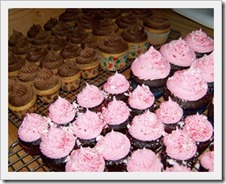
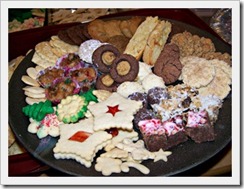
In addition, the mini cupcakes I’d made the day before were a hit; although, everyone seemed to prefer the dark chocolate cupcakes with peppermint icing over the mocha cupcakes with scrumptious dark chocolate icing. I dusted the later with cocoa powder and sprinkled crushed candy canes and red sugar over the peppermint icing. Yum.

CupcakesI also brought a dish that I pioneered at Thanksgiving… roasted yams, sweet potatoes and beets with white sugar, cinnamon and allspice. The sugar and spices making a syrupy, but not overly sweet coating.
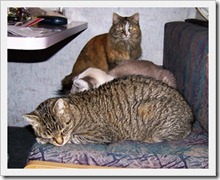
As the hour drew close to 10 p.m., I drove my mother back to Sherwood, and Rich followed in the motor home. We spent the night in the motor home in front of my mother’s house, listening to the rain falling and dreaming about the teriyaki chicken Chris made. The next morning, we took my mother to breakfast and then headed west along with the Columbia River to Cape Disappointment on the Washington coast.

It being Christmas day there was only a handful of trailers and RVs in the campground. We found a nice spot and were hopeful we’d be able walk around the area, which is rich in history and natural landmarks. The persistent heavy rain, however, dampened our plans. With hoped it’d be dried in the morning and spent the rest of the day reading and nibbling on the food we’d brought.

It poured throughout the night; the next morning, it was rainier than the day before. Disappointed that we’d miss out on hiking along the jetty, visiting two lighthouses, and touring the the Lewis and Clark Interpretive Center, we packed up and headed north to Grayland. Three MusCATeers

Along with way, we passed through Illwaco, a small fishing town on the confluence of the Columbia River and Pacific Ocean, which has obviously suffered in recent years with numerous houses for sale, stores closed, and scarcely a person on the street. Illwaco, like many of the town we passed through, are fragile, its residents dependent on fishing, logging, and tourism. According to Wikipedia, 16.3% of the 1,000 or so people who live in Illwaco live below the poverty line. Zephyra

A quick “news” search found an article written in late December about a $1.6 million earmarks by departing U.S. Representative Brian Baird for continued dredge operations to keep the ports of Illwaco and Chinook open. The article explains these ports are essential for maintaining the health of seaside ports in southwest Washington and northwest Oregon.

With the rain unrelenting as we drove to our next campground, I contemplated alternative activities. When Rich stopped for gas in Raymond, I slipped on my Converses, grabbed my raincoat and umbrella, and dashed down the street to warehouse with a wooden sign up front, advertising fresh crabs. Inside was a small office. When no one appeared after a few minutes, I ventured through an open door into the main part of the building, which was full of pallets, staked with large cans of crab meat.

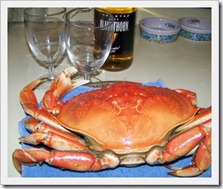
Determined to buy a crab, I called out “Hello!” A man appeared, acknowledged my presence then scurried behind a door. Shortly afterwards, a local walked into the warehouse in search of the fifteen crabs he’d ordered early that morning. He was able to get in his words, “someone who spoke English” to retrieve the crabs and collect our money. I ended up paying $10 for a 2.5 pound crab I named “Fred.” For the duration of our trip, Fred stayed in our motor home’s freezer in a bag with shaved ice. We ate him on New Year’s Eve with wasabi cocktail sauce (mediocre cocktail sauce Rich had bought on sale combined with powdered wasabi and lemon juice). Fred the crab

Check out the picture of Fred grabbing for a glass, intended for our celebratory Blackthorn hard cider. Rich and I served this British cider at our wedding.

The town of Raymond, population around 3,000, is known for logging, fishing, and cranberries. The grunge band Nirvana played their first gig in this town. Around the turn of the century, Raymond has a reputation as a wild and wooly lumber mill town with 6,000 residents. Today, 25% of its population lives below the poverty line.

On the outskirts of the town is Ocean Spray’s Sweetened Dried Cranberry (SDC) and Cranberry Sauce plant. I’m guessing the water from the Wishkah and Chehalis Rivers are used to flood local bogs so the cranberries can be harvested. The plant has been a major employer since 1946 and runs two production lines 24 hours a day, seven days a week with annual output of 20 million pounds of SDCs and 1.2 million cases of cranberry sauce. Hats off to the Ocean Spray Cooperative for being an exceptional employer!Sasquatch Pizza & Wings in Aberdeen, WA

As we passed through Aberdeen, we passed a sign for Sasquatch Pizza & Wings. My out-of-office at Microsoft said we were searching for Big Foot (i.e. Sasquatch) in the Olympic Forest, so it was exciting to discover he’s given up on foraging in the forests for food and has opened a restaurant. It just shows civilization can tame even the most feral creatures.

Our destination for the day was Grayland Beach State Park on Gray’s Harbor. We approached with high expectations bolstered by the clearing weather. While the campground was mostly empty, many of the prime camping sites had several inches of sitting water. Nevertheless, we found a great spot, a stone’s throw from the beach. After plugging in our utilities and pumping up our bike tires, we Grayland Beach State Parkbiked to the ranger station to pay the registration fee. When we arrived, however, we saw our site was reserved.
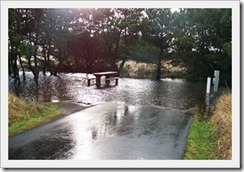
Taking note of the open sites, we madly biked back to the motor home. Closer to the bathrooms and more protected by the trees was another nice spot. While Rich “held” the spot, I speedily pedaled back to the ranger station and successfully registered.Grayland State Park

With each trip, the blue sky seemed to be getting darker and the air colder. On my last trip, I was convinced my nose was going to fall off because of the frosty air. I was dressed in a long-sleeve t-shirt, fleece jacket, rainproof parka (in stunning yellow), double-layer fleece and water-proof hat, gloves, jeans, and leather hiking boots… and was still cold!

Five minutes after we moved into our new camping site, a torrid of hail started falling, followed by torrential rain, and then more hail. As the sun started to set, we felt confident enough to wander out of the motor home for a quick, but freezing walk on the beach.

Julie LaryThe next morning, the sky was clear and Rich rushed me out the door for a lengthy walk along the water. We passed by the ranger station on the way back to our campsite; we stopped for a bit to chat with the ranger and learn more about the area… in particular whether the black bears in the area attack human. The answer is “yes” and “no.” Typically, if you make a lot of noise bears will run away. However, if you happen to bump into a mama bear and her cubs, she’ll be very protective. Best advice. Use a walking stick with a bell attached.
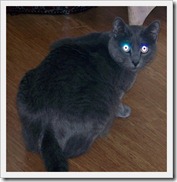
After gathering some brochure, I commented to the ranger about the promising weather. He rebuked me saying it can change at any time. Sure enough, a moment after we started back, we felt the first drop, which quickly become a shower and then a full-force rainstorm! Gracie Lint Lary

To the right is a picture of Gracie Lint who’s too much of a fruit loop to travel in the motor home. She’s afraid of everything except the other cats and squirrels, which she enjoys watching from our French doors. Not part of the three MusCATeers (Pu’Yi, Zephyra, and Jujube), she wanted her picture included in this write-up.

Visit to the San Diego Zoo

16 Tuesday Nov 2010

Posted by rajalary in Travel

≈ Leave a comment

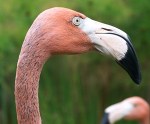
I can never take enough pictures of flamingos.
I like the composition of this picture with the iris out of focus
Flock of flamingos

This is the baby panda.
California condors are huge. They make bald eagles look petite
Giraffes are huge… at the San Diego Zoo you’re 10-20 feet away.

If you look carefully, you can see my reflection superimposed on the gorilla

Shy koala bear
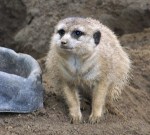
There were two meerkat exhibits that made it easy to observe them

Meerkats always have a look-out for predators
This is the “mommy” panda bear. She seemed grouchy
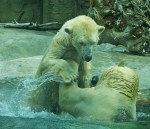
You can see the water dripping off their paws

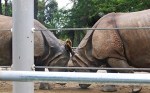
Rich was lucky to have captured these two rhinos butting horns
I think this animal came from Australia
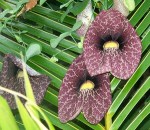
I don’t know what these wicked flowers are called

This turtle had graceful flippers and looked like a mini manta ray

This turtle has a snake-like head
This is actually two hogs standing next to each other

A Reunion in Wine Country

07 Sunday Nov 2010

Posted by rajalary in Travel

≈ Leave a comment

When Rich said he wanted to go to his 40-year high school reunion, my first thought was “Yuck.” How much fun could it be to visit with 58-year olds who graduated from Magnolia High School in Anaheim, California. Nevertheless, had Rich gone to one of my high school reunions, so I agreed to go to his.

It was a surprise to both of us when the invitation said the reunion would be held in Temecula. Temecula? Rich thought it was somewhere near San Diego. I’d never heard of it.

Temecula is bordered by the City of Murrieta, unincorporated areas of Riverside County, and the Pechanga Indian Reservation. The Pechanga Band of Luiseño Indians lived in the Temecula area for more than 10,000 years. In Pechanga mythology, life on earth began in the Temecula Valley. They call it, “Exva Temeeku”, the place of the union of Sky— father, and Earth— mother (“Tuukumit’pi Tamaayowit”).

In 1904, Nova Scotia native Walter L. Vail started buying ranch land in the Temecula Valley. Forty-three years later, the Vail Ranch consisted of over 87,500 acres and was the center of activities in the area – primarily ranching and agriculture.

In 1964, the ranch was sold to Kaiser Land Development Company. With the completion of the I-15 corridor between Los Angeles County and San Diego in the early 1980s, the housing boom began.

Today, what was once ranch land is now neighborhoods with snazzy houses, shopping centers, schools, parks, two dozen wineries, 3,500 acres of vineyards, nine golf courses, and the Pechange Resort and Casino with 85,000-square feet of gambling nirvana, a 1,200-seat bingo hall, 522-room hotel, 1,200-seat showroom, seven restaurants, 2,000 slot machines, 60 card tables, and 15 poker tables. The resort and casino is also the largest employer in the area with about 7,500 employees. The total population of Temecula is slightly over 100,000 and shrinking as more-and-more overpriced houses go into foreclosure.

On our flight to Ontario from Seattle, Rich sat next to a woman who lives in Temecula. She said that they purchased a house in the area several years ago for $600,000, which was inexpensive compared to houses of similar sizes in Los Angeles and Riverside. Today, it’s worth half as much; she and her husband, a professional golfer, are in the midst of foreclosure proceedings.

Before I tell you any more about Temecula, I wanted to mention that we started our trip at 3:30 a.m. when Rich’s cell phone alarm went off. After getting dressed, Rich loaded up the car and made sure the cats’ food and water bowls were filled to the brim. We have a pet-sitter who comes once a day to feed them treats and empty their litter boxes.

While Rich scurrying around the house, I reluctantly climbed out of bed and went into the guest bedroom to put on my clothes, which I’d laid out the night before.

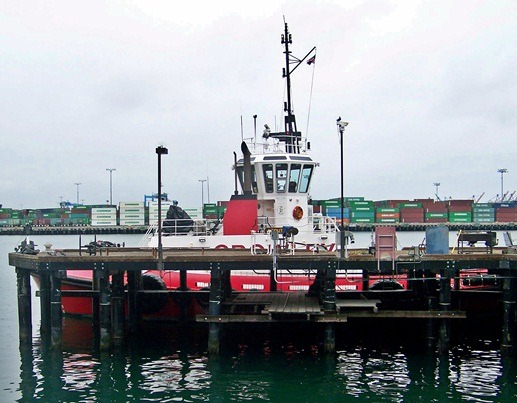
Twenty minutes later, we were ready to go, except, I needed to dash back into the guest bedroom to get my coat. I was sure no cats had gotten into the room, but Rich thought otherwise and we spent the first few days of our vacation trying to get a hold of the pet-sitter to have her check to make sure no cat snuck into the room. Ship at Long Beach (640x426)

By 6 a.m. we were in the air and heading for Ontario. I snoozed a little, but mostly read. Once we landed, we headed to Long Beach and San Pedro. I’m fascinated by the Port of Long Beach, one of the world’s largest shipping ports and the second busiest container port in the United States, handling nearly 6.7 million containers per year!

A container is the metal “box” that fits on the bed of a semi-trailer truck or railroad car. The containers handled in Long Beach arrive and leave via ships going to the Pacific Rim or freight lines provided by Union Pacific Railroad and BNSF Railroad. The Port of Long Beach occupies 3,200 acres of land and 25 miles of waterfront. It generates $100 billion dollars in trade and provides more than 316,000 jobs in Southern California.Crowley tug

Introduce Rich’s daughter, Stacey, to the mix. Stacey works on one of three commercial Crowley tugboats (right) in San Pedro, which provide harbor ship assist and tanker escort. These perky, red, white, and black tugs are available around the clock to guide, push, pull, and wish cargo and other ships into the Port so they can be loaded and unloaded. Her boat is on-call from 3 a.m. to 9 a.m., which I thought was a very strange time. However, Stacey explained that it’s very busy during this time because ships are arriving and leaving so they’re ready to be unloaded or heading out to open water by early morning. Rich and Stacey

During lunch, at a local Mexican restaurant, Stacey further elaborated on the workings of the boat and the challenges of “parallel parking” massive cargo ships against docks and then maneuvering them back into the main channels. Rich’s eyes went batty listening to Stacey talk.

Our next stop was to visit Rich’s brother Ralph, in Anaheim. We could only stay a short time because we had to take several freeways south to Temecula. Being Saturday, we expected light traffic. We’d obviously neglected to realize we were in Los Angles and traffic is only light during the wee hours of the morning!Stacey and Julie

Happily, we made it to our motel an hour and a half before the reunion! After a quick shower, we slipped on our snappy outfits. Rich wore a black, feather-weight wood sweater from Italy with black dress slacks (I can count on two hands the number of times Rich has worn “slacks” since we married).

I wore a sleeveless Jones New York dress with black pumps and hose. The latter were several years old; when I pulled them on, I thought “I bet the elastic has deteriorated.” Sure enough, the top of the hose got looser and looser as we walked from our car to the tasting room of the winery. By the time we got inside, I barked at Rich “No” when he asked if I wanted something to drink.

I wasn’t in any mood to drink anything! My hose had fallen below my butt and were surrendering to gravity. I expected at any minute their complete collapse around my ankles!

Fortunately, there was a bathroom nearby. I tied a knot in the waistband and yanked them back up, where they stayed the rest of the night!

The reunion was held at the Ponte Family Estate, which along with producing blends and varietals, has a large restaurant, ornate gardens, and several event areas. When we arrived, a wedding reception was in full swing in the tent pavilion. Another wedding was being set up in the barrel room and the reunion was held in the reserve room, an intimate setting that included a covered patio.

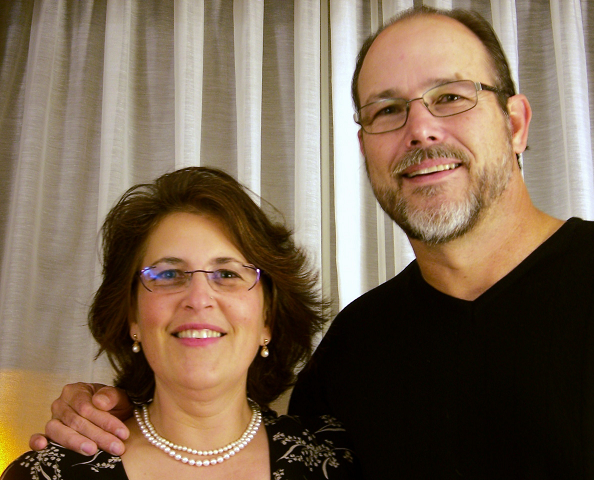
Rich thought they’d be serving dinner. I was pleased it was hardy appetizers, including a glorious selection of cheeses, nuts, dried fruits and crackers; trays of fresh fruits and vegetables; flavorful spreads; and several hot hors d’oeuvres like crab cakes, petite meatballs, mushroom caps stuff with sausage, spinach and pesto, and spring rolls. The piece résistance were the trays of delicate cakes and sweets. I won’t elaborate because writing about them would simply make me hungry and won’t want to reveal that Rich and I split a dozen or more of these scrumptious yummies. Richard and Julie Lary

After chatting with a few people – Rich insisted he was antisocial during high school and knew no one – and eating so much that my hose and Rich’s slacks were in no danger of falling, we headed back to our hotel. Rich tipped a coffee table over in our room and set our camera on top. Using a timer, we took a handful of pictures of ourselves in our fancy clothes.

We then changed into our bathing suits and eased into the hotel’s outdoor hot tub. While I stared at the stars, Rich tried to remember details about his high school days. He’s come a long ways from when he was a skinny dude, riding a motorcycle to school, barely studying (and ending up in the top 10% of his class), and working at a pizza joint in the evenings and weekends.

Putting a Face to a Soldier

27 Thursday May 2010

Posted by rajalary in Travel

≈ Leave a comment

(This article was written several weeks ago on a bobbing boat. It’s particularly apropos for Memorial Day)

The first leg of our British Virgin Island (BVI) sailing adventure started at 6 a.m. at the SeaTac Airport. Because we’d gotten up a 3:30 a.m. all I wanted to do was sleep. Happily, Rich and I were seated in a row with just two seats across. There would be no third person to see me snooze with my mouth wide open and head bobbing from side-to-side as the plane pitched.

Before all of the passengers had been seated, the man across the aisle from us struck up a conversation. He was lamenting the ridiculous charge of $8 for a blanket. He commented that he was “willing to pay two smiles, but not $8.” Then again, with airlines charging for checked luggage, snacks, and in some instances, use of the bathroom, every creature comfort, even a blanket, becomes fair game for a tacking on a fee.

The man, whose name we later learned was Nick, was wearing nondescript white shorts, a tee shirt, white socks, canvas shoes, and a baseball hat. He was eager to talk and was perpetually fidgeting, rubbing his nose, adjusting his hat, scratching his leg, and putting Chapstick on his lips. In spite of the early hour, he was wide-awake and eager to strike up a conversation. He was moving from Fort Lewis, an hour south of Seattle, to the Brooke Army Medical Center outside San Antonio, to be closer to his family. He let slipped that he had been in Afghanistan. My ears perked up.

Not wanting to miss details of his deployment, I fought the urge to sleep and listened to him recount his recent trip, snowboarding at Snoqualmie in eastern Washington. Rich, having been a snowboard instructor for six years, was delighted to talk shop about boards, snow conditions, and other tedious details on how to skim down a hill on a narrow board with your feet restrained in heavy boots.

I continued reading a TIME magazine. Ironically, the lead article was on a captain and his company’s attempts to reopen a school in Afghanistan. Sensing a break in the conversation, I handed the magazine to Rich, with a page open to a map of Afghanistan, and asked that he have Nick point out where he deployed. He was east of Kandahar in an area where the roads where lined with pomegranate trees and an occasional vegetable garden and trees with apple so thickly skinned that he couldn’t abide eating them.

From what we could gather, Nick joined the Army in 2007, after the construction business collapsed in Florida and his plans to travel abroad with friends fell through. He ended up leading a team that patrolled an area crawling with the insurgence. He spoke of the camaraderie and the extraordinary experience of training then closely bonding with members of his squadron.

One fateful morning, however, an improvised explosive device (IED) exploded during his patrol, knocking him unconscious for ten minutes. Later that afternoon, his team encountered another IED. Even though Nick appeared not be injured, the force of the IEDs damaged his equilibrium. His speech, memory, and balance were severely impacted.

Just as a baby is harmed when shaken too hard, an explosion or sharp jolt can cause ones brain to knock against the skull, causing traumatic brain injury (TBI). It’s estimated that two-thirds of all soldiers wounded in Iraq suffer from TBI. The rocket propelled grenades, mortars, and other explosive devices commonly used in Iraq create concussive shock blasts that damage the brain.

Even though Nick enjoyed living in Washington, he was excited about being with his family in Texas. He was hopeful his continual headaches would be alleviated. He explained how they can be completely debilitating, making it impossible for him to do anything more than wish them away. Several times during our conversation, he reached into his backpack for a prescription bottle and gulped down a pill.

It was heartbreaking to listen to him occasionally struggle to find the right word, especially after he explained that he loves to read and used to have a rich vocabulary. His constant fidgeting confirmed the damage that’d been done to his cerebral cortex. We gave him a card with our contact information and asked that he jot down on another card his contact information. He struggled to write his email address, clutching the pen and straining to keep his hand and arm steady.

We unfortunately lost his contact information during our sailing adventure. It would have been nice to have kept in touch. Or maybe not.

Nick put a face on the horrors of the Iraq and Afghanistan wars. He joined the Army on a whim when his plans to travel with friends fell through. In the end, he got his wish, traveling to a hellish country with men who became his closest friends, training, patrolling, and forming a tight unit to protect each other.

Then twice, on a fateful day, the normalcy of his life ended. We’ll never know the outcome of his rehabilitation or whether he moves forward with his life, getting a job, marrying, and having kids. In spite of everything, not a bitter or angry word came from his mouth. He was joyful and determined to grab every opportunity that came his way.

This Memorial Day, Nick is the face we’ll recall when we think about the thousands of men and women who’ve paid a high price to defend America.

Twenty One Hour Day

21 Friday May 2010

Posted by rajalary in Travel

≈ Leave a comment

Rather than write about the start of our recent sailing adventure in the British Virgin Islands (BVI), I decided to provide the ending first. It’s like flipping to the back of a novel when you can’t decide whether it’s worth the time and effort to wade through the rest of the pages.

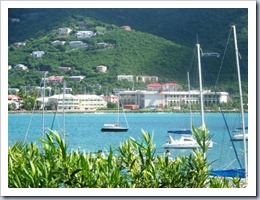
Our final day in BVI was spent at the historical Fort Burt Hotel, which was built in 1666 by the Dutch. In the 1950’s it was turned into a hotel. We were thrilled with our room, which provided a view of the marina, Road Town, and the surrounding hills. Three of the pictures in this blog were taken from our room’s balcony. The pool was a short walk away. View from Fort BurtHaving slept nine night in a v-berth on a thin mattress with a cranky sun-burned wife, Rich claimed the king-sized bed made him feel like a cherry resting on fluffy cream cheese icing, slathered on a carrot cake.
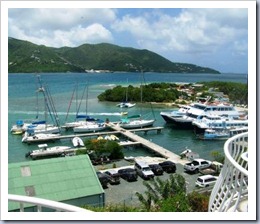
After a glorious day recharging our batteries, we finished packing our bags, turned out the lights, and slept soundly until the alarm went off at 4:45 a.m. Thirty minutes later a taxi whisked us towards the airport.

Because there is no public transportation in BVI and relatively few cars, it’s common for people to hitchhike. And in the seven years since we visited, everyone seems to have acquired a cell phone, which is permanently affixed to their ear. Given these facts, it was no surprise that our taxi driver received a call, and on the way to the airport, he took a side street to a slummy area to pick up a mystery package from a supposed friend. He then returned to the main road, and a few minutes later, gave a lift to a women who needed to go to the airport. We were the only people, however, who had to pay the fare.

In spite of the early hour, there was a lengthy line in front of the American Airlines window. We were unruffled, though, knowing we’d left plenty of time to check our luggage, go through security, and get on the plane. Rich was pleased that he’d carefully packaged our bags. The bottles of water, cans of soda, and a bottle of rum from the boat were in our carry-on bags; snorkel and fins, clothing, and sailing gear in two large Army duffle bags; and my beloved netbook, Sputnik, with pictures and notes from the trip, secured in a satchel and slung over my shoulder.

If you read the paragraph above carefully, you would have realized we were moments away from committing the first of the day’s many mistakes and SNAFUS. You can’t have containers with more than 2 ounces of liquid in your carry-ons. The bottle of rum had to go. And the sodas and waters either drunk or poured out.

Fortunately, the ticket agent was thinking clearly and offered to place the rum in one of our duffle bags, which of course, had already been tossed onto a conveyor belt and zipped outside to be placed on the plane. And unbeknownst to us, she checked both of our duffle bags under Rich’s name. She also recommended that we hurriedly drink the sodas before going through security.View 2 from Fort Burt

While chug-a-lugging the sodas, Rich decided to dump out the water. I recommended that he pour it on some plants. He returned moments later, a smile from ear-to-ear, with two empty water bottles and a cream-colored cat in the crook of his arm. There are many stray cats in BVI who are receptive to petting and nuzzling for food scraps. So in a sense, it wasn’t remarkable to find a cat lounging just inside the airport. The cat was a nice distraction and we hoped a good omen for the long trip home.

We were wrong on all accounts.

After handing my boarding pass to the screener, I was told to step aside, where I was searched from head to toe, and everything in my carry-on bag was taken out while I was questioned about my visit to BVI. Finally, I was told why my luggage and I were subject to such a thorough examination. An “SSSS” (Secondary Security Screening Selection) appeared on the top of my boarding pass, which required an enemy-of-the-state-level of scrutiny. The inspectors even walked onto the tarmac to track down and search my luggage before it was loaded onto the plane.

They were in for a surprise. There was NO luggage for ”Julie Lary” because the agent had checked both bags under Rich’s name! Had this not been the case, we would most assuredly have missed our plane.

But, the fun was not yet over, my carry on luggage and I were re-inspected once again at the gate, making Rich and I the last people to get on the plane.

The forty-five minute flight to Puerto Rico was blissfully uneventful as was our trip through customs and immigration. Once again, however, with an “SSSS” on my boarding pass, I was thoroughly inspected, and my carry-on bag and Sputnik unpackaged and swabbed for explosive residues. They also decided to inspect Rich and his large bag full of sailing gear. We now know that there are no explosive materials on his binoculars, GPS, video camera, digital camera, sailing books, empty water bottle , and wallet.Pool at Fort Burt

After getting cups of coffee and Cinnabons, we waited to board a 7.5 hour flight to Los Angeles. Just as they were boarding the first class passengers, Rich was paged. He was informed that we’d failed to claim our luggage at customs. Rich grabbed our boarding pass out of his backpack and with an American Airlines agent in tow, sprinted back to customs.

The bags were by the baggage carousel so it was just a matter of Rich grabbing them. With the help of the agent, he was able to cut to the front of the line and whoosh through customs. The next challenge was getting through the screeners, which immediately presented a problem because Rich had inadvertently grabbed our tickets for the Los Angeles to Seattle flight instead of the ones for Puerto Rico to Los Angeles.

Fortunately, the agent directed him to the American Airlines help desk, which reissued the Puerto Rico tickets. Aside from being thoroughly searched again, he was able to race back to the board area – shoes in hand and breathing hard – to join me in getting on the plane. Fortunately, we had exit row seats that were in back of first class. We simply needed to make it through the door, cross the aisle, and flop down on our seats.

Prior to the custom’s commotion, I’d purchased what I hoped was an engaging book to read, Relentless by Dean Koontz. I started the 7.5 hour flight by finishing up a magazine and the newspapers we’d brought. I then dove into the novel. By the time we got back to Seattle, I’d nearly finished the book. Dean Koontz is a fabulous writer! Funny! Suspenseful! Innovative!

Since the food selection at the Puerto Rico airport was awful, I recommended to Rich that we buy food on the plane. I’d read that the package meals on the plane are usually very good and inexpensive. Sure enough, when the cart came around, they had a nice selection, at a premium price of course.

Night view Fort BurtRich handed them his credit card and ordered two Boston Market grinder sandwiches with chips, a cheese, dried fruit, and cracker plate, and a large cookie. Leftover from sailing, we had a package of Japanese crackers, some Costco dried fruit and nut mix, and Jelly Belly jelly beans. I recommended to Rich that we space out the food over the 7.5 hour flight. Every half hour or so, he informed me how close we were getting to our next food indulgence.
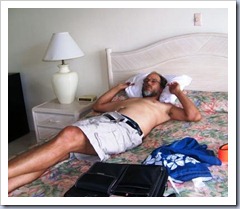
Eating makes flying much more pleasurable!

Los Angeles was smoggy-foggy when we landed. We were optimistic that our luggage had also landed and wasn’t saturated with rum from a broken bottle inside. Putting our concerns aside, we got on a shuttle bus to the Alaska/Horizon terminal. Three minutes on the bus, Rich jumped up and exclaimed that he left his wallet on the plane.

I’m not making this up!

The shuttle driver turned around and barely came to a stop before Rich jumped of the bus and raced for the door. We scrambled across the busy American Airlines terminal and Rich ran down towards the plane we’d left ten minutes earlier.

Writing this, I can’t believe that he wasn’t stopped by some security officer! Undeterred by his lunacy, he ran back onto the plane and looked around our seats. No wallet. He then frantically searched through his backpack. Vola! Wallet!

Back to the shuttle bus. By the time we reached the Alaska/Horizon terminal, my patience was thread-thin. When Rich started scurrying around looking for the gate, I went the opposite direction and found the “departure and arrival” board, which confirmed I was in the right place to get on the flight back to Seattle.

Of course, Rich was furious when he found me and decided to quench his fury by buying more food. His choice was a Burger King “Bessie Cow” burger with French fries and a large root beer. To appease me, he bought from Starbucks a tasty turkey and cheese sandwich on chewy bread. Rich at Fort Burt

Listen. You’re a hostage in an airport. You might as well eat.

The flight to Seattle was nearly three hours, which gave me plenty of time to read Relentless. In the row in front of us were two little kids who were ricocheting off the ceiling before we took off. They proved to be little angels for the entire flight and were kept engaged by their mother.

The monsters in the row behind us were another story. Nevertheless, we were relieved that nearly 18 hours of flying and being at airports was coming to a thankful end. We arrived at the BVI airport at 6 a.m. (3 a.m. pacific time) and landed in Seattle at around 9 p.m.

When we got home, we were too wired to sleep so we unpacked our bags, conversed with the cats, inspected our plants by flashlight, and then watched some TV before crawling into bed, twenty one hours after we’d gotten up at the Fort Burt Hotel in BVI.

And our luggage. It was waiting for us in Seattle. The bottle of rum didn’t break and neither did the two small conch shells we’d packed.

← Older posts
Newer posts →

Subscribe

  • Entries (RSS)
  • Comments (RSS)

Archives

  • December 2025
  • December 2023
  • November 2023
  • November 2022
  • May 2022
  • April 2022
  • February 2022
  • January 2022
  • November 2021
  • June 2021
  • May 2021
  • April 2021
  • March 2021
  • January 2021
  • December 2020
  • October 2020
  • September 2020
  • July 2020
  • June 2020
  • May 2020
  • April 2020
  • March 2020
  • January 2020
  • December 2019
  • November 2019
  • October 2019
  • September 2019
  • August 2019
  • July 2019
  • June 2019
  • May 2019
  • April 2019
  • March 2019
  • February 2019
  • January 2019
  • December 2018
  • November 2018
  • October 2018
  • September 2018
  • July 2018
  • June 2018
  • May 2018
  • April 2018
  • February 2018
  • January 2018
  • December 2017
  • November 2017
  • October 2017
  • September 2017
  • August 2017
  • July 2017
  • June 2017
  • May 2017
  • April 2017
  • March 2017
  • February 2017
  • January 2017
  • December 2016
  • November 2016
  • October 2016
  • September 2016
  • August 2016
  • July 2016
  • June 2016
  • May 2016
  • April 2016
  • December 2015
  • November 2015
  • August 2015
  • July 2015
  • June 2015
  • March 2015
  • February 2015
  • January 2015
  • December 2014
  • November 2014
  • October 2014
  • September 2014
  • August 2014
  • July 2014
  • June 2014
  • May 2014
  • April 2014
  • February 2014
  • January 2014
  • December 2013
  • October 2013
  • September 2013
  • August 2013
  • July 2013
  • May 2013
  • April 2013
  • March 2013
  • February 2013
  • January 2013
  • November 2012
  • October 2012
  • September 2012
  • August 2012
  • July 2012
  • June 2012
  • May 2012
  • April 2012
  • March 2012
  • February 2012
  • January 2012
  • December 2011
  • November 2011
  • October 2011
  • September 2011
  • August 2011
  • July 2011
  • June 2011
  • May 2011
  • April 2011
  • March 2011
  • February 2011
  • January 2011
  • December 2010
  • November 2010
  • October 2010
  • September 2010
  • August 2010
  • July 2010
  • June 2010
  • May 2010
  • April 2010
  • March 2010
  • February 2010
  • January 2010
  • December 2009
  • November 2009
  • October 2009
  • September 2009
  • August 2009
  • July 2009
  • June 2009
  • May 2009
  • April 2009
  • March 2009
  • February 2009
  • January 2009
  • December 2008
  • October 2008
  • September 2008
  • August 2008
  • July 2008
  • June 2008
  • May 2008
  • April 2008
  • March 2008
  • February 2008
  • January 2008
  • December 2007
  • November 2007
  • October 2007
  • September 2007
  • August 2007
  • July 2007
  • June 2007
  • May 2007
  • April 2007
  • March 2007
  • February 2007

Categories

  • Cat Diaries
  • Computers and Internet
  • Coupeville
  • Entertainment
  • Family
  • Food and drink
  • Gardening
  • Health and wellness
  • Hobbies
  • Holiday
  • Home Improvement
  • Invocations
  • Microsoft
  • Motorcycle accident
  • Mount Vernon
  • Movies
  • News and politics
  • Politics
  • Puget Sound Islands
  • Rich Lary Realtor
  • Rose's Writings
  • Sailing
  • Seattle
  • Texas Life
  • Travel
  • Uncategorized

Meta

  • Create account
  • Log in

Blog at WordPress.com.

  • Subscribe Subscribed
    • Rajalary
    • Join 108 other subscribers
    • Already have a WordPress.com account? Log in now.
    • Rajalary
    • Subscribe Subscribed
    • Sign up
    • Log in
    • Report this content
    • View site in Reader
    • Manage subscriptions
    • Collapse this bar
 

Loading Comments...