
• About
  • scribbles
  • Tribute to Rose

Rajalary

~ The adventures of Richard and Julie Lary

Rajalary

Category Archives: Uncategorized

Comment Leads to Constitutional Research

12 Saturday Nov 2016

Posted by rajalary in Politics, Uncategorized

≈ Leave a comment

Tags

Bill of Rights, Constitution, Electoral College, Founding fathers, Julie Lary, rajalary

An acquaintance recently wrote on Facebook, “The independent states were originally united by the U.S. Constitution, which has been systematically dismantled,”

I inquired “What’s been dismantled?”

He wrote back, “The Constitution, as drafted by the authors, via erroneous interpretation.”

I retorted that the founding fathers couldn’t have visualized today’s modern world, and therefore a document written hundreds of years ago, would have to be open to interpretation to be relevant to today’s technologies, issues, and human needs. The U.S. Constitution is essentially a framework.

He wrote back a missive of gibberish and nonsense citing the Revolutionary War, Lexington and Concord (Civil War), Nazi Germany, and Russia, and how “the Constitution was drafted by geniuses so the county could be run by idiots if they just stick to the script.” It was obvious that he was simply repeating what he’d heard from a conservative pundit or pseudo constitutionalist.

To be honest, prior to our exchange, I barely knew anything about the U.S. Constitution, let alone why there seems to be a perpetual controversy surrounding its meaning.

I went online to do some investigating (and learning).

In 1787, there were approximately 4 million people living in the original 13 American colonies. They were governed under the Articles of Confederation, which lacked the mechanisms to fund the federal government through taxation, and likewise persuade delinquent states to pay their share of expenses, like the Revolutionary War (1775 – 1783). In addition, the Articles didn’t provide a means to adjudicate issues between the states, such as boundaries and tolls on road that crossed multiple states.

Originally conceived to revise the Articles of Confederation, the Constitutional Convention took place from May 25 to September 17, 1787. Because travel in colonial times was challenging, it took several months before representatives from twelve states arrived in Philadelphia, Pennsylvania, establishing a quorum. Seventy-four delegates were invited, but only 55 attended, with 39 eventually signed the Constitution. It took nearly three years for all thirteen states to ratify.us_constitution
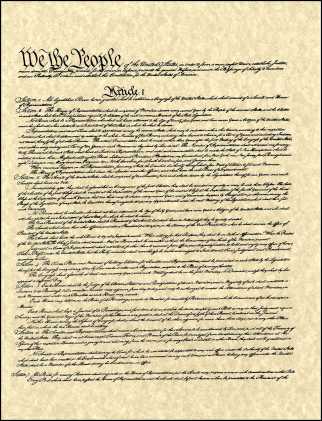
The writing of the U.S. Constitution wasn’t a slam-dunk. It was a compromise between several mindsets with disputes and debates centered on how “proportional representation” would be defined. The final wording in Section 2, third paragraph of the U.S. Constitution is ”Representatives and direct Taxes shall be apportioned among the several States which may be included within this Union, according to their respective Numbers, which shall be determined by adding to the whole Number of free Persons, including those bound to Service for a Term of Years, and excluding Indians not taxed, three fifths of all other Persons.”

While slavery no longer exists in America, making those living in the United States, “free,” if you were to literally apply what’s written in the U.S. Constitution then Native Americas who don’t pay any taxes aren’t counted when determining the number of representatives per state. In 2015, the Tax Policy Center estimated the percentage of households who don’t pay federal income taxed to be 45.3%. If Native America’s mirror this statistic, does that mean that 45% of them don’t count?

And what about the “three fifths of all other Persons” statement? Does that consist of people with green cards? Illegal immigrants? U.S. citizen who live outside the country?

Section 2, paragraph three of the U.S. Constitution further states, “The Number of Representatives shall not exceed one for every thirty Thousand, but each State shall have at Least one Representative; and until such enumeration shall be made, the State of New Hampshire shall be entitled to choose three, Massachusetts eight, Rhode-Island and Providence Plantations one, Connecticut five, New-York six, New Jersey four, Pennsylvania eight, Delaware one, Maryland six, Virginia ten, North Carolina five, South Carolina five, and Georgia three.

If the U.S. Constitution names only thirteen states, is it also relevant to the other 39, plus a couple of territories like Puerto Rico? After all, the “number of representatives shall not exceed one for every thirty Thousand,” which today is the size of small American town, not a huge metropolitan area like Los Angeles with over 4.03 million people.

The point being, the U.S. Constitution must be interpreted in context to today’s world. To bounce up-and-down saying politicians and pundits are straying away from the tenants of the Constitution is preposterous because a document written over two hundred years ago can’t possibly be rigidly followed unless you abandoned progress. It’s like treating cancer by applying leeches.

Sections 3 through 6 of the Constitution spells out the election, responsibilities, behavior, and compensation of members of the Senate, House of Representatives, and President. Section 7 discusses the creation and passage of bills.

Section 8, from a viability point-on-view is one of the most important once because it states, “The Congress shall have Power To lay and collect Taxes, Duties, Imposts and Excises, to pay the Debts and provide for the common Defence and general Welfare of the United States; but all Duties, Imposts and Excises shall be uniform throughout the United States.” It continues, defining how monies can be used including for posts offices, roads, support armies and militia, borrowing on credit, commerce with “foreign Nations, and among the several States, and with the Indian Tribes,” progress of science and useful arts, and much more.

Section 9 deals with migration and “importation” of “Persons,” along with the authority to apply a “Tax or duty may be imposed on such Importation, not exceeding ten dollars for each Person.” Read that again. Once again, if the Constitution were to be followed by the law, and not interpreted, it sounds like people can be imported for just $10 per head.

This section also prohibited states from levying taxes and duties on exported articles, granting titles of nobility, and privileges of the Writ of Habeas Corpus (bring a person before a court to determine if the person’s imprisonment or detention is lawful).

The remainder of the Constitution continues in a similar manner, detailing the design, checks and balances, and responsibility of the government and its officials – as envisions by the representatives of the Constitution Congress in 1787.

Bill of Rights: The other half of the Constitution

One of the more contentious debates surrounding the writing of the Constitution was how slaves or other property was defined. After being drafted, this issue bubbled to the top when the states were asked to ratify the document. States and critics argued the Constitution lacked a bill of rights, which protected citizens’ rights.

Two states – North Carolina and Rhode Island – refused to ratify until the Bill of Rights was proposed in Congress in 1789. Even so, Rhode Island only ratified, by two votes, when threated with the possibly of being treated as a foreign government.

The Bill of Rights consists of ten amendments. As you read them, consider which ones are being “systematically dismantled.”

Amendment I: Congress shall make no law respecting an establishment of religion, or prohibiting the free exercise thereof; or abridging the freedom of speech, or of the press; or the right of the people peaceably to assemble, and to petition the Government for a redress of grievances.

Amendment II: A well regulated Militia, being necessary to the security of a free State, the right of the people to keep and bear Arms, shall not be infringed.

Amendment III: No Soldier shall, in time of peace be quartered in any house, without the consent of the Owner, nor in time of war, but in a manner to be prescribed by law.

Amendment IV: The right of the people to be secure in their persons, houses, papers, and effects, against unreasonable searches and seizures, shall not be violated, and no Warrants shall issue, but upon probable cause, supported by Oath or affirmation, and particularly describing the place to be searched, and the persons or things to be seized.

Amendment V: No person shall be held to answer for a capital, or otherwise infamous crime, unless on a presentment or indictment of a Grand Jury, except in cases arising in the land or naval forces, or in the Militia, when in actual service in time of War or public danger; nor shall any person be subject for the same offence to be twice put in jeopardy of life or limb; nor shall be compelled in any criminal case to be a witness against himself, nor be deprived of life, liberty, or property, without due process of law; nor shall private property be taken for public use, without just compensation.

Amendment VI: In all criminal prosecutions, the accused shall enjoy the right to a speedy and public trial, by an impartial jury of the State and district wherein the crime shall have been committed, which district shall have been previously ascertained by law, and to be informed of the nature and cause of the accusation; to be confronted with the witnesses against him; to have compulsory process for obtaining witnesses in his favor, and to have the Assistance of Counsel for his defence.

Amendment VII: In Suits at common law, where the value in controversy shall exceed twenty dollars, the right of trial by jury shall be preserved, and no fact tried by a jury, shall be otherwise re-examined in any Court of the United States, than according to the rules of the common law.

Amendment VIII: Excessive bail shall not be required, nor excessive fines imposed, nor cruel and unusual punishments inflicted.

Amendment IX: The enumeration in the Constitution, of certain rights, shall not be construed to deny or disparage others retained by the people.

Amendment X: The powers not delegated to the United States by the Constitution, nor prohibited by it to the States, are reserved to the States respectively, or to the people.

Were the Signers of the Constitution Geniuses

James Madison, who became the fourth President of the United States, is considered the “Father of the Constitution” for his pivotal role in drafting and promoting the Constitution and the Bill of Rights. He was born into privilege, the oldest of 12 children, to a Virginia tobacco planter and the daughter of tobacco planter. The Madison family was the largest landowners in the area with hundreds of slaves on a Montpelier, VA plantation.

Madison had private tutors, and attended the College of New Jersey, which later became Princeton University. He studied and mastered a breadth of subject, becoming a Virginia State Legislator 1776, where he initially met Thomas Jefferson. Jefferson later sent Madison crates of books from France on various forms of government. These learnings were central in Madison’s viewpoints when drafting the Constitution, and driving compromise and consensus.

One delegate wrote, he’s “the best informed Man of any point in debate.” Madison wasn’t just wise, but understood human foibles, writing “If men were angels, no government would be necessary.”

The first Secretary of the Treasury, Alexander Hamilton was the consummate statesman, leading the Annapolis Convention, playing a pivot role in composing the Constitution, writing 41 of the 85 installations of The Federalist Papers, and adjudicating in many federal issues. He was also born out of wedlock in Charlestown, British West Indies to a mother whose ancestry was African, British, and French. His father was from Scotland.

In 1804, Aaron Burr was defeated as the governor of New York. He felt that Hamilton’s support of his opponent, Morgan Lewis, and the contents in a letter written by Hamilton, attacked his honor. While attempts were made to reconcile their differences, a duel was arranged between the two men. Hamilton, feeling obliged to his family, and wanting to continue playing a role in politics, resolved to throw his fire, meaning to abort a conflict by allowing one’s opponent to fire first. It’s unknown whether Hamilton fired after being struck by Burr’s bullet or if they fire simultaneously, but the shot to Hamilton was fatal.

It’s easy to assume all of the signers of the Constitution were outstanding individuals, however, like modern-day politicians they had their flaws or at least, a tendency to resolve conflicts through gun fire.

Richard Dobbs Spaight signed the Constitution when he was only 29 years, having previously been a delegate to the Confederation Congress and served in the North Carolina House of Commons. When he was 44, like Alexander Hamilton, he was died from injuries sustained in a duel.

A member of the North Carolina delegation at the Constitutional Convention, William Blount and his brothers gradually acquired 2.5 millions of acres in Tennessee and the trans-Appalachian west, which left him deeply in debt. He then hatched a scheme to increase the value of his lands by working with Great British to seize Spanish-controlled Louisiana and Florida, and then give American merchants free access to New Orleans, and the Mississippi River. When his duplicity was discovered, he was expelled from the Senate, and become the first U.S. public official to face impeachment.

Timothy Pickering, who was also a signer of the U.S. Constitution, and involved in impeaching William Blount, served as Secretary of State under Presidents George Washington and John Adam, and was also a Massachusetts Senator.

In 1810, he challenged Thomas Jefferson’s Embargo Act by holding several conferences with special British envoy George Rose in hope of creating a pro-British party in New England. Passed in 1807, the Embargo Act supporting U.S. neutrality during the Napoleonic Wars, and imposed embargos on Great Britain and France. At the time, the British Royal Navy was forcing thousands of American seaman to serve on their war ships.

Pickering’s insolence in wanting to form a party sympathetic to Britain was in violation of the Logan Act, which forbids unauthorized citizens from negotiating with foreign governments who conflicted with U.S. interests. In addition, Pickering read confidential documents in open Senate sessions before an injunction of secrecy had been removed. By a majority vote of 20-7, Pickering was censured by the Senate on January 2, 1811.

Born in County Carlow, Ireland, and one of the largest slaveholders in the United States, Pierce Butler represented South Carolina when he signed the Constitution. Recognizing human dignity, he introduced the Fugitive Slave Clause to the Constitution. Throughout his life, he lobbied for better treatment of slaves, but continued to support the institution because of its importance to the southern economy.

Considered “eccentric” and an “enigma,” he summarized his view of government as “Our System is little better than [a] matter of Experiment…. much must depend on the morals and manners of the people at large.”

Final Thoughts

The Constitution has withheld the test of time. But it’s important to keep in mind, it was created through compromise with aspects of the final version drawn from five different points-of-view, the Virginia Plan, New Jersey Plan, Hamilton Plan, Pinckney Plan, and Connecticut Compromise. There was heated discussions and modifications that continued for several months with some of the signers reluctantly adding their signatures, and sixteen refusing to sign.

More than half of the delegates were trained as lawyers with others being merchants, manufacturers, shippers, land speculators, bankers or financiers, physicians, a minister, and several small farmers. Twenty-five owned slaves.

Once signed, the next challenge was to get the 13 states to ratify, and adhere to its premises. To nudge reluctant states to sign the Federalist Papers – a collection of 85 articles and essays – were published under the pseudonym Publius. Written by Alexander Hamilton, James Madison, and John Jay the papers are interpretations of what’s contained in the Constitution and were envisioned to speed up the ratification.

If the signers of the Constitution found it necessary to help state legislatures and citizens better understand the idiosyncrasies of the Constitution by writing the Federalist Papers, then it’s not unreasonable to continue interpreting the document as it applies to modern-day issues. Sure enough, the Federalist Papers are often referred to by judges in applying the laws-of-the-land.

One aspect of the Constitution, which is coming under scrutiny, is the Electoral College. In Federalist [Paper] No. 39, James Madison argued the Constitution was designed to be a mixture of state-based and population-based government. Federalist [Paper] No. 68, written by Alexander Hamilton presents the advantages of the Electoral College, focusing on elections taking place among states so they can’t taint “the great body of the people.” He also commented Electoral College delegates – none of whom can be a U.S. officeholder – have information that might be unavailable to the general public.

Unfortunately, recent history has twice elected a president for whom didn’t receive the population vote, which begs the question, is it time to re-interpret this aspect of the Constitution to elect a president who is chosen by the majority of people?


Grow Another Me

19 Wednesday Oct 2016

Posted by rajalary in Gardening, Rose's Writings, Uncategorized

≈ Leave a comment

Tags

gardening, Julie Lary, Meaning of life, rajalary, rose ridnor

The following essay was written by my grandmother, Rose Ridnor. I found it humorous because I’m often precariously balanced on a ladder, in the middle of summer, trimming the dead flowers off our two lilacs in Mount Vernon, WA. And while I have the clippers, the nearby apple trees also gets a trimming.

The lilac tree was long overdue for pruning. This particular morning, after spending almost two hours pulling weeds, cutting, and cleaning up the front and side of the house, I was finally ready to begin trimming the lilac. When I as more than half done, I found I was getting terribly tired.

The burning sun had followed me all morning, making my face flush and sticky with sweat. My legs ached from leaning against the runs of the ladder, my hands were stiff from wielding the clippers. I just had to finish. Stop now and who knows when I could get back to it. So I pushed harder with the clipping and snipping to finish faster.

I was concentrating hard on lopping off a heavy branch, my mind as blank as it could get, when out of the blue, a line of words popped into my head. It was odd. I eased off a second to repeat it to myself, “I can always plant another tree, but I can never grow another me.”

Lilac
Lilac
Apple blossom
Apple blossom
Raspberry lilac
Raspberry lilac

Quickly, I fathomed its meaning, and for a moment was tempted to heed its message. But no, I couldn’t stop now. I had to finish.

But it kept bugging me. Why am I pushing myself? What am I out to prove? I have just so much energy, exhaust it, and I’m finished. The tree doesn’t give a darn whether I cut off its dead flowers or crowded limbs. It will just go on doing what it has to do: Grow and produce more flowers that will die, and I’ll have to cut off.

I set the clippers down, stepped off the ladder, went into the den, and plopped into a chair. I could feel the tiredness ease out of my body.

Ten minutes later, quite refreshed, I went out, put away the ladder and tools, left the sweeping to Morris [husband], and that was that! I didn’t hear one word of protest from the lilac tree.

Life is a constant weighing of the importance of one’s own self in relation to everyone, and everything else.

Jujube Camping Extravaganza

09 Sunday Oct 2016

Posted by rajalary in Uncategorized

≈ Leave a comment

There’s been very few times when Rich and I didn’t take a dog, cat (or three) when we went camping in our motorhome. When we lived in Oregon, my sheltie Gigi or rat terrier Cyrano would come along, usually to the Oregon coast or along the Columbia Gorge.

In 2002, we drove the motorhome from Sherwood, OR to Round Rock, TX with six cats – Micheko, Mongojerrie, Goldakevtch, Calamity Jane, Ariel Anne, and Pu’Yi – snuggled in nooks and crannies in-between house plants, luggage, and last minute stuff that didn’t make it into the moving van. Once in Texas, the motorhome sat abandoned in our driveway, used only a handful of times because the air conditioner only worked in the cab. The rest of the motor home would have become uncomfortably warm in the Texas heat.

After buying a house in Mount Vernon, WA, we drove the motorhome back to the Pacific Northwest, parking it in the driveway, where it patiently awaited our return. Sure enough, once we left Texas we started camping again, usually with the three Musketeers: tabby Jujube, calico Zephyra, and Siamese Pu’Yi.

The motorhome also came in handy when we visiting people in Oregon because we could park it on the street, and spend the night in our home-on-wheels.

In 2013, the weekend our Coupeville house closed, we drove the motorhome to Whidbey Island. We figured we could cook in the motorhome or sit at table for meals since there was no furniture in the house. The first night, we set up an inflatable bed in the master bedroom; however, we forgot the air pump. Undeterred, we grabbed the pads from the bed over the motorhome cab, and slept on them instead of the inflatable bed.

A few weeks later, when we leased the house, I decided to clean the area over the cab before putting back the cushions. It was surprisingly dirty and moldy, and when I climb on top, it shattered! The wooden platform over the cab was full of dry rot. After taking part the front of the motorhome, including the outer fiberglass, Rich discovered when the motorhome was built, twenty or so years earlier, they neglected to remove the plastic tape on one side of the weather stripping so there was never a tight seal. For years, water had been dripping into the motorhome, jeopardizing the integrity of the bed over the cab.

With more pressing obligation, Rich put plastic over the front of the motorhome until he had time to deal with the issue. Happily, a few months ago, Rich started rebuilding the front of the motorhome. Over the course of the project, he used a variety of materials, including wood, fiberglass, metal, and sealants; purchased a used high-end band saw (for $200) over Craig’s List to craft rounded wooden pieces for the front of the motorhome, and employed tremendous ingenuity to make the motorhome as good as new.

The crowning moment was last Sunday, pulling out of the driveway for the much anticipated Jujube Camping Extravaganza with Jujube, Zephyra, and Lila.

We left on a Sunday morning, and headed an hour north to Birch Bay State Park. The town of Birch Bay is located, less than 10 miles from the Canadian border on the idyllic Semiahmoo Bay, which is surrounded by quaint cottages, small hotels and condos, camp/RV parks, and a couple of retail shops. It’s a fabulous place to unwind for a few days, wandering along the beach, and watch the sunset. It doesn’t look much different than this vintage postcard.

After arriving, we set up camp, then hopped on our bikes, and road south along the water. A quick lunch later, we went north, riding to one of the most northwest corners of the United States, the Semiahmoo Spit. We expected it to be very rural, but were surprised to find several large up-scale gated communities surrounding plush golf courses, along with many affluent neighborhoods on the water or tucked into forested areas. At the top of the spit is the snazzy Semiahmoo Resort, with the cheapest rooms, starting at around $180 per night.

This slideshow requires JavaScript.

Having ridden for several hours, and shed layers of clothes, we stopped at a mini-mart for ice cream bars before heading back to our motorhome. As the sun started to set, we biked to the beach, and reflected on a wonderful day of biking, sightseeing, and once again, enjoying our motorhome.

The next day, we got up early and biked to Peach Arch Park, which is on the boundary between Blaine, WA and Douglas, British Columbia, Canada. It was built by philanthropist Samuel Hill in 1921 to commemorate a century of peace between the United States and Canada. Hill also built Maryhill on the Columbia River Gorge, which is now a wonderful, eclectic museum, and a favorite place to visit when I lived in Oregon.

After taking some pictures at the park, we zipped through Canadian customs. They have a special area for bicyclists and pedestrians. We then biked a few miles, arriving in White Rock, around 10 a.m. A few years ago, when we took the train to Vancouver, B.C., we passed by White Rock, and vowed to return by car to visit. Little did we know it’s an easy bike ride (11 miles) from Birch Bay.

We wandered around White Rock for quite a few hours, then hearing a train in the distance, waited for its arrival. The train track is on a raised boardwalk in front of the town. You can stand within a few feet of a passing train and experience its power. Rich and I both shot video with our smart phones.

Hungry, we had to choose where to eat. With dozens of street-side restaurants, Rich referred to his smart phone for ratings, and opted for Moby Dick, which has accolades from far and near, and primarily serves fish and chips. We secured a table outside, and eagerly polished off a bowl of clam chowder, three pieces of fish, and a huge plate of seasoned fries.

After walking off our meal, we got on our bikes, and headed back to the United States. To say U.S. Customs and Immigration is a confusing mess would be an understatement. First, it wasn’t well marked where bicyclists are supposed to go. We spent ten minutes or so waiting among the cars to get close enough to the inspection booths to spot a sign, directing us to go around the corner of large building. Once in front of the building, we had no idea what to do, until Rich spotted a customs officer and asked him where we should go.

“Inside the building,” was his response.

We hastily parked our bikes and went inside, and were then perplexed as to which of the three long lines we were supposed to stand in. After ten minutes of waiting, another customs officer, spotting our bike helmet said we were in the wrong line.

Fifteen or twenty minutes more of waiting – since only one of the 18 terminals were manned by an officer – we approached the counter. We were asked a couple of questions, our petite backpacks were searched (containing not much more than our identification, and some snacks), and we were given a yellow slip to “hand to the officer stationed off the parking lot.” Once outside, we discovered Rich left the slip on the counter. Happily, he was able to retrieve it with no further delays.

With slip-in-hand, we biked through the lot, handed it to the officer, and we were finally back in the United States, an hour after approaching the border!

Our ride back was uneventfully, except when we passed a quiet bay, I rode recklessly, watching the dozen or so blue heron perched on their own rocks or swooping overhead in search of a tasty morsel below. I love blue heron!

We slept soundly that evening, and woke refreshed. After a leisurely breakfast, we pulled up camp, drove around Blaine, WA, and were back to Mount Vernon before noon.

We and the cats had a great time. They enjoyed the extra attention, looking out the motorhome windows at black squirrels, and snuggling with us at night. We can’t wait for our next motorhome adventure (or cat camping extravaganza)

Homeless in Seattle

27 Tuesday Jan 2015

Posted by rajalary in News and politics, Uncategorized

≈ Leave a comment

Tags

homeless in seattle, Julie Lary, rajalary

Driving to work this morning, I heard on the radio that a man had fallen to his death from a Seattle freeway ramp. The police thought he’d lived at a homeless camp. The incident reminded me of an article I’d read last week about a 21 percent increase in the number of homeless people sleeping on the streets or in their vehicles in King County.

The annual One Night Count found 3,772 people camping along freeway overpasses, in campers and cars, in doorways, and under bridges. In addition, a 100 or so people were found, riding night owl buses to keep warm and dry. It’d never occurred to me that riding a bus all night was an alternative to being on the street or in a shelter until I read an article about The Santa Clara Valley Transportation Authority bus 22, which runs 24-hours, going from East San Jose to Palo Alto, California. Every night and into the early morning hours, the bus is full of homeless people, paying $2 for the two-hour, one-way trip.

They ride the bus all night, sleeping between the herky-jerky stops, and then disembarking at the end of the route, getting back on the bus a few minutes later, to go the other direction.

The increase in homelessness, at least in Seattle, is tied to soaring rents, loss of older, more affordable apartment buildings, persistent poverty, unemployment, and inadequate treatment of resources for the addicted and mentally ill.

Several years ago, I helped move residents from a tent city being hosted at a church in Redmond to a synagogue in Bellevue. I remember showing up, and seeing piles of pallets, on which the residents pitched their tents. While handled with great dignity, the tent city was a horrific existence, especially when it rained, when a trip to the porta-potty required putting on shoes, and slogging on muddy paths.

I made a couple of trips in my car, moving residents and their possessions between the church and synagogue. One man, with a British accent and a gentle manner, had a suit, shirt, and tie in a cleaner bag. I asked about the outfit. He said he used to be a programmer for a company in Seattle. He’s gotten laid-off and couldn’t find another job. He wore the suit when he interviewed.

It was a startling admission, and just showed how quickly someone can “fall” when they can’t find employment or as happened several years ago, can’t afford the mortgage on a house or condo. I wonder how many whose houses were foreclosed are still living in apartments or with friends and relatives. On a regular basis, the Seattle Times has articles about people being displaced when their affordable apartment was renovated and turned into more expensive apartments or sold as condos.

Even though people think of homeless people existing primarily in downtown Seattle, it’s in plain site on the Eastside. When I lived in downtown Bellevue, I remember seeing an elderly woman begging by the freeway off-ramp. After getting home, I gathered up all my change and bills, and walked back to the off-ramp. She was dressed in soiled, but tidy clothes, a safety pin held the collar of her shirt together.

She said that she took care of her mother until she recently died. She then found herself on the street. To this day, I wish I’d offered her the extra bedroom in my apartment. She could have taken a shower, and I could have purchased her clean clothes, and investigated social services the following day.

I was reminded of her a few weeks ago when I was getting on the freeway in Kirkland. An elderly woman, wearing men’s loafers (they appeared to be several sizes too large) and shabby, mismatched clothing was holding a sign, indicating she was homeless. The signal turned before I could reach for a dollar or two to give her.

A few hours later, at Pike’s Market, I watched as the women in the restroom step aside to make way for an elderly woman, also wearing men’s shoes, and pushing a cart, filled with her belongings. They seemed embarrassed by her, but I was embarrassed in an upscale town like Seattle there are around 8,000 people without shelter every night.

2014 in review

29 Monday Dec 2014

Posted by rajalary in Uncategorized

≈ Leave a comment

The WordPress.com stats helper monkeys prepared a 2014 annual report for this blog.

Here’s an excerpt:

A San Francisco cable car holds 60 people. This blog was viewed about 1,100 times in 2014. If it were a cable car, it would take about 18 trips to carry that many people.

Click here to see the complete report.

Not Seeing the Humor

26 Tuesday Aug 2014

Posted by rajalary in News and politics, Uncategorized

≈ Leave a comment

Tags

IBM, inequity, Julie Lary, rajalary, Reno, Republicans, Village Idiot

Last week, I received an email from my mother’s long-time friend. The email consisted of vicious, short-sided cartoons and quotes about President Obama, protesters in Ferguson, Muslims, Hillary Clinton, and Central American children who’ve made their way to America.

In the past, she’s sent skewed Republican crap, but this latest collection filled me with disgust for many reasons.

First, her husband was a vice-president at IBM, who no doubt had a hand in out-sourcing jobs, and scaling back American operations. Maybe he contributed to some of the bad decisions by upper management, which has resulted in nine consecutive quarters of losses, and IBM’s determination to sell off their PC, low-end server, and chip-manufacturing units.

Last July, Rich was laid-off from IBM, after training his “replacements” in Brazil. He was 18 months shy of the earliest date he could have retired. Fortunately, he landed a good contract role at Microsoft, but he missed out on IBM’s retirement benefits, and he’s certainly not earning the same amount of money or benefits as previously.

I’m sure my mother’s friend’s husband retired with full benefits, and a generous pension plan.

Since having to leave Microsoft, I’ve struggled to land a decent job. While my current role pays well, it comes with no healthcare insurance, no sick time, vacation or holidays. I can either go without healthcare benefits (not a good idea) or sign up through the Washington Healthcare Exchange. I’m mortified that I need to use a government-sponsored program, but what choice do I have?

Republican beliefs I’m sure my mother’s privilege friend is in favor of repealing what she’d term “Obamacare.”

One of the quotes she sent said President Obama’s presidency [could be] summarized in a chapter… fitting on one page… as a single paragraph… holding just one simple sentence… which would be abridged.” If Obama’s accomplishment from improving the economy to reducing unemployment, increasing energy production and efficiencies, reforming healthcare, expanded anti-discrimination laws, increasing access to student loans, and remaining calm and reasonable in light of outrageous occurrences in American and around the world, than I can only imagine what would be written about Republicans in Congress.

Words that come to mind are inflexible, unpatriotic (i.e. involved in activities that harm your country), deceitful, and intolerant.

I’m hard pressed to think of anything positive ANY Republicans have done to help anyone who wasn’t in the top 1% or a corporation. They’re adamant about outlawing abortion, but unwilling to support programs for low-income children that provide access to food, housing, healthcare, and equal opportunities. They’re vigilant about gun ownership, failing to recognize the horrendous shooting that flood the news. They rant about taxes yet ignore the fact that millionaires pay less taxes than factory workers. And many corporations avoid paying any taxes while enjoying record earnings, and paying their executives, thousand-fold more than the people doing the work.

A quote I found succinctly pointed out Republicans define democracy as allowing billionaires to spend unlimited sums to buy elections, implement voter suppression tactics against seniors, young people, low income citizens, and people of color, and gerrymander voting districts.

According to Senator Bernie Sanders (I-Vt.), “At a time when 1 out of 4 corporations pays NOTHING in federal income tax, in a given year, and when many working people pay a higher federal tax rate than billionaire hedge fund managers, it is time for REAL tax reform. The wealthy and powerful must begin paying their fair share of taxes.”

Making the rounds on Facebook this week, Senator Sanders continued, “Here’s what income and wealth inequity is about. Last year, the top 25 hedge fund managers made more than 24 billion, enough to pay the salaries of 425,000 public school teachers. This level of inequity is neither moral nor sustainable.”

It’s inconceivable that Republicans can be so critical of President Obama and the democratic policies, yet so forgiving of eight years of the Village Idiot who not only burned through the budget surplus left over from President Clinton, but bankrupted the US Treasury, creating the largest annual national deficit in US history. Two million Americans lost their jobs during his first year in office. Personal bankruptcies soared, there were record home foreclosures, a massive drop in the US stock market, and we entered two groundless wars. While people perceive the Village Idiot was fiscally conservative, he increased the national debt by 115% versus 37% by President Clinton, and 16% by President Obama.

Yet, my mother’s friend found it necessary to share a Photoshopped picture of an African American girl handing money to President Obama who is holding a bag labeled “Deficit,” with a caption that reads, “Are you sure that’s your fair share?”

Other cartoons she sent are about President Obama going on vacation while the Middle East is in turmoil. Unless you’re a Republican, I doubt you’d see anything wrong with the infrequent vacations President Obama has taken to spend time with his young daughters and wife.

After all, Congress has been on vacation since the end of July, and is expected to work a handful of weeks between September and the end of the year.

In the eight years he was in office, the Village Idiot took 149 trips to Camp David, 77 visits to his Crawford ranch, and 11 trips to his father’s Kennebunkport mansion. That’s an average of 30 trips per year, at tax payers’ expense on Air Force One. Each trip to his Texas ranch cost over a quarter million dollars.

My mother’s friend lives in Reno, Nevada, where 20% (3% above the state average) of the people have incomes below the poverty level, which is $11,490 for a single person, and $23,550 for a family of four. The Nevada minimum wage is $8.25 per hour, which works out to a little over $17,160 per year if you work 8 hours a day, 5 days a week, taking off no time for holidays, doctor visits or mishaps like lack of transportation, sick family members, or having to attend to personal business like voting (unless you live in a gerrymandered district where your liberal votes don’t count).

I wonder how much my mother’s friend contributors to her local community? Does she realize the poverty that exists when she shops at her community, buys a hamburger from a middle-aged woman working at a fast food restaurant, complains about the condition of her upscale hotel room cleaned by underpaid cleaning staff, and loses patience with the kid pumping gas who couldn’t possible earn enough to pay his way through college and earn an engineering degree like her husband did in the 1950’s?

This discussion bring me to another theme, which ran through the collection of cartoons she shared, that of children from Honduras and other Central American countries making the dangerous trek to America, in hope of a better life.

The observation she shared, titled “Some food for thought,” provided an analogy about “3 year old to 8 year old” children walking from Houston to Minneapolis by themselves with no food or “belongs” to sustain them. The analogy continues, babbling (in 6th grade English) about avoiding towns and cities, having no maps or “sun protection,” and how the whole truth isn’t being shared. Concludes the missive, “Someone created and assisted this, and the media should be figuring out who it is.”

First, young children aren’t making the journey themselves. They travel in groups, usually at night, often with the assistance of smugglers. They don’t walk the entire way, they ride on top of trains, take buses, and maybe even hitch rides in cars. It can take months to arrive at the border. Many perish, get injured or are victimized.

Putting the journey aside, consider how desperate the parents of these children must be to sell everything they have, and trust them with shady smugglers with the hope, they’ll make it to America, and miraculously be allowed to stay.

No doubt, if my mother’s friend and her family lived in Honduras, with the world’s highest murder rate, coupled with rampant gang violence, and dire poverty, she’d do whatever was necessary to get her twin grandson’s to a safe haven, even if it meant selling everything she had, and making the gut-wrenching decision to send them on a dangerous journey. Maybe then, she’ll understand there’s no humor in poverty, corporations outsourcing jobs, protections for the rich, and the rapid disintegration of the American middle class.

2013 in review

05 Sunday Jan 2014

Posted by rajalary in Uncategorized

≈ 1 Comment

The WordPress.com stats helper monkeys prepared a 2013 annual report for rajalary

Here’s an excerpt:

A San Francisco cable car holds 60 people. This blog was viewed about 910 times in 2013. If it were a cable car, it would take about 15 trips to carry that many people.

Click here to see the complete report.

2012 in review

01 Tuesday Jan 2013

Posted by rajalary in Uncategorized

≈ Leave a comment

The WordPress.com stats helper monkeys prepared a 2012 annual report for this blog.

Here’s an excerpt:

The new Boeing 787 Dreamliner can carry about 250 passengers. This blog was viewed about 780 times in 2012. If it were a Dreamliner, it would take about 3 trips to carry that many people.

Click here to see the complete report.

Crime isn’t Anonymous

23 Monday Jul 2012

Posted by rajalary in News and politics, Uncategorized

≈ Leave a comment

Tags

aurora colorado, crime, Julie Lary, rajalary

Monday morning, we start the work week by going around the table and sharing a highlight from our weekend. I’m always quick to share what I harvested from our garden. Others relate enjoyable get-togethers with family and friends.

This morning, however, our zeal for sharing quickly fizzled. A designer in New York lamented she’d had a difficult weekend. She blurted out she knew the man who was celebrating his birthday when he was shot at the premier of the new Batman movie in an Aurora, Colorado theater.

Having read numerous articles about the horrific tragedy, I knew she was referring to 27-year old Alex Sullivan.

Crime isn’t anonymous.

When I heard about the shooting on Friday evening, I drew a mental picture of Colorado, many states away. Just a few days later, the distance drew closer, hearing the angst from a woman, across the nation in New York.

And this evening, I learned my stepson’s sister who lives in Colorado had a friend who was planning to go to the premier. She changed her mind at the last-minute.

No crime is anonymous.

Image

Last Spot of Color

07 Friday Oct 2011

Last Spot of Color

I took this picture a month ago of the last few flowers in my garden. The lillies are always the last to bloom because they’re in a garden beneath a cedar and maple tree, which block out the light.The hydrandea were starting to fade from cornflower to blue-gray. Summer is gone!

Posted by rajalary | Filed under Uncategorized

≈ Leave a comment

← Older posts
Newer posts →

Subscribe

  • Entries (RSS)
  • Comments (RSS)

Archives

  • December 2025
  • December 2023
  • November 2023
  • November 2022
  • May 2022
  • April 2022
  • February 2022
  • January 2022
  • November 2021
  • June 2021
  • May 2021
  • April 2021
  • March 2021
  • January 2021
  • December 2020
  • October 2020
  • September 2020
  • July 2020
  • June 2020
  • May 2020
  • April 2020
  • March 2020
  • January 2020
  • December 2019
  • November 2019
  • October 2019
  • September 2019
  • August 2019
  • July 2019
  • June 2019
  • May 2019
  • April 2019
  • March 2019
  • February 2019
  • January 2019
  • December 2018
  • November 2018
  • October 2018
  • September 2018
  • July 2018
  • June 2018
  • May 2018
  • April 2018
  • February 2018
  • January 2018
  • December 2017
  • November 2017
  • October 2017
  • September 2017
  • August 2017
  • July 2017
  • June 2017
  • May 2017
  • April 2017
  • March 2017
  • February 2017
  • January 2017
  • December 2016
  • November 2016
  • October 2016
  • September 2016
  • August 2016
  • July 2016
  • June 2016
  • May 2016
  • April 2016
  • December 2015
  • November 2015
  • August 2015
  • July 2015
  • June 2015
  • March 2015
  • February 2015
  • January 2015
  • December 2014
  • November 2014
  • October 2014
  • September 2014
  • August 2014
  • July 2014
  • June 2014
  • May 2014
  • April 2014
  • February 2014
  • January 2014
  • December 2013
  • October 2013
  • September 2013
  • August 2013
  • July 2013
  • May 2013
  • April 2013
  • March 2013
  • February 2013
  • January 2013
  • November 2012
  • October 2012
  • September 2012
  • August 2012
  • July 2012
  • June 2012
  • May 2012
  • April 2012
  • March 2012
  • February 2012
  • January 2012
  • December 2011
  • November 2011
  • October 2011
  • September 2011
  • August 2011
  • July 2011
  • June 2011
  • May 2011
  • April 2011
  • March 2011
  • February 2011
  • January 2011
  • December 2010
  • November 2010
  • October 2010
  • September 2010
  • August 2010
  • July 2010
  • June 2010
  • May 2010
  • April 2010
  • March 2010
  • February 2010
  • January 2010
  • December 2009
  • November 2009
  • October 2009
  • September 2009
  • August 2009
  • July 2009
  • June 2009
  • May 2009
  • April 2009
  • March 2009
  • February 2009
  • January 2009
  • December 2008
  • October 2008
  • September 2008
  • August 2008
  • July 2008
  • June 2008
  • May 2008
  • April 2008
  • March 2008
  • February 2008
  • January 2008
  • December 2007
  • November 2007
  • October 2007
  • September 2007
  • August 2007
  • July 2007
  • June 2007
  • May 2007
  • April 2007
  • March 2007
  • February 2007

Categories

  • Cat Diaries
  • Computers and Internet
  • Coupeville
  • Entertainment
  • Family
  • Food and drink
  • Gardening
  • Health and wellness
  • Hobbies
  • Holiday
  • Home Improvement
  • Invocations
  • Microsoft
  • Motorcycle accident
  • Mount Vernon
  • Movies
  • News and politics
  • Politics
  • Puget Sound Islands
  • Rich Lary Realtor
  • Rose's Writings
  • Sailing
  • Seattle
  • Texas Life
  • Travel
  • Uncategorized

Meta

  • Create account
  • Log in

Blog at WordPress.com.

  • Subscribe Subscribed
    • Rajalary
    • Join 108 other subscribers
    • Already have a WordPress.com account? Log in now.
    • Rajalary
    • Subscribe Subscribed
    • Sign up
    • Log in
    • Report this content
    • View site in Reader
    • Manage subscriptions
    • Collapse this bar
 

Loading Comments...