Invocation #28: False Witness

Tags

, , ,

It is commended: Thou shalt not bear false witness against thy neighbor.

If we lie about our neighbors, or to them, we might make them angry, or hurt them, but they need not accept. They can easily destroy the lie by searching out the truth.

But, what if we lie to ourselves? What if, because we can’t face the truth, we tell ourselves that what is isn’t. What isn’t is. Or deny we did what we did? Or said what we said?

Or lie to ourselves that it’s okay to cheat on an exam, or a score card, or income tax. And what’s so wrong with adultery as long as your mate doesn’t find out?

Some lies weave a web of fantasy, and to maintain that fantasy we need to concoct another lie, and another, and another. Until the mind gets confused it can’t distinguish between truth and falsehood, reality and fiction.

Truth has substance; no matter how it is hidden it’s still there. A lie is a figment of the imagination, vaporous, for which no truths can be found when needed?

O Lord, let us not lose our sense of reality, or fear to face a truth.

Teach us, thou shalt not lie unto owns self.

I’m writing a response to this invocation on Christmas day. A few minutes ago, Bryan and Casey, my step-children’s sister and her husband showed up. They were carrying a newsletter, which showed a picture of one of their relatives who quite suddenly announced they were breaking up.

They’d been married for years, and to observers they were madly in love, a model couple. However, it came to light that they husband had been having an affair for many, many years. The truth caught up with him after years of lies. Evidently, he worked with the woman with whom he was having the affair, and there was no covering up the truth once the deception started to leak out.

Regrettably for the perpetrator, and those around them, a lie or deception can be challenging to mask. My grandmother wrote in a diary she kept in 1953 of my mother’s mendacity. At the time, my mother, who was 22 years old and was having an affair with Herb Ross, an older, divorced man, whose Jewish origin (and sincerity) was questionable. The affair had been going on for quite some time, with their breaking up, and then getting back together.

What was consistent was the lies of my mother saying she wasn’t seeing him, but then disappearing for days or come home in the wee hours. Herb had confided in my grandmother that he wanted to break up with my mother, but they continued to see each other.

In mid-year, my mother moved out of her parent’s house. While she said she was living with someone named “Mickey,” she was probably spending most of her time with Herb. In November, they announced they planned to get married. However, my mother never married Herb. Five years later, when she was 27, she married my father Bernard Stark, who was 10 years older, and worked with his father in the garment industry in downtown Los Angeles.

I’m not sure my father ever knew of my mother’s past. I do know my mother confided in my father’s best friend that she was still in touch with her ex-lover. Sure enough, when my father died in 1970, after 12 years of marriage, my mother promptly resumed her relationship with Herb. At the time, he was married, and owned a children’s camp in Mammoth, California.

Running the camp gave him the freedom to spend weeks at a time with my mother, claiming he was on the road meeting with families of future campers or up in Mammoth, fixing up the camp.

My mother’s relationship with Herb, of course, perpetrated another round of lies. This time, my brother and I weren’t allowed to tell anyone about Herb. We’d refer to him as “HR.” When he called, sometimes when my grandparents were visiting, we were instructed to say “HR was on the phone.”

Our lies extended to not telling the truth about the cars parked in the driveway, beat-up boat in the side yard, and why my mother would spend most of the day in a bathrobe or sexy lingerie, jumping in-and-out of bed with Herb.

Where did the lies get her? Nowhere. Eight years after my father’s death, we moved to Oregon. My mother claimed we moved because I’d visited my cousin’s beach house in Lincoln City, and I wanted to move. However, no one packs up their house and moves because their 14-year old daughter liked a particular city.

Instead, we probably moved because my mother didn’t want the responsibility of caring for her aging parents, or her paranoia about Los Angeles crime convinced her Portland would be a safer place to live. In either case, Herb visited Oregon once, and never returned, and never called her again.

To this day, she continues to basks in the fantasy of her “perfect” relationship and love with Herb. However, reality bears another truth. She was never more than a convenient bedmate. Once her usefulness or convenience ran out, she was discarded.

Invocation #27: Covet

Tags

, , , ,

It is commanded: Thou shalt not covet.

Not they neighbors’ possessions, nor those in his pay, nor those bound to him by love. Nor envy that they possesses more than we. For we have not earned nor been given them.

Yet this is another type of coveting. Ironically, one built on admiration, the envy of another’s talents, and the wish they were ours.

We wish we could paint as our friend, the artist. Or earn plaudits as a cook, a ballplayer, a speaker, an immaculate housekeeper, the business executive. We feel diminished by our own supposed lack of talent.

O Lord, let each one see there is no personal without talent. We all have skills; we all have aptitudes. We each can do something that will enhance our own feeling of accomplishment.

We need not envy another. We need only to find our own.

Help us O Lord to search out our skills and guide us to their development.

Even though my grandmother saw herself as ordinary, and maybe at times, less than adequate as a wife, mother, daughter, or housewife, she had talents that many, even to this day, covet. She was an extraordinary writer and philosopher, along with an unselfish advocate for family members who sought her counsel during times-of-need.

A few weeks ago, her son, Allen Ridnor, passed away. My initial thought was she was lonely in heaven, and wanted one of her son to join her. It was a ridiculous thought. After all, for the past year, Allen had been struggling with health issues, finally succumbing to aggressive acute leukemia.

After learning of Allen’s death, I contacted his wife of nearly 60 years. She asked that I send a few words in his memory. Not knowing what to write, I sought my grandmother’s help. I located a bankers box of her papers, and after a little searching found a diary she kept in 1953.

For the most part, my grandmother wrote little about her family. The diary I found was a treasure trove of tidbits about her everyday life from waking up on chilly mornings to lamenting the summer heat, questioning her parenting skills, shopping for a new outfit, visiting family, or contemplating a pressing social issue.

A few pages into the diary, she wrote about babysitting my cousin, Bobby, who was around two at the time. She claimed “I haven’t changed any since my own baby-sitting days. I still don’t know how to play with children and entertain them! I feel so self-conscious attempting to sing to them or get down to their level.”

Decades later, however, she had no objections to climbing under a dining room table, and playing Barbie dolls with her granddaughter Jenny. And from a maternal point-of-view, she was more of a mother to me than my own mother.

Yesterday, while typing this invocation, my step-daughter Stacey, was thumbing through the stack of invocations, in awe of the profound wisdom contained in them. She snapped a couple with her smart phone to later read and reflect on their wisdom.

My grandmother had no need to covet what others had, especially with her own enviable talents.

Two Thanksgivings. Three States.

Tags

, , , , , , , , ,

Mount Vernon

This year, we had two Thanksgivings. One Thanksgiving with my mother in Mount Vernon, and a second the following day with Rich’s father, Ted Robertson, in Bullhead City, Arizona, just over the border from Laughlin, Nevada.

The Thanksgiving preparations began on Wednesday evening with my making stuffing for the turkey. It was late in the evening, and I was rushing. I’d purchased food for the Thanksgiving the weekend before and put it in the refrigerator in Mount Vernon. I brought the rest from Kirkland. Instead of bringing jars of spices and fresh picked herb from my herb barrel, I grabbed a container of Cajun seasoning.

I browned a large onion and several stalks of celery, and then added half a loaf of moistened cubed Greek olive bread, sliced mushrooms, and chopped parsley. I regrettably poured, instead of sprinkled in the Cajun seasoning. Even though I realized I’d added too much, I stared mixing.

The stuffing was way too salty!
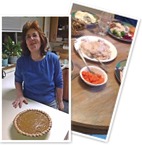
Thanksgiving in Mount Vernon Washington

Thanksgiving in Mount Vernon

So I cubed up the rest of the olive bread… added in more chopping parsley, and started to search around for more stuff to add. Luckily, I’d bought a bell pepper last week for my mother, which her caregiver didn’t use. It got chopped and dumped in the stuffing. Next, I went outside and picked some kale, the only vegetables left in the garden. It too was added to muddle.

Even with the added ingredients, it was way too salty! With nothing left to add, I tossed the stuffing into the refrigerator, and hoped for the best the next day.

The morning began with my making a pumpkin pie. I’d purchased a pie pumpkin weeks earlier, which I cut in half, and tossed in the oven to bake while I made the crust. Pie pumpkins have great seeds, which I washed, and Rich later roasted with salt and pepper.

Next, I made the cranberry sauce, prepped the yam dish (oranges and maple syrup), boiled some deceased carrots, and mashed with butter, eggnog, and sea salt (no one was the wiser), and sliced white potatoes to boil for mashed potatoes. Finally, I prepped some brussels sprouts.

It was time to stuff the turkey…

Because only Rich, and I, and my mother were having Thanksgiving in Mount Vernon, Rich purchased a “hybrid” turkey, which when we opened was missing its legs, wings, and tummy. We examined it for a few minutes, and then concurred we could plop a couple of handfuls of stuffing under the breast plate, and then stretch the skin to cover it up. There was also another small cavity, at the back, for securing stuffing.

The remaining boat-load of stuffing, I put in a large casserole pan.

The result? The stuffing was perfectly seasoned. I knew the turkey would absorb most of the excess salt, but was surprised the stuffing in the casserole was okay.

After cleaning up, and freezing most of the dinner for my mother to eat in the coming weeks, we drove back to Kirkland, packed, and got the cats, birds, and house in order for our trip.

Bullhead City

Friday morning, the alarm went off at 3:15 a.m. After a quick shower, we pulled on our clothes, grabbed our bags, counted the cats — to make sure none were locked in a room — and headed to the airport. We had a smooth flight, landing in Las Vegas, getting a rental car, and heading to Bullhead City, Arizona by 10 a.m.

Before visiting Ted, we stopped at a park that borders the Colorado River on the Nevada side. We took a brisk walk because the wind was gusting. We then chatted with a Canadian couple who are traveling around the United States. They were delighted with Bullhead City, which truly is splendid during the winter months.

It occurred to me why so many Canadians find America intriguing. Canada doesn’t have the vast variety of landscapes from snow-capped mountains to warm sandy beaches, vast deserts, swamps, plains, and dramatic places-of-interest like the Grand Canyon, Yellowstone, Mount Rushmore, Niagara Falls, Florida Keys, and Monumental Valley. And nothing matches the places to visit in American cities from Hollywood to Manhattan to Memphis, Houston, Chicago, Las Vegas, Atlanta City, Miami Beach, and points-in-between.

After visiting with Ted for several hours, we followed him across the street to his “special” friend Sue who had spent the day cooking a Thanksgiving meal. Sue takes care of Charlie who is turning 94. In spite of Charlie’s age, hearing loss, and near blindness, he enjoys interacting with people.

Bullhead City, AZ

Bullhead City and Laughlin

After stuffing our tummies, and discussing at length Rich’s beard – to shave or not to shave – we returned to Ted’s house to chat for a while before going to bed.

The next morning, Rich and I got up earlier and returned to the park along the Colorado River. We planned to take a longer walk to the Davis Dam, and dressed according to combat the wind. We had a pleasant, but windy walk, snapping pictures, and stopping to read the sign along the walkway.

Rich then decided we should take an alternate route back to our car. However, instead of taking the marked trail, we climbed to a viewpoint, and then trail blazed across a mesa. Happily, Rich decided to head back down at the precise time we lined up with a sandy trail that headed down the mesa.

We kinda’ took a step, and skid for a foot or until the sand stopped our descent, and then took another step. The only problem was we were both wearing Keen sandals, which quickly filled with sand and tiny sharp rocks. Ouch!

Later, when we viewed the mesa from a distance, we realized we took the ONLY sandy trail down the mesa. The alternative was brush- and rock-covered. Sometimes miracle happen.

We spent the rest of the day looking at picture albums and chatting with Ted until mid-afternoon when we went across to Laughlin, Nevada, and had lunch in one of the casinos at Bubba Gump. Afterwards, I immediately lost a $1 in one of the slot machines. Sue, on the other hand, put $2 into a machine, played 30 numbers at once, and instantly got multiple free plays. When the machine stopped chiming, she won $27!

Sue was nonchalant about winnings; whereas, Rich and I were jumping up-and-down with excitement!

Sunday morning, we had a late breakfast/early lunch at Denny’s with Ted, and then hit the road.

Last Stop: Las Vegas

We’ve been to Las Vegas many times, and were going to skip going during this trip, but I wanted to see the downtown area and the Fremont Street Experience. Months ago, I made reservations to stay at the Golden Nugget, which received high marks.

We we’re disappointed from the automated check-in to our spacious, elegantly appointed room, complete with robes. Plus, the room cost just $53!

I was pleased with the Golden Nugget as soon as we walked in the door. The holiday ornaments and decorations were fabulous with polar bears, white reindeer, elves, a white-bearded Santa, and beautiful ornaments, ribbons, and other flourishes.

In the center of the hotel’s two towers is a large pool deck with a 200,000 gallon aquarium in the center. In the aquarium are several varieties of sharks – sandtiger, brown, nurse, blacktip reef, and zebra – along with large fish like horse-eye and crevalie jack, redfish, blue runner, Queensland and black grouper, golden trevally, cobia, and stingrays.

The best part of the aquarium is the two-story water slide. It took no time for me to convince Rich that we needed to change into our bathing suit, jump into the

View Golden Nugget

Golden Nugget, las vegas

pool, and work up the nerve to go down the slide… even though it was breeze and cool outside.

My first decent down the slide was a little scary as I didn’t know what to expect. The next 5 or 6 were a blast! The slide takes several turns before thrusting you through the sharp tank, and then disposing you in a shallow pool.

My supply of adrenaline used us, we spent a few minutes in the hot tub, and then dashed back to your room for a quick shower and night-on-the-town.

Our first stop was the newly opened Downtown Container Park, which is amazing, fabulous, and fun! It’s made out of metal cubes, along with refurbished shipping containers that could have previously be used on cargo ships or placed on trucks for shipping good. The containers are stacked one-on-top of each other to form shops, stairways, sitting areas, restaurants, art galleries, and common areas.

The park is designed to be a business incubator, allowing entrepreneurs to start small in a 250 space foot space, the inside of a shipping container.

There is also a large stage with Astroturf in front, and a boxcar and caboose in the back, the later containing a barber shop called Bolt Barbers.

In the center of the park is a playground and interactive zone with a 30-foot-tall tree house, three different slides, and an electronic game, where children engage by raced around, hitting flashing lights.

It was dusk when we arrived at the park. At the entrance was performers engaging children and adults in a drum circle. Behind the performers was a 40-foot praying mantis sculpture mounted on a truck. As the last bit of sun faded, and the drumming grew louder, the mantis spewed fire from its antennae. It’s very dramatic, and something we hadn’t expected to see.

The park was developed by the Downtown Project, a community revitalization group funded by Zappos.com CEO Tony Hsieh. The site used to be home to a Motel 6. It’s now an amusing place to spend a few hours, wandering through 41 metal cubes and 30 repurposed shipping container. Learn more about the park and vision for the area.

Hungry, our next destination was to find a place to eat. We passed by the Heart Attack Grill, which touts “Taste… Worth Dying For.” The waitresses are dressed as nurses who take prescriptions and customers are considered patients. A tag is wrapped on patients’ wrists showing which foods they ordered, and a “doctor” examines the patients’ health with a stethoscope.

Their menu consists of insanely large hamburgers, including an Octuple Bypass Burger with 8 beef patties, 40 slices of bacon (5 per patty), American cheese, red onion, sliced tomato, and Heart Attack Grill’s unique special sauce. You can also ordered Flatliner fries (cooked in pure lard), and range of beverages, including Mexican-bottled Coca-Cola and “Butter-fat Shakes.”

If you manage to finish a Triple or Quadruple Bypass Burger, a nurse will wheel you out to your vehicle. Not sure where they wheel you if you eat at the Heart Attack Grill on Fremont Street since I didn’t see a parking lot nearby.

We opted for a slightly lower form of gluttony, a buffet at a casino!

I’ve never eaten at a buffet and NOT regretted it later. This trip was no exception. I take a few bites of each of my favorite foods, but put together is was WAY TOO MUCH to eat from blue cheese dressing poured over the yummies at the salad bar to French onion soup, macaroni and cheese, baked salmon, sushi, seafood salad, and cooked vegetables, which I dipped in melted cheese (intended for pouring over tortilla chips). And because we got to the buffet before the crowds, there was a huge selection of desserts, which Rich and I shared.
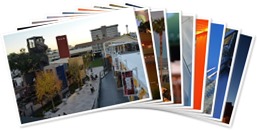
View Container Park and Las Vegas

Container Park and Las Vegas

Oh, you don’t want to know how many slices of different types of cakes and pastries (i.e. napoleon, cannoncini, etc.) we ate.

Our bellies stuffed to capacity, we hit the streets, walking through casinos, looking at signs and buildings from the 50’s, many of which have since fallen into disrepair. There were also signs of hope with the gentrification of several blocks, and developers breathing new life into the original casinos and hotels.

The longest continuously-running casino in Las Vegas, the El Cortez Hotel and Casino feels like a step-back in time with 40’s interior design of dark wood, leather-covered chairs, patterned wallpaper, and low ceilings with amber lights.

Opened in 1941, and purchased by Bugsy Siegel and Meyer Lansky in 1963, the El Cortez has expanded, but the original two-story, Spanish-style buildings remain. The Flame Steakhouse, at the El Cortez, serves food that’s reminiscent of the “Rat Pack,” such as jumbo shrimp cocktails, oysters Rockefeller, and oysters on the half shell for appetizers, french onion soup, iceberg wedge, and traditional Caesar as starters, and pork chop, filet mignon, surf & turf, steak diane, and prime rib of beef as main courses.

The Downtown Grand Casino and Hotel, which was formerly the Lady Luck, has a steampunk feel with exposed brick walls, spectacular chandeliers, and giant gears and other mechanics displayed as art. It’s steps from the Mob Museum, the National Museum of Organized Crime and Law Enforcement, which is located in the former federal courthouse where in 1950 the Kefauver Hearings on Organized Crime were held to expose and control organized crime.

The museum is probably fascinating, but at $20 per ticket, we opted for continue walking through downtown Las Vegas. Plus, it was a beautiful night.

We then came across a large, dramatic office complex, which we later learned is the headquarters for Zappos, online shoe source extraordinaire. Formerly located in Henderson, Nevada, a short drive from Las Vegas, Zappos remodeled the Las Vegas City Hall site, and moved their relocated its 1,200 employees to the new complex in 2013.

The move is designed to boost the local economy and help revitalize the downtown area to the tune of $336.6 million, with the city collecting approximately $395,900 annually in additional property taxes. With up to 2,000 employees at Zappos, there’s an increased need for restaurants, retail stores, health care providers, apartments and condominiums, and other services, which is great news for downtown merchants, hanging on until the economy improves.

The next morning, we drove around and were astonished to see so many new high-rise buildings in the area, and positive signs that downtown Las Vegas will return to its previous appeal before the “strip” became the main attraction and magnet for development funds.

We caught only the tail-end of a Fremont Street Experience. What we saw wasn’t overly impressive, and didn’t overcome the despair on the street. There are many beggars, shysters, and low-life who take up residence on Fremont Street as the night wears on.

It’s a safe area because of the many police, but one won’t want to wander too far from the neon lights. Many of the shops are seedy, and casinos lure in customers with scanty- or bikini-clad female dealers and bartenders, who alternate between working the tables, serving drinks, and dancing on top of bars or raised platforms.

Lining Fremont Street are sidewalk bars, where you can get a tall plastic “vase,” filled with frozen concoctions, spinning in slushy machines. Choose from margaritas, daiquiris, mud slides, mojito, pina colada, and much more.

Around 10 o’clock, we tried of the hubbub, and returned to the Golden Nugget to watch the sharks swim, and sit by the fire pit in the pool area.

The next morning, we woke to loud noises at 6 a.m. Our room was over the conference center and they were replacing some ducts. Rich called the front desk to complain. To make up for the unexpected early-morning wake-up call, we got to go through their breakfast buffet for free. While Rich enjoyed the food, I was nauseated from the buffet gluttony the night before. Nevertheless, I enjoyed a few bites of a tasty omelet and some fruit.

We walked around for a while, then returned to our room so I could dial into a conference call for work. Afterwards, we found parking on the strip, grabbed the camera, and snapped pictures of our favorite building. I keep wanting to see Vegas not for the gambling, food or entertainment, but the buildings. I don’t think I could ever tire of seeing the variety of architecture and interior design.

During the day, you can see the detail on the Paris, Caesars Palace, Bellagio, Monte Carlo, Venetian, and the many other ornate, themed casinos. And ARIA, Vdara, and the other magnificent buildings in the same area.

Dinner was at Jack-in-the-Box before an uneventful flight back to Seattle, and two Thanksgivings spent in three states: Washington, Arizona, and Nevada.
This Year’s Cookie Extravaganza!

Tags

, , ,

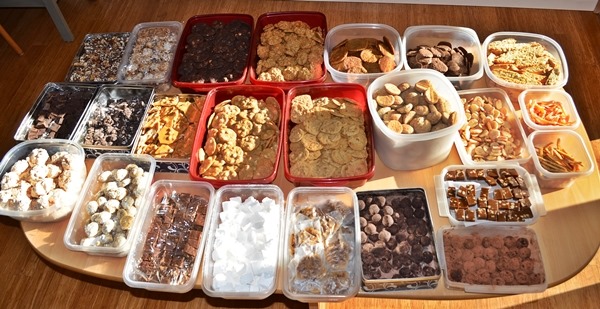
Every year, we make cookies and candies to give away. We start in late October, purchasing the ingredients, and determining what we’re going to make. And then in early November, we start baking, boiling, and packaging!

This year’s batch included:

Top RowCookies

  • Rocky road fudge
  • Seven-layer bars
  • Chocolate cookies with peanut butter chips
  • Oatmeal with butterscotch chips
  • Exotic spice
  • Cappuccino thins
  • Two types of biscotti: Traditional with almonds, and dried mango

Second Row

  • Fudge with cashews
  • Toffee
  • Peanut brittle
  • Chocolate chip made with cinnamon chips
  • Salt-and-pepper cookies with toasted pine nuts
  • Snicker doodle
  • Ginger coins
  • Candied orange peels
  • Candied grapefruit peels

Third row

  • Macaroon (coconut)
  • Mexican wedding cakes
  • Fudge with dried cherries
  • Marshmallows (so easy to make!)
  • Pralines
  • Rum balls
  • Coffee caramels
  • Truffles

Highlights from Our Boating Adventure

Tags

, , , , , , , , , , ,

It’s been a mixed up year for Rich and I so I’ve decided to scramble around the account of our annual trip on Tug Time, a 29-foot Ranger Tug, and focus on the highly memorable parts.

Ominous Beginnings

With forecasts predicting rain, cold, and general dreariness for much of our trip, neither one of us was particularly gung-ho about going. We packed at the bitter end, tossing in clothing, food, linens, boating gear, and other “stuff,” which was on our check-off list. We’d started this list years ago so it also included things like sunblock, bathing suits, and shorts. None of which we anticipated needing this trip.

With spirits dampened by the weather, we didn’t rush to get to Bellingham. We arrived less than an hour before the orientation for captains and crew. Rich being the former; me the latter. We half-heartedly listen, ate hotdogs and potatoes salad, provided by San Juan Yachting, and then dragged our stuff down to the boat.

After unpacking, we realized we’d forgotten to take our fleece jackets and pants. I was in a bit of panic because it’s nice to pull on my fleece after showering, or first thing in the morning when the boat is chilly. With Mount Vernon 30-minute away, Rich agreed to drive back and get the extra clothing.

When we returned, around 9 o’clock at night, we were prevented from getting on Tug Time… by a very agitated and vocal seal, which was sprawled across the dock. Last year, when we were pulling into the slip, at the end of our trip, a seal was also on the dock. It slithered into the water at the last minute, before I needed to step onto the dock to tie off the boat.

The seal we encountered the night before our departure, however, had no interest in moving. He’d found a nice place to sleep, a few feet from where we needed to step onto Tug Time. Hearing my reasoning with the seal – I couldn’t decide whether he was going to bite if I eased between him and Tug Time – several people arrived from other boats.

One man scolded me for thinking I could get close to a seal. They evidentially have no reservations about biting, and their saliva is full of bacteria. Their sharp teeth can easily tear human flesh, resulting in a terrible wound and infection.

The man then shooed the seal into the water, allowing us to safely board Tug Time.

The next morning, we had an uneventful voyage to Deception Pass. Originally, we planned on going from Bellingham to Deception Pass via the Swinomish Channel, which separates Fidalgo Island from the mainland. However, it was an ambition plan, and if we couldn’t make it through Deception Pass, we’d be stuck until the next slack (point of minimum current) tide. The current through Deception Pass can be 8 or 9 knots, which can rapidly sweep a boat against the rocks.

I’m glad Rich opted for the safer route because it gave us time to explore Deception Pass Park and learn about the Civilian Conservation Corps (CCC).

Established in 1923, the park now welcomes over 2 million visitors per year. It’s the most visited park in Washington. In the 1930’s the CCC built roads, trails, and sturdy stone and timber buildings, which are still in use today, including covered barbeque areas, restrooms, group shelters, cabins, and a conference center.

Two of the buildings are now part of an interpretive center, which has displays and a short movie on the CCC. It’s extraordinary (especially in light of today’s short-sited Republicans), the vision President Roosevelt had to put citizens to work on public projects, which not only gave them a sense of purpose, but significantly contributed to strengthening the country’s infrastructure (bridges, roads, dams, etc.) and recreational facilities (trails, parks, cabins, etc.).

I thoroughly enjoyed visiting Deception Pass Park, which previously, we’d only seen while zipping over the Deception Pass Bridge which connects Fidalgo and Whidbey Islands. And several times, we’ve walked in the vicinity of the bridge, venturing less than a quarter mile on either side. The park, however, is quite large with lots to see and do.

Oh Canada… You Treat Us So Well

The next morning, it was very overcast with less than a quarter mile visibility as we headed to Victoria, Canada. Rich and I both kept our eyes on the water, listening carefully to the VHF, and trying to make out shapes in the dense, gray blur.

As we were crossing the shipping lanes, which are like giant freeways for ships and commercial traffic, we got a call on the radio. The caller wanted to know if we were pulling a barge. It took us a while to figure out that he thought Tug Time was a commercial tugboat!

When surrounded by pea-soup-consistency fog, you need to constantly watch the radar

to spot ships before they appear, and then adjust your course accordingly. If a large ship is traveling 15-20 knots in a shipping lane, by the time they spot us, tugging at 8 knots per hour, it could be too late for either boat to avoid a collision.

It took us five hours to get to Victoria, with us passing many ship, but only seeing through the fog a couple of commercial whale watching vessels. These boats travel very fast and can switch course quickly so they often zip behind or in front of Tug Time on their way to drop-off and pick-up sightseers.

Happily, the rain held off until we finished going through customs. We then docked in a light drizzle, secured the boat, and briskly walked to Chinatown for dim sum. We were the only ones in the restaurant, but they graciously heated up left-over dim sum. It was a lovely, very late lunch.

We then walked around and darted into shops until the rain necessitated returning to the boat. We read for the rest of the afternoon, and watched a silly blue heron saunter on the dock, periodically poking his beak in the water, and then springing into action, seizing a small fish, tilting back his head, and gulping it down within seconds.

After dinner, the rain ceased, and we decided to venture out for a walk. The moon was bright and the air crisp. We had a very pleasant walk along the water, in front of the government building, through the Empress Hotel, and then back along the water where we saw a river otter dashing across the docks. On our way back to Tug Time, we started a conversation with two men who were sailing a 42-foot Hunter, named Perfect Excuse, to San Francisco. They’d been sidelined for several days in Victoria because of the weather, and were anxious to take off the following morning with forecasts of clear skies.

The owner of the boat was from Edmonton, Canada, where he works in the coal tar industry. We spent at least an hour chatting about natural and renewable energy, differences between Canada and the United States, politics, and the benefits of living in Mexico.

After arriving in San Francisco, the man was going to pick up members of his family, who would compete with him in Baja Ha-Ha, a sailboat race from San Diego to Cabo San Lucas, Mexico.

The next morning greeted us with dazzling skies and a splendid drive to Sydney, at the top of Vancouver Island. Rich and I both love Sydney. It’s the perfect-sized town with everything a person could want, plus, it’s breathtakingly beautiful.

We spent the rest of day walking around, talking to a Canadian woman about her travels and life in Canada, drinking Americanos at Starbucks, checking out books on living in Mexico and Costa Rica, and enjoying the splendid weather.

Because we were both unemployed, and feeling very unemployable during this trip, we lapsed into thinking about packing up our lives and relocating to Mexico. We envisioned living in a cute house with a VW Bug parked up front, working at minimum wage jobs, eating lots of fresh fruits and vegetables, and hanging out at the beach.

When we returned from our trip, I was convinced a great place to move, with affordable, newer houses walking distance to the water, is Barra de Navidad north of Manzanillo on the western coastline of Mexico. However neither one of us are the type to run-away. And after reflecting on what we really wanted – a house by the water with room for our “stuff,” the cats, garden, and opportunities to occasionally sail – we realized all we had to do was continue working for a years, and then move into our Coupeville house on Whidbey Island.

Back to America

We didn’t linger for long the next morning, knowing we had to drive for many hours from Sydney to Roche Harbor, check into American customs, and then zip over to Sucia Island for the night. Roche Harbor on San Juan Island, is one of my favorite marinas. It’s a treat to walk around and admire the historic Hotel de Haro, wander through the gardens, enjoy the other historical buildings, and meander through the sculpture park.

In the sculpture park, we hurried over to an easel with a polished mirror on it. Rich then pointed the camera at the mirror to snap the reflection of both of us. Check out the pictures to see how we look zoomed in-and-out. Last year, we had fun using this technique to snap our self-portraits.

I also wrote a wish and placed it in one of the prayer urns in the park, and then gave it good spin. One of the nicest aspects of the sculpture park is the ability to interact with the artwork, touching, spinning, opening, closing, and even using gongs to punctuate the silence with a pleasant peal.

We didn’t spend as much time in the park as usual because earlier I’d received an email asking me to write-up a document for a client… since I was the only person who had the knowledge. The challenge was remembering the details with nothing to refer to on my personal netbook. Once completed, I rushed to the café onshore, and sent the email with the completed document, and we were back on the water, heading to Sucia Island.

There are several places to moor at Sucia so we had no troubles getting a mooring ball. We then took our dingy ashore to walk around. It’s an interesting island, which in Spanish means “dirty” because of the jagged shores lined with hidden reefs and rocks that could do serious damage to a bottom of a boat.

The broken shorelines is from geologic folding of the earth’s crust, exposing not only fossils, but sharp, uneven rocks. Walking along the shores is fun because you can see layers of sediment along with imprints from sea critters caught hundreds of years ago in the mud. Plus, the island is irregular with several fingers and outlying islands, some of which you can be reach on foot at low-tide.

Because the island has many nooks and crannies to explore and protected bays, it’s attractive destinations for kayakers. Anchored in the bay were two ships with Un-Cruise Adventures, which offers expeditions through the San Juan Islands for adventurous guests who have access to the ships’ kayaks, paddle boards and inflatable skiffs to explore the islands, and go ashore to hike, bird watch, and wander through the towns where the ships stop.

For our second to last day, we went to Friday Harbor on San Juan Island to stretch our legs, leave our recyclable, empty trash, shower, and wander through a couple of stores. I was amused by one boat in the marina named “Bugsy Seagall.” People come up with clever names for their boats!

We spent the night anchored off Shaw Island, watching the ferries glide over the water, lit like giant ballrooms, and wandering if we’ll ever have the chance to once again charter Tug Time. We’ve enjoyed every moment on the boat!

Tug Timing Around the Puget Sound

Tags

, , , , , , , , ,

For the past six years, we’ve chartered a boat from San Juan Sailing/Yachting. This year, like the previous two years, we chartered Tug Time, a luxurious 29-foot Ranger Tug, with everything we could possibly want for the week. Familiar with the boat, we are able to thoroughly relax, not having to wonder how to use the instruments, light the stove and oven, flip the switches on the electrical panels, best way to grab a mooring ball or anchor, and myriad of other “things” one needs to know to go from point A to point B in a boat.

This trip, however, we were bogged down with worry.

In June, Rich was laid-off from IBM, less than two years before his retirement. Happily, he was given six months of severance and other benefits. Nevertheless, it hasn’t eased the challenge of getting another job. His focus at IBM was Linux device drivers for IBM servers, which is the opposite of what employers are seeking. Windows and software (versus hardware) development is the overwhelming focus in the Seattle area.

Meanwhile, I was working gangbusters as a freelancer on Microsoft short-term projects through June. With the start of Microsoft’s fiscal year in July, and announcement of re-organizations a few weeks later, the work dried up. And even though the agency I’d been contracting through kept saying they were going to be busy, no work came my way.

Adding to our stress, we’ve been juggling my mother’s care, listing for sale and then selling our Anacortes lot (yeah!!!), leasing our Coupeville house (we had three potential renters within a day!!), leasing my mother’s house in Sherwood, Oregon, refinancing Rich’s brother’s house to lower the payments (he’s quadriplegic and Rich oversees his finances), and keeping up our Kirkland (primary residence) and Mount Vernon (where my mother now lives) houses. I dream of the day when we have one house!

Shimmering Moon Over Cypress

Our last full day on Tug Time was a reflection of our present lives.

The night before, we had a magical evening anchored off Shaw Island. It was a quiet bay that we shared with several other boats, many of which probably belong to the residents of the island. As the sun started setting, I pulled out my binoculars, and watched a blue heron methodically walk on a floating dock, slowly lifting each leg, bending its knees backwards, and then carefully placing its foot a few inches forward, it’s long, graceful toe flexing, and then spreading out as he easing his weight from one foot to the other. The entire time, it surveyed the water, hoping to find an unsuspecting fish, which it could quickly snatch in its bill, and then swallow in a single gulp.

As the sun set, the ferries that chauffeured passengers and vehicles from island to island turn on their lights. In the dark of night, they look like sparkling fairylands gliding across the shimmering water. We never tire of watching them coming into view and then disappearing. But as the hour grows later, and the day’s activities catch up with us, fatigue takes over and we crawl between the flannel sheets, several warm comforters on top, falling asleep as Tug Time gently rocks in the water, and slowly swings as the wind changes direction.

After our customary breakfast of coffee, frosted mini wheat, milk, and a piece of fruit, we pulled up anchor, and headed to Cypress Island. We’ve been to Cypress Island many times to gaze at the view from Eagles Cliff. Two years ago, when we were admiring the panorama, Rich looked down at this foot, and saw an old coin. When he dusted it off, he realized it was an Indian head penny from 1890.

With clear skies and light breezes, our drive over to Cypress Island was uneventful until an alarm sounded. It took us several minutes to figure out it was the carbon monoxide detectors. The LEDs on the alarms indicted there was no power.

Rich checked the voltage of all of the batteries and realized the starter engine battery was dead. Having reset the inverter switch several time throughout our recent trip, Rich went to the back of the boat and noticed one of the four battery switches was off, so he turned it on. The issue was instantly solved. However, to make sure he was supposed to turn on this switch, Rich contacted San Juan Yachting. They concurred he’d taken the correct action.

We continued to Cypress Island where we easily grabbed and tied up to a mooring ball. We changed into shorts, and then took our dingy ashore. It was low tide, which holds the promises of finding interesting treasures along the waterline. A quick walk up and down the pebbly shore yielded several pieces of rusty metal, including a rat tail file (which I thought was a metal chopstick until Rich pointed out the threading), railroad tie, and several large nails.

Having arrived at Cypress before noon, we had lots of time to walk around the island and see places we hadn’t been before. Although, to be brutally honest, there isn’t a heck of a lot to see besides the Puget Sound and boats zipping between the islands.

Less than 50 people live on the island, which is around 5,500 acres in size. The only people I’ve ever seen are boaters and kayakers.

Having our fill of evergreen trees and picking pebbles off the beach, we returned to Tug Time for our customary afternoon cheese, salmon spread, crackers, white wine, reading or day dreaming. With several other boats in the cove, Rich couldn’t resist breaking out the binoculars to spy on them and comment on their mooring techniques.

With our trip nearing an end, it was hard not to lament that was probably our last charter on Tug Time. In the past, we’d immediately reserve the boat for the following year, but with Rich and I both searching for jobs, we’ll have to “wait and see.”

Adding to our angst is the responsibility of caring for family, wondering what we’re going to do about health insurance if we can’t secure jobs in the coming months, and the uncertainty of the economy with the lunacy of the Republicans.

Nevertheless, we were determined to enjoy our last few hours on the boat… assembling giant burritos from the last of our lettuce, tomatoes, peppers, refried beans, spicy chicken, and roasted green salsa. We then read until dark, admiring the full moon glowing on the still water. It was one of those perfect evenings where everything aligns perfectly like a Photoshopped picture.

After saying good-bye to the full moon, we crawled into bed, and flipped on the TV/DVD player in the forward cabin. We surfed the TV channels from Canada, and then watched the movie Lincoln with Daniel Day Lewis. We’d brought a stack of DVDs to watch on the boat when we weren’t reading. Most of the movies we brought weren’t memorable except The Queen with Helen Mirren. We’d had this DVD for weeks, but put off watching it, thinking it would be boring. However, it proved to be fast-moving, engaging, and well-acted. We enjoyed it more than Lincoln.

Before we turned off the lights, Rich started up the engine to make sure everything was charged.

Battery that Couldn’t

We planned on getting up at 6 a.m. the next morning to pack, and motor back to Bellingham before the rush of other charter guests at the fuel and pump-out docks. However, Rich couldn’t get the boat started! The battery for the starter engine was dead.

He located a pair of jumper cable, and thought he could use the charge from another battery to jump the starter battery, but no luck. The switch he’d turned on the day before connected all of the batteries so overnight, they must have ALL discharged. It didn’t make much sense because the other batteries were all charged the day before, and it was only the starter battery that was dead when the carbon monoxide detectors went off.

The only option was to call San Juan Yachting and ask them to send a boat, which could give us a jump. Because they were concerned there was a major issue with the boat, and may have to tow it, they sent a 48-foot Grand Banks, which looked small on the water, but huge next to the 29-foot Tug Time.

Once the two boats were rafted (tied) together, they jumped the batteries. We started up the engine, and were ready to return to Bellingham. We followed the Grand Banks for a while, and then told them we were okay and they should go ahead.

Back in Bellingham, we got 63 gallons of diesel at the fuel dock. Over the course of our 7-day trip, we went over 158 nautical miles from Deception Pass off Anacortes and Whidbey Islands to Victoria and Sydney, British Columbia to Roche Harbor, Friday Harbor, Shaw Island, and several other Puget Sound islands.

Because we’d one most of the packing and cleaning of Tug Time while waiting to be rescued at Cypress Island it took us barely an hour to unload and clean the boat when we got back to Bellingham and San Juan Yachting.

Stay tuned for more highlights of our trip.

Innovation #26: Understanding

Tags

, , , , ,

It is asked, “Understanding, how it can be attained?”

Understanding does not come of its own accord. It must be pursued, searched out. There are many roads to understanding as we care to explore, but it must start with one’s own self.

It means laying bare our virtues and flaws so we may get to know why we say, and do, and feel as we do, along with the motives that drive us.

It means getting to know other people, their views and reasoning, for through them we get clues and insights into the ways we function.

It means facing ourselves with honesty, and others with eyes not glossed over with prejudice or envy, or ears not shut down with disinterest.

It means sharing the lives of other people, in any small way, so we may know the full range of human emotions, and learn the meaning of empathy and compassion.

The more we travel the roads to understanding, the closer we get to understand the importance of understanding if we are to live in harmony with oneself and others.

I’ve pondered what my grandmother wrote in this innovation for a few weeks. Rather than referring to “understanding,” I think a better word would be “introspection,” the process of carefully examining your own feelings, thoughts, and ideas.

“Understanding” seems too vague, especially when suggesting the need to face oneself with honesty, not glossing over prejudice or envy, or disregarding another because you’re disinterested… or too myopic to consider another point-of-view.

Understanding one’s self is particularly relevant with Rosh Hashanah, the Jewish New Year, last Thursday, and Yom Kippur, Day of Atonement, on Saturday. This is the time of the year to when God inscribes each person’s fate for the coming year into the Book of Live, and then waits until Yom Kippur to “seal” the verdict.

During the Days of Awe, between Rose Hashanah and Yom Kippur, one tries to amend his or her behavior and seek forgiveness for wrongs done against God, and others. The hope is that by the end of Yom Kippur, one has been forgiven by God, and granted another year of life.

As my grandmother wrote, the more one travels the roads to understanding, the closer they get to understanding the importance of living in harmony with themselves and others. But understanding isn’t enough. What’s necessary is recognizing one’s shortcomings, determining if they need to change, and then working towards amending them.

Not all shortcomings are bad. Understanding which ones impact your quality of life, and the lives of others is the key.

My grandmother was known for critiquing other’s writing. If someone sent her a letter, she more often than not, sent it back with “redlines,” indicating how it could be better written. Most people found this habit rather irritating, if not insulting. After all, they took the time to write, and she showed her gratitude, but correcting their grammar.

She was most brutal on my writing, correcting my papers every Saturday when she visited. This trait, however, transformed me into a pretty good writer.

I also understand why she was so critical of my writing. Her dream was to become a journalist or short story author. Even though her native language was Russian, and she was in her teens when she came to America, she’d mastered English, speaking without an accent, and using words that were more typically found in a dictionary than rolling off the tongue.

She’d taken numerous writing classes, writing stacks of articles, observations, poems, stories, and in a play or two. In her later life, she wrote invocations for her senior citizens group. Until she took her last breadth, she was scribbling her thoughts on scraps of paper, most illegible, using crayons because it was too difficult for her to hold a pen or pencil.

I understand myself partially because I understood my grandmother. And with the New Year, I’ll strive to better understand and recognize my flaws, and work towards being a better person to myself and others.

Bits of Wisdom from my Grandmother

Tags

, ,

I found these snippets of wisdom in a small flipbook my grandmother, Rose Ridnor, started writing in the fall of 1954. The pages must have been labeled by grandfather, Morris because each page has a giant letter at the top in his handwriting. He used to draw cartoons and his handwriting resembled the block printing used by cartoonists.

Pages “A-F” were torn out of the flipbook. The first entries start on page “G.”

The snippets below were taken from the last pages of the flipbook:

www

They who cannot find happiness or satisfaction in their own lives and environment demand it be brought to them by others

Spite, like every, engulfs the perpetrator along with its victim. Rose_cropped

Can you love a person and still not like him?

We each of us have our own blind spots of immaturity.

One’s character is evident to the eye long before the tongue finds the words to name it.

Your true character casts its shadow before.

www

Another cry in the night. How much do I own my child for having given him birth?

Some children believe in an equal division of the family – the “giver” (the parents, naturally), and the “takers.”

Our design is not to tell youngsters what or not to do, but merely to show what has been done with what results so they may better judge their own decisions and potentials.

www

Anyone with proper management can live on a minimum wage, but who wants to?

www

With the coming of the middle years, comes the rewarding knowledge you don’t have to be as clever, as quick, or as rich as you once thought. And you don’t have to provide nothing to nobody!

I think I’m brilliant and want no one to remind me I’m not!

www

The extrovert runs away from himself; the introvert burrow into himself

The extrovert gathers a crowd around him; the introvert hides in a corner behind the potted plant

May Bee

Tags

, , , ,

This morning, while chugging on an elliptical machine, I read an insightful article in TIME magazine about the nationwide collapse of honeybee colonies due to viruses, invasive lice, and most likely pesticides. It’s estimated one-third of our food – vegetables, fruits, and nuts – depends on the help of bees for pollination.

As I read the article, I couldn’t help think about two phenomenon I observed this year. First, a miniature blueberry bush on our deck in Kirkland, which has always produced berries, produced nothing this year. Not one berry.

Second, we have a green apple tree in the backyard of our Mount Vernon house. Since we’ve owned the house, the tree has produced 2-6 apples per year. Last year, the house in back of ours went into foreclosure. The new owner dove into updating the house, including significantly pruned the yard, and cutting a huge mostly dead pine tree that was shading our apple tree.Honey_Bee_BTA_092708_074

This year, the apple tree had spectacular blooms, and has 100-150 apples on it. For two week in row, I’ve been making apple pies using the apples that fell on the ground. I haven’t bother to pick any because so many have fallen.

We don’t see a lot of bees in Kirkland, which could account for why our blueberry bush produced zippo. Our backyard, which is shaded by large cedar, evergreen, and maple trees is shady and cool with few flowers. It’s not an attractive place for bees.

In Mount Vernon, however, I planted dozens of lavenders, salvia, dianthus, and other flowering bushes, which are usually swarming with bees. Plus, the house is ringed with 30-year old rhododendron and azalea bushes.

The blueberry, strawberry, and raspberry bushes in the front of our Mount Vernon house have been very productive this year, as has the pole beans, peas, tomatoes (many are still green), cucumbers, and carrots. And an apple tree that barely produces fruit, is now densely packed. I suspect cutting down the aged pine tree made our apple tree a more attractive destination for bees. And may “bee,” we’re now enjoying the fruits of their labors.